Showing posts with label Bob Dylan. Show all posts

Tuesday, January 14, 2020

Best of 2019 Lists from Friends of Twist & Shout! (Round 4)

Scott Brand


Director, Commercial Development, Caroline

Top 9 of 2019! (In no particular order!)
Obsequiae – The Palms of Sorrowed Kings
Besvarjelsen – Vallmo
Immortal Bird – Thrive On Neglect
Mndgsn - Snaxx
Horndal - Remains
My Diligence – Sun Rose (Mottow Soundz)
Frankie and the Witch Fingers – ZAM
Battles – Juice B Crypts
Mass Worship – Mass Worship

----------------------------------------------------------


Esmé Patterson


Denver-based musician. You can find out more about her here - https://esmepattersonmusic.com/

Bill Callahan - Shepherd In a Sheepskin
SUNN O))) - Life Metal
Solange - When I Get Home
Purple Mountains - Purple Mountains
Blackwater Holylight - Veils of Winter

----------------------------------------------------------

Michael Bunnell


ThinkIndie Executive Director; owner Record Exchange, Boise ID

Bob Dylan - Travelin’ Thru, 1967-1969: The Bootleg Series Vol. 15
John Coltrane - Blue World
Hayes Carll - What It Is
Kronos Quartet - Terry Riley: Sun Rings
Steve Earle and The Dukes - Guy
Buddy and Julie Miller - Breakdown On 20th Ave. South
Nick Cave and The Bad Seeds - Ghosteen
Hildur Gudnadottir - Chernobyl Soundtrack
Eilen Jewell - Gypsy
Josh Ritter - Fever Breaks
Wilco - Ode To Joy

----------------------------------------------------------


Corsicana


Hiii, Ben here from the band Corsicana. I tried to list records in order of their personal significance, hope y'all enjoy! You can check out my band's stuff at www.corsicanamusic.com. (:

My top 10 list for the year would have to go something like this:
1 - i,i by Bon Iver
2 - U.F.O.F. by Big Thief
3 - MAGDALENE by FKA Twigs
4 - ANIMA by Thom Yorke
5 - Atlanta Millionaires Club by Faye Webster
6 - Dimly Lit by From Indian Lakes
7 - Anak Ko by Jay Som
8 - LP3 by American Football
9 - Better Oblivion Community Center by Better Oblivion Community Center
10 - Ventura by Anderson. Paak

My best of the decade list:
1 - 22, A Million by Bon Iver
2 - Familiars by The Antlers
3 - Carrie & Lowell by Sufjan Stevens
4 - good kid, m.A.A.d. city by Kendrick Lamar
5 - Stranger In The Alps by Phoebe Bridgers
6 - LP1 by FKA Twigs
7 - The King Of Limbs by Radiohead
8 - Moving Away by Gleemer
9 - Pure Heroine by Lorde
10 - Ology by Gallant

Monday, January 6, 2020

I'd Love to Turn You On #247: Bob Dylan - Time Out of Mind (1997)


             The final song on Time Out Of Mind, Bob Dylan’s 30th studio album, is the 16-minute “Highlands.”  It begins with what sounds like a world-weary sigh exhaled in unison with an opening guitar figure. The result is that the music presented feels as natural as breathing, as opposed to a contrived or constructed work. This central metaphor pretty well defines the mystery and magic of Bob Dylan. His best work feels like the musings of a naturally inquisitive and discerning mind, thus they are rewarding to the discerning and inquisitive listener. He asks and speaks for all of us. “Highands” is one of a very few songs in Dylan’s catalogue that breaks the 10-minute mark (“Sad Eyed Lady Of The Lowlands” and “Brownsville Girl” being the other two), and as such it is given the room to breathe unlike much of Dylan’s contemporaneous work. Teetering between thoughts of mortality and alienation from modern society Dylan openly yearns for the peace and beauty of either youth or death - we’re never quite sure. Musically the song and the entire album creak with a wooden authenticity, while still betraying all the modern production flourishes of Daniel Lanois. The album is soaked in waves of reverb and Lanois takes great care in mike placement and the specific instruments used on each song. The result is the contrary sensation of someone whispering in your ear while standing on the moon. It sounds far away, yet incredibly intimate simultaneously. Lanois has taken shit for his techniques, but I am a huge fan. I feel like the albums he produced in the 80’s, 90’s and beyond are some of the very few which pay tribute to the past while pointing the way to the future. His productions are immediately recognizable and entirely magical. Time Out Of Mind might be his most consequential achievement because it threw open the door to a modern era of Bobness, an era where his albums sound great again and he seems to have comfortably shrugged off the expectations of modern record making and found a comfortable place in the timeless firmament of musical tradition.

          Leading up to Time Out Of Mind Dylan had struggled with his craft, leaning on albums of traditional covers, an unsatisfying stint with The Grateful Dead and generally weak new material (1990’s Under The Red Sky is in contention to be his worst album), yet suddenly he seemed reconnected to his lyrical and musical muse. The songs were heavy with folksy wisdom and ruminations on the natural order. Perhaps that is the greatest strength of this album; it restores Dylan’s rightful place in the tradition of great American singer/songwriter’s and lessened the incessant imperative to constantly be “the voice of a generation.” Now he was sounding like a voice for ALL generations. Take opener “Love Sick.” Dylan takes a common phrase and turns it around, exploring it from all angles “I’m sick of love…but I’m in the thick of it/This kind of love…I’m so sick of it/I’m sick of Love …I hear the clock tick…I’m sick of love…I’m love sick.” Two simple words, normally spoken together to indicate an early state of romance are tumbled around to show the complexities and pitfalls of the most fraught state of human existence. In so few words Dylan perfectly illustrates his poetic mastery. Love isn’t only beautiful… it can make you sick. Each song on Time Out Of Mind follows this template: simple, declarative language employed in the most strategic and extraordinary ways to illuminate the complexities of the human condition.


          Back to “Highlands” - Dylan ends the album with a fatalistic, but somehow hopeful sentiment: “Well, my heart’s in the Highlands at the break of day / Over the hills and far away / There’s a way to get there and I’ll figure it out somehow / But I’m already there in my mind / And that’s good enough for now.” These lyrics can be read as poetry, yet with Lanois at the dials Dylan’s musings become musical monuments as well. Time Out Of Mind is such an important album in Dylan’s discography because it succeeds so wildly on both of these fronts. After at least a decade of seemingly not caring what his music sounded like, he produced an album of compelling, relevant, modern roots-rock, and after casually tossing off lyrics for a number of years he had re-fastened his poet’s loupe and started offering his audience polished thought diamonds once again. Time Out Of Mind declared boldly that Dylan’s best days as an artist were definitively not in the past thus proving composer Edgard Varese’s bold proclamation of 1921, “The present day composers refuse to die.”


- Paul Epstein

Monday, May 6, 2019

I’d Love To Turn You On At The Movies #217 - The Harder They Come (1972, dir. Perry Henzell)


            When The Harder They Come first appeared in America in 1972 it had to have been met with bewilderment. While filled with an almost intoxicating first look at real life on the Island of Jamaica and blessed with one of the best soundtracks in the history of film, the movie presents its narrative and action in such a herky-jerky fashion, and the patois of the characters is so thick, that the typical westerner would be forgiven for requiring subtitles to even follow the plot. In fact, on its first runs through America the film was indeed shown with subtitles. I had not seen The Harder They Come in at least twenty years, and I freely admit that putting subtitles on made this my most rewarding watch of this extraordinary film. My memories of the movie were as cloudy as the ganja that filled the room the first time I saw it. There were strong memories of certain scenes, but my recall of the actual plot was dim. This time, from the first scene, I found The Harder They Come to be a fully absorbing and heartbreaking tale about the grinding effect of systems on human endeavor. Our hero, Ivanhoe Martin (based on a real character) is played with elemental realism by Jimmy Cliff who brings such burning intensity to his portrayal, that one can’t help but feel he is telling his own story at some level. When his grandmother dies, Ivanhoe, an aspiring singer, is forced to leave his country home and go to the city to stay with his mother. Finding nothing but poverty and disinterest in his music, he finds ways to get by-being a bike messenger, then entering the dangerous ganja trade. When he is told to deliver a package to a music studio he tries in earnest to sell his talent to the only producer on the island who can make his dreams come true. When his song only brings him 20 dollars, his disillusionment with the music business starts coming into focus.

            Through a series of events, all of which illustrate the corrupt nature of a system that takes advantage of poverty, ignorance and innocence, Ivanhoe becomes a notorious figure and does indeed find the fame he seeks. He finds a way out of the ghetto and straight to the top. It’s just not the way he wanted to get there. As the events of Ivan’s life ultimately lead him toward a violent conclusion, we are given an amazing look into the inner workings of the Jamaican music business (hint - it’s just as corrupt as it is here), and the marijuana business, and ultimately, the machinery that keeps poor people poor. The fundamental corruption of any system is explored (much as it was later on The Wire). We can feel that Ivan’s dreams will not come true the way he expected as the events of his life tumble inexorably toward chaos. The final acts of the film capture a fateful inevitability that is reminiscent of Bonnie And Clyde. This narrative is played out against the real stars of The Harder They Come: the exotic and exciting views of actual Jamaican life, which initially thrilled Jamaican audiences, and ultimately acted as the greatest calling card the island ever received, and of course the miraculous soundtrack which, along with Bob Marley and The Wailers’ Catch A Fire turned the rest of the world on to reggae music. Throughout the movie, the songs act as a narrative device, driving and describing the action playing out on screen. Reggae legends Toots and The Maytals are responsible for two of the best scenes. In one, their classic Pressure Drop provides the perfect driver for a breathless chase scene through a crowded ghetto. For me though, the most magical scene in the movie takes place as Ivanhoe gets his first look inside the recording studio during a Toots session for the song Sweet and Dandy. Cliff stares at the scene, wide-eyed and in wonder, and we share his thrill and desire to be part of the charismatic magic Toots is laying down. It is one of the most effective scenes about the making of music that I’ve seen. So few movies get the musician side of things right. Director Perry Henzel nails it with this scene.

            Bob Dylan wrote “You’ll find out when you reach the top / You’re on the bottom.” The Harder They Come brings this axiom to life vividly. Ivanhoe Martin dreams of leaving his country boy roots and becoming famous in the big city. He makes his dream come true, and it turns out to be a nightmare. His story is a cautionary tale as well as a lesson about the harsh realities of life for those whom the chips are stacked against. Although this message is depressing, the experience of watching The Harder They Come is ultimately uplifting, because the sounds and sights unfolding are so genuinely thrilling.
                     - Paul Epstein

Monday, June 18, 2018

I’d Love To Turn You On At The Movies #194 - Festival (1967, dir. Murray Lerner)


It is hard to imagine a music documentary that is more historically important than Festival. Filmed over three years (1963-1965) at the Newport Folk Festival, this documentary not only offers life-changing glimpses of three generations of American musicians, but it actually captures some of the moments that see the American cultural, social and intellectual landscape shifting from 1950’s black and white to 1960’s technicolor. Hard to believe, right? When the movie opens on a scene of Jim Kweskin’s Jug Band performing casually backstage and director Murray Lerner begins to question them on the importance of folk music and the meaning of the festival, harmonica player and future cult leader Mel Lyman launches into some wild-eyed rapping about this music’s place in current society, and in those few minutes you can almost see the scales falling from society’s eyes as one generation of highly educated, idealistic youth takes the baton of cultural relevance and runs akimbo toward an uncertain finish line and the mushroom cloud that lay beyond it. It, and so many other moments in this incredible documentary, provides insights of such societal prescience that it is almost forgivable to forget the multi-generational panoply of great American music also playing out on screen. That, ultimately, is what makes Festival different and better than so many music documentaries; it is the fact that Murray Lerner took years of work to get the balance between music and society just right.
Other than Bob Dylan’s historic first electric performance of “Maggie’s Farm” from 1965, there are no full songs presented in Festival. Rather, Lerner skillfully allows us to float through three years of festivals - the music, the crowd, the conversations, the styles, the unreal cars (if you love cool cars from the 60’s, it’s worth watching the movie for the brief glimpses of Corvettes, Mustangs and Jaguars that the seemingly endless sea of middle-class white kids arrive in), and the overall gestalt of the times. It is an inescapable fact that the audience is almost entirely white, collegiate and representative of all the historical advantages post WWII America has come to represent. The seeds of the mid- to late-60’s cultural revolution awaiting are blowing throughout this film. There are no hippies, no revolutionaries (except on stage), no bomb throwers, but the potential to become just that is clear in each earnest pronouncement the post-beatnik audience members mouth with heartbreaking innocence. Because the film jumps around so willfully and with such artistic intent (largely thanks to editor Howard Alk, who would go on to work on a number of important music films), it avoids most of the traps of other concert films, remaining interesting and unpredictable throughout. No obligatory drum solos, sycophantic journalistic talking heads or music video collage tricks to take the realism and grit out of the music. And ultimately, the beautiful music is what makes this film so special.
Festival, by the simple act of letting events play out before the camera, manages to capture and contrast three distinct generations of American musicians. First are the heritage acts that have always inhabited this festival. However, because this was the mid 60’s, those acts were primarily made up of musicians whose history stretched back to the pre-war age of American regionalism. Thus artists like The Blue Ridge Mountain Dancers, Eck Robertson, The Swan Silvertones and most importantly, the bluesmen like Howlin’ Wolf, Son House and Mississippi John Hurt provide a priceless glimpse into a lost America. There isn’t really one authentic bit of this “old weird America” as Greil Marcus called it left in 2018 - not one bit! That fact alone makes these images indispensable. The second, and most prevalent category of performer represented, is the one that most closely mirrors the audience - the contemporaneous stars of the folk and infant folk-rock boom. Peter, Paul & Mary, Joan Baez, Judy Collins, Buffy Sainte-Marie, Johnny Cash, Odetta and Pete Seeger among others offer proof of the sincerity of their music and their message. It is clear why each would go on to forge distinctly important careers. They are young and at the peak of their powers. The sight of Johnny Cash’s profile or the sound of Odetta’s powerful voice are enough to take your breath away. And these moments happen over and over in this film.
Of course the unspoken but clear sub-context is the fact that all this “real,” “homespun “ music was about to come crashing up against the cultural tidal wave that that the next five years of American history would prove to be. That wave is represented in the person of one Bob Dylan, whose appearances at all three festivals provide increasing levels of hysteria amongst the audience, and culminate with his 1965 electric set. Director Murray Lerner later went back and created a full-length documentary on just Dylan’s part called The Other Side of the Mirror. I highly recommend watching it as well; however, there is a magic poignancy to Dylan’s appearances within the context of the other two categories of performer outlined above. Having hindsight, knowing what we know now, it is indeed touching and fascinating to see Dylan paying tribute to and breaking the mold in the same moment. It adds the perfect air of suffocating inevitability to the seemingly joyous proceedings. Optimism ruled the day, but dark clouds gathered on the horizon. Completely essential viewing!


-         Paul Epstein

Thursday, September 12, 2013

On The Cover: Adam Goldstein covers Bob Dylan Blood on the Tracks. Opening: Roger Green


Twist & Shout continues its support of the great monthly series, On the Cover, taking place the last Wednesday of every month at the Hi-Dive. For On the Cover, local musicians tackle classic albums that have been an influence on them, performing them in their entirety live and on stage. Check out this month's series in which Adam Goldstein takes on Dylan's Blood on the Tracks and offers some insight as to why he's chosen to perform this masterpiece.

Bob Dylan always distanced himself from the drama, heartbreak and loss that mark every single song on Blood on the Tracks.
In interviews following the release of the record in 1975, Dylan claimed its ten tracks were based on the short stories of Anton Chekhov. Years later, when a radio interviewer asked him about the fact that the album had become one his most beloved among fans, Dylan demurred, insisting, “It's hard for me to relate to that. I mean, it, you know, people enjoying that type of pain, you know?” He added that the tunes weren’t pulled from his personal life, saying he didn’t write “confessional” songs.
For anyone who knows and loves this record, those claims are hard to believe.
Blood on the Tracks stands apart in Dylan’s oeuvre for its immediacy, for its rare glimpse into the heart of an artist who made enigma, distance and mystery such a big part of his creative persona. Beneath the convoluted lyrical twists on “Idiot Wind,” beyond the third-person narrative approach of “Tangled Up and Blue” and “Simple Twist of Fate,” under the fatalistic bravado on “Bucket of Rain,” this album offers a portrait of Dylan coming to grips with a gaping emotional wound. And that makes sense, considering that this album came out shortly after his divorce from his wife and the mother of his children, Sara Dylan.
That pain makes for a compelling work of art, one that offers lessons to anyone who’s ever known heartache. Since I started listening to Blood on the Tracks in earnest at the tender age of 14, it’s offered comfort for every failed crush, every derailed relationship and every brutal rejection.
That’s not to say this album is about self-pity. Lyrically and musically, Dylan avoids self-indulgence here in a way he fails to do on any other album. He tracks every stage of a doomed relationship across the record, from the first glimmer of obsession to the final acceptance of letting go. But he does it with lyricism, integrity and insight.
It’s quite a feat, considering the material here came from a messy creative process. Indeed, on hearing the bare-bones songs for the first time, Stephen Stills was not impressed. “He's a good songwriter ... but he's no musician,” Stills observed to Graham Nash.
That’s hardly apparent from this brilliant record.
On the album’s opener, “Tangled Up in Blue,” the tale of a drifter looking to reconnect with an old flame becomes an allegory for much larger truths. Singing over bright major chords and tasteful folk-rock rhythm accompaniment, Dylan ends up purposeful: “Now I’m going back again, I got to get to her somehow,” he promises, before adding, “We always did feel the same, we just saw it from a different point of view.”
Those nuggets of wisdom only get more profound. “People tell me it’s a sin to know and feel too much within/I still believe she was my twin, but I lost the ring/She was born in spring, but I was born too late,” he bemoans on “Simple Twist of Fate.” On “You’re a Big Girl Now,” he cries, “I’m going out of my mind with a pain that stops and starts / Like a corkscrew to my heart.”
The accusations fly on “Idiot Wind,” before Dylan turns tender on “You’re Gonna Make Me Lonesome When You Go,” one of the poet’s most haunting and aching romantic tributes. Even the standard blues number “Meet Me in the Morning” includes nuggets of profound wisdom, as does the epic, 15-verse “Lily, Rosemary and the Jack of Hearts.”
The end of the record stands as a career high point for Dylan. The imagery in “Shelter from the Storm” stands among Dylan’s most profound; lines like, “Beauty walks a razor’s edge, someday I’ll make it mine” resonate for those who’ve been caught up in the bleak hopelessness of a rejection. “Buckets of Rain” turns philosophical, with lines like “Life is sad, life is a bust, all you can do is do what you must. You do what you must do and you do it well / I do it for you, honey baby can’t you tell.”
Dylan’s songwriting matches his insights. The song structures are subtle and moving. The guitar work, mostly performed in open E, is crisp; his harmonica playing never veers into overindulgence. Haunting organ lines on “Idiot Wind,” high-register bass on “Shelter from the Storm” and a funky blues band on “Meet Me in the Morning” round out the artist’s voice, strings and harp.
But perhaps more than any other album, Blood on the Tracks is all about Dylan. In peeling back layers and exposing what he usually keeps hidden behind brilliant verse and folk tradition, Dylan offered listeners a peek into the universal.
That’s the reason this record still feels poignant after every spin. That’s the reason why, nearly 20 years after I first played it through, I find new insights and deeper pathos in the tunes. That’s the reason why, after I can play this entire record through, I’m ready to listen to it again.

Monday, August 26, 2013

Bob Dylan – Bootleg Series Volume 10 Another Self Portrait

Bob Dylan – Bootleg Series Volume 10 Another Self Portrait

For the first 20 or so years of its life, Bob Dylan’s Self Portrait was the subject of much derision by the critical and fan community. Somewhere in the last 20 years it has gone from derision to acceptance by some and downright adoration by others. As usual the truth lies somewhere in between. I always found the original album to be the perfect accompaniment to a stoned Sunday afternoon of rootsy pleasures. It had a real country authenticity and the comfortable relaxed vibe that characterized Dylan’s late 60’s/early 70’s material. After the societal crucible of Dylan’s 60’s material this more pastoral take on life and music was a jarring change of pace and thus the cries of sellout and schlock-merchant started to dog Dylan’s steps as they have at every juncture of his career. As he said himself “Everybody wants me to be just like them…I just get bored.” Another Self Portrait allows the listener to evaluate this pivotal album in a new historical and musical context. The deluxe version is made up of several components.

First, and perhaps most importantly are the unvarnished work tapes from spring and early summer of 1970 that finds Dylan accompanied by David Bromberg on guitar and Al Kooper on various keyboards. They run through a gamut of material that would find its way on to Self Portrait and New Morning six months later, as well as some songs that have never seen the light of day until now. None of these versions have been heard and it is safe to say that they are a revelation. Dylan is in fine form, strumming guitar and trying out the different voices from the era - swoon, croon, hick and folkie - and he lends each an authority that can only be born from genuine love and knowledge of the subject. On most of these cuts, David Bromberg shows himself to be a priceless accompanist as he unfailingly finds the melodic heart of each song giving Dylan the freedom to really explore his vocals and the material. Al Kooper as well offers such insightful arranging and keyboard service that one might start to think of him as an almost “Zelig”-like figure in Dylan’s career. The next pieces are a handful of assorted odds and ends from the period that help fill in the gaps and more fully illustrate the sound Dylan was striving toward. There are a couple of cuts left off Greatest Hits Volume 2, a session with Dylan intimate George Harrison, and some other tasteful rarities. The third element of the set is the first legitimate appearance of Dylan and The Band’s entire performance at The Isle Of Wight Festival on August 30th 1969. Finally, there is a meticulously remastered version of the original Self Portrait. Self Portrait may have been a head-scratcher at the time of its original release for many people, but Another Self Portrait makes everything crystal clear. It’s all about context. When one looks at Self Portrait as the follow up to Dylan’s unprecedented and incomprehensibly accomplished mid-60’s work it is hard to understand. However when one looks at it with the helpful clarity of 40+ years it makes perfect sense. Within the context of The Flying Burrito Brothers, Doug Sahm, The Blasters, X, Uncle Tupelo, Drive-By Truckers etc, etc. it makes perfect sense. In fact it predicts, executes and beats the lot of ‘em at their own game before they even thought of it. Per usual Dylan was, and remains on the cutting edge of his own universe - we’re just lucky he let’s us listen in. Here are my thoughts on my first two listens.
Disc 1
1) “Went To See The Gypsy” - The New Morning song as it was meant to be - a spare, spooky mystery - Bromberg shines.
2) “Little Sadie” - stripped of overdubs, the menace and elastic p.o.v. of this traditional narrative are returned to Dylan’s original vision.
3) “Pretty Saro” - an outtake from Self Portrait that shows Dylan penchant for sentimental folk balladry. Just beautiful!
4) “Alberta #3” - A fabulous take of the song that appears on Self Portrait twice. This is by far the best version as Dylan offers the most straightforward vocal and a nice simple acoustic setting highlighted by Kooper’s subtle piano fills and Bromberg’s dobro.
5) “Spanish Is The Loving Tongue” - another outtake that did appear on A Fool Such As I but here is just Dylan solo at the piano showing a real vulnerability and a horrendous Spanish accent.
6) “Annie’s Going To Sing Her Song” - A Tom Paxton song that finds Dylan in a relaxed voice for this poignant song fragment.
7) “Time Passes Slowly #1” - a song from New Morning, here with George Harrison adding guitar and background vocals, it has a totally different effect than the original album version.
8) “Only A Hobo” - originally slated for Greatest Hits Vol.2 this wonderful duet with early Dylan associate Happy Traum is a shining outing for this rare Dylan song.
9) “Minstrel Boy” - a Basement Tapes outtake with The Band. This nugget begs that a full Basement Tapes Bootleg Series entry be forthcoming.
10) “I Threw It All Away” - A less cluttered take of the Nashville Skyline standout where Charlie Daniels, Norman Blake, Charlie McCoy et al really shine like the Nashville pros they were.
11) “Railroad Bill” - a sweet vocal on this folk classic that was probably one of the first fingerpicking songs both Dylan and Bromberg learned.
12) “Thirsty Boots” - Dylan really gets to the emotional and melodic heart of this fully realized Eric Anderson beauty. It is hard to understand why this was left off the original. Maybe it was too much like a Dylan song.
13) “This Evening So Soon” - One of my favorites on the set. This is a fantastic arrangement with Dylan using what sounds like his “real voice” and showing genuine emotional range on this traditional number. He plays a couple of lovely harmonica breaks and Bromberg and Kooper are perfect. A real gem.
14) “These Hands” - a country hit that probably would have been schmaltzed-up if it had made it to production on Self Portrait, but here is an absolutely charming, intimate duet between Dylan and Bromberg’s guitars while Dylan sings it beautifully straight.
15) “In Search Of Little Sadie” - another version from the original album that has been stripped of overdubs and thus offers a Masters class on why Dylan is one of the greatest interpreters of traditional American folk and blues. He has a deep understanding of the material and his vocal here, unadorned by production distractions, is miraculous.
16) “House Carpenter” - another total gem. Dylan takes hundreds of years of British and American folk music and boils it down to one bluesy distillation of tradition. He owns it with such authority.
17) “All The Tired Horses” - to me this was always the most perfect moment on the original Self Portrait. Like few other pieces of music this one line proclamation of…of…of something has a complete “otherness” to it that defies description. Here, it is stripped back to just Dylan, Bromberg, Kooper and the female voices and the result is no less hypnotic than the album version.

Disc 2
1) “If Not For You” - a mind-boggling alternate of New Morning’s hit, this version finds Dylan alone at the piano save for an unknown violin player providing an aching accompaniment. A major find.
2) “Wallflower” - already one of the great “lost” songs of Dylan’s catalog, this version is simply Dylan strumming acoustic, blowing harp and singing in what again sounds like his “real” voice while sole accompanist, steel master Ben Keith wails.
3) “Wigwam” - no overdubs again reveal the simple melodic beauty of this Self Portrait cut. What was once difficult to get out of your head is now impossible.
4) “Days Of’49” - what was always one of my least favorite songs on the original album is made highly enjoyable by the uncluttered mix. Bromberg! - what a tasteful player, and Al Kooper seems to have some kind of telepathic instinct for what each song needs.
5) “Working On A Guru” - a funny little number featuring George Harrison playing nice lead guitar and a rhythm section of Charlie Daniels on bass and Russ Kunkel on drums making this a supergroup that never was. Good fun.
6) “Country Pie” - alternate version of Nashville Skyline’s most light-hearted song. Really shows the connection between the sessions that connected the three albums of this period.
7) “I’ll Be Your Baby Tonight” - live at the Isle of Wight from the second day’s performance finds the band giving enthusiastic backing.
8) “Highway 61 Revisited” - again from Isle of Wight. A bold re-imagining that hints at Dylan’s modern performance style.
9) “Copper Kettle” - another Self Portrait song that is a complete revelation without all the overdubs. The Dylan-Bromberg-Kooper ensemble is perfect for this gorgeous bootlegger’s tale. One understands much better why Dylan chose the material he did for the original album.
10) “Bring Me A Little Water” - a fully realized New Morning outtake of this song Dylan probably learned from listening to Leadbelly, this bluesy number finds Dylan using a gospel-inflected rasp that he would exploit at great length in the late 70’s and 80’s. Very interesting and forward-looking.
11) “Sign On The Window” - interestingly, this New Morning song is an example of the opposite effect of most of the material on this set. Here we have a familiar song with extra orchestral overdubs arranged by Al Kooper. The lush result is fascinating. It is safe to say if you were a big fan of the original Self Portrait concept you will find this to be an extremely rewarding addition.
12) “Tattle O’Day” - one of the most enticing and mysterious fragments on the entire set. Left off Self Portrait this traditional lyric is a riddle wrapped in an enigma much like many songs passed down by oral tradition with layers of cultural meaning and folk wisdom. I have listened to this dream-like piece of music over and over and it won’t leave my imagination. Much like the first time I heard “Blind Willie McTell,” “Abandoned Love” or “Series Of Dreams” this song is an immediate, magical favorite in Dylan’s catalog. Even though he didn’t write it, it occupies the same country as his greatest songs. Worth the price of admission alone!
13) “If Dogs Run Free” - along with “Sign on The Window” the most radical re-imagining of a familiar song. A slowed down, beat-poetry recitation, that really changes your understanding of this New Morning classic.
14) “New Morning” - another very different take of the title song. This version has punchy, Van Morrison-like horns arranged by Al Kooper. Priceless!
15) “Went To See This Gypsy” - another version - this time with just Dylan alone at the electric piano. This is chilling, essential Dylan. A real highlight.
16) “Belle Isle” - another Self Portrait song that benefits so much to hear Dylan’s humble vocal in the perfect two-guitar setting provided by his own strong strumming and Bromberg’s heavenly fills.
17) “Time Passes Slowly #2” - a total rager. You will be amazed at how different this take is than either of the others you have heard. Charlie Daniels lays it down fat on the bass, Bromberg and Ron Cornelius are fabulous on guitar and Dylan taps into the solid rock energy he would demonstrate during The Rolling Thunder Review a few years later. Another major keeper.
18) “When I Paint My Masterpiece” - much will be made of this solo piano version of a Dylan classic. Not only is it a different and affecting version, it contains a different lyric that is uncharacteristically demonstrative for Dylan - rhyming “Victrola” with “rock and rolla” - very fun indeed and a perfect way to end this part of the set.

Disc 3
This disc contains the entirety of the Isle Of Wight Show from August 30, 1969. Dylan is accompanied by The Band, who, as expected, shine with authentic chops and sympathy with the material. Dylan’s set is a 17-song overview of his best material wrangled into manageable, tight, country-ish interpretations. It is the set that many modern fans wish Dylan would deliver. It is well-recorded and entirely enjoyable. If it didn’t follow the majesty of the previous two discs it would be considered a major addition to his catalog. In this context, it makes sense and it is really the only live performance from this period of Dylan’s career, yet it feels like a somewhat more careful outing - closer to the vest than the totally new experience of the first two discs. One is spoiled by the excitement of new discoveries. That shouldn’t take away from this important milestone in Dylan’s performing career - yet, in some way, it does.

Disc 4
The remastered Self Portrait. The previous three discs have also had an affect on this listening experience. They make me realize what singular and groundbreaking albums Self Portrait, Nashville Skyline and New Morning were, and they also help contextualize them –especially Self Portrait - in the arc of Dylan’s career and the history of modern music. I always enjoyed this album, and hearing it after further scholarship makes it sparkle with renewed interest. This set is also joined by two books that really do define the idea of deluxe; an essay by the dean of rock journalism Greil Marcus is insightful and down-to-earth and scores of beautiful photos bring the era to vivid life.
- Paul Epstein
Tuesday, February 26, 2013

I'd Love to Turn You On #76 - Bob Dylan - Oh Mercy


1989.  A year a lot of people were waiting for, waiting for the 80s to end.  Yes, there were some good times in that decade, but many of us who lived through it couldn't wait for it to be over, envisioning a much more radical 1990s and the count up to a millennium that would either bring the end of the world or a new era of growth and change.  For me, 1989 was also the year I graduated high school.  I was more than ready to throw off the bonds of conformity and complacency and move on to life's next chapter.  High school had more than a few good times of its own and I had my own personal coping devices to get me through.  A major one, probably the biggest, was the music of Bob Dylan.  I got into Dylan just as high school was starting.  There weren't too many other Dylan fans at my school and when we found each other it was like exchanging a secret handshake.  Of course, why would 80s high schoolers care about Dylan in the first place?  He was a relic from a previous era who wasn't making much relevant music at the time.  The Dylan albums I obsessed over were some 20 years old, primarily Bringing It All Back Home and Highway 61 Revisited.  Like most artists of his time, Dylan spent most of the 80s making slick, over-produced albums of sub-par material.  And as the contemporary bands I listened to, like The Replacements and Husker Du, were primarily ignored by the public at large, it seemed like I was living in an era where rock and roll was dead or dying.  We needed to desperately slam the door on the 80s and try again in the 90s.  Lo and behold, Bob Dylan played a major part in slamming that door shut.  He released an album called Oh Mercy.
Now Dylan's previous 80s albums weren't all terrible.  1983's Infidels is pretty good and there are some gems to be found digging through Down in the Groove.  What he really needed were sympathetic collaborators to help get him out of his rut.  Bono from U2 suggested he hook up with producer Daniel Lanois.  Dylan wisely took this advice and headed down to New Orleans to meet up with Lanois and a group of local musicians.  It didn't hurt that he brought with him his best batch of songs since the mid-70s.  The album opens with the fiery thrust of "Political World."  This angry, impassioned number flew in the face of the entire previous decade.  Everything is not alright, the captain is asleep at the switch, and the ship is going down.  The bluesy "Everything Is Broken" echoes this message.  But all is not doom and gloom.  The hopeful and uplifting "Ring Them Bells" follows.  It has a spiritual feel to it and is much more effective than the dogmatic Christian records he released in the late 70s and early 80s.  It's been covered many times and old flame Joan Baez even used it as the title song for her 1995 album.
Another oft-covered song is the far more darker "The Man in the Long Black Coat."  Corruption and temptation are given the form of a demonic creature who nonetheless converts all he encounters into following his wicked ways.  But is it this mysterious stranger who is at fault, or those all too eager to follow?   Perhaps the album's most haunting track is "Most of the Time."  Dylan has been an expert at crafting infectious songs out of sexual politics since his classic mid-60s recordings.  Here he confronts the lies we tell ourselves when a relationship goes sour and the longing that never seems to go away.  It stands as one of the all time great Dylan songs of loss and regret.  Self-doubt seems to dominate the rest of the album from the sparse "What Good Am I?" to the quietly funky "What Was It You Wanted?"  The album closes with the poignant "Shooting Star" which assesses Dylan's perception of his own place in the world as a legend who may or may not have anything left to offer the world.
As it turns out, Dylan still had a lot to offer and still does to this day.  His comeback wasn't firmly cemented with Oh Mercy as his next few releases were another mixed bag.  But he reteamed with Lanois again in 1997 for Time Out of Mind, which may actually be an even better album, and hasn't looked back since.  He has been as relevant to modern times as he was in his 60s heyday.  High school kids even listen to him.  And they have the advantage of having current Dylan music to call their own, in addition to all the great material from the past 50 years.  There were several other cultural touchstones that came along in 1989 to help usher the decade out the door.  Neil Young had his own comeback album Freedom.  Faith No More and Nine Inch Nails released albums that would soon break through into the mainstream, heralding the alternative rock explosion of the early 90s.  Yes, real rock & roll was back in vogue.  No, the 90s weren't perfect and had plenty of problems of their own.  But for me, I was in college, had a group of friends I could really relate to (and are still friends to this day), and didn't get weird looks when I told people what music I listened to.  And that included saying that my all-time favorite artist is Bob Dylan.
            - Adam Reshotko

Friday, September 7, 2012

Review of the New Bob Dylan Album "Tempest"


I got an advance of Tempest and here are my immediate thoughts after one listen

There’s no doubt it is modern Bob Dylan. The music hearkens back to some indeterminate point in American history. Part blues, part folk, part jazz, part some hybrid feeding trough of all roots music filtered through the sensibilities of someone who was there for all of it, every moment of the last 50 years Bob both reveled in and created. He has never been a nostalgia act, he has been his own act; making his own music that encompasses everything that came before and predicts all that is to come. Tempest will not divide fans. I believe if you are a believer in Dylan, all of it - the old, the middle the new - you are going to FLIP FUCKING OUT over this album. It has everything you want and a level of lyrical density that has been gone for a long time. If, on the other hand, you find the modern Dylan to be an impenetrable frog’s croak compared to Blonde On Blonde look elsewhere. You will find this to be the same. It is worth noting that his voice is actually less rough than it has been in recent years, and the musical accompaniment (his touring band with the addition of Los Lobos’ David Hidalgo) is as lightly sweet as Love & Theft but it does not sound like a man in his 20’s.

That aside, I am swooning after only one listen. Dylan’s lyrics are as intense as evocative as they have ever been. They are poetic, historic, intelligent and informative. It is Bob at his best. The album is beautifully produced by Dylan himself and shows a man so comfortable with his own musical skin that “fashion” isn’t even a consideration.  I can’t wait to listen to this album obsessively for the next few months to unlock all its mysteries, but here a few immediate impressions.


1) “Duquesne Whistle” - upbeat tune. Impossible to think of it now except in terms of the amazing, weird video that accompanies it - watch it HERE. Nostalgia and dread mix nicely to form something like…Dylan’s version of normal. Would have fit nicely on Love & Theft. A very pleasing musical arrangement hides a viper’s eye.

2) “Soon After Midnight” - slow, lots of pedal steel. A lonesome cry for companionship.

3) “Narrow Way” - repetitive, guitar driven tale of weary resignation and retribution with the ominous chorus. “If I can’t work up to you, you’ll surely have to work down to me someday.”

4) “Long and Wasted Time” - an embittered cry for lost love, and lost everything else. So many great couplets: “I wear dark glasses to cover my eyes, there’s secrets in ‘em I can’t disguise.” An amazing vocal performance.

5) “Pay In Blood” - “I pay in Blood, But not my own.” Wouldn’t have been out of place on Infidels musically. But a deep set of ominous lyrics.

6) “Scarlet Town” - Lyrically, this one is so deep, I can’t even begin until I’ve heard it more. Clearly he is under the influence of another poet here. A vision of the natural world gone mad under the influence of a corrupting mankind? I don’t know - this is one heavy song.

7) “Early Roman Kings” - a groovy, stone blues. One of his best modern lyrics. There is so much going on here, I can’t begin to pick my favorite of the amazing lines that crash the modern condition head on with the ancients.

8) “Tin Angel” - A tale of corruption and betrayal. John Ford meets John Dos Passos.

9) “Tempest” - it sounds like a Stephen Foster epic, but it is pure Bob Dylan. History unravels and spills over the floor like so much unspooled film as Leonardo Dicaprio rubs elbows with the real participants in this tragedy that seems to never lose its appeal. Yes, Bob examines the sinking of The Titanic in 14 minutes of hypnotic storytelling. Getting lost in the dream-like lyrics and lovely musicianship it might be easy to miss the fact that Dylan’s voice is more compelling on this song than it has been in years. As fascinating as the actual story and twice as revelatory. James Cameron eat your heart out. Dylan tells the story with such comparative brevity and absolute poetic superiority, it seems like HE should get the Oscar.

10) “Roll On John” - A tribute to John Lennon. Bob is openly broken-hearted about the senseless loss of one of the few people on earth who could have really understood what it was like to be Bob Dylan.

- Paul Epstein

Thursday, February 23, 2012

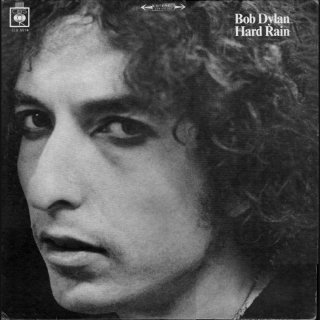
Several Species of Reconstruction: Hard Rain


Memories of a Wet Day - May 23, 1976

Thirty-six years ago, let’s see that would have made me 17 years old - a junior at Thomas Jefferson High School in Denver. I heard on the radio (KFML? KAZY? KBCO?) that something called the Rolling Thunder Review which featured Bob Dylan would be playing at Hughes Stadium in Fort Collins. Weird. Why Fort Collins? Why was Dylan playing with other people? One has to remember that in 1976, there was no internet, no instant access to information; making a long-distance call was a big, expensive deal and the next issue of Rolling Stone might be two months away from your local store. Yes, there was still some mystery and searching left in the world. It made experiences much fuller when you didn’t know what to expect. Somehow my best friend Joel Berk and I talked our parents into letting us go. It was a Sunday, and we had school (not just school, but finals) the next day. Unbelievably, Joel’s parents gave us the use of their Cadillac (Joel’s dad was a doctor) to set out on the adventure of our lives. Part of the selling point to my parents was that the show started at noon, and thus would have to be over by nightfall - so we would be home at a reasonable hour.
The day arrived and we set off at about 8:00 a.m. not knowing how long it would take us to get to Fort Collins. About an hour and a half later we pulled into Fort Collins, which in 1976 was a pretty sleepy, rural college town. It was Boulder’s hayseed cousin. Kinda dumb, kinda bucktoothed, but beautiful and alluring just the same. We drove around aimlessly for a while until we found a sign pointing to Hughes Stadium. Have I mentioned the weather yet? Completely cloudy! But in that very threatening high-altitude, not gray but green way. We sort of knew we were in for something. We got to the stadium at about 10:00 a.m. and were allowed in with very little security and no lines. Hughes Stadium was pretty small and plain compared to Mile High Stadium or Folsom Field. It was now sprinkling a light rain as we headed onto the field, which was already starting to turn muddy. We decided we would go to the sloping grassy area at the back of the field, looking straight at the stage. We hunkered down while it steadily rained… harder and harder. Around 11:00 the sound system burst to life with The Beatles. Some genius took pity on us and put on the Red Album (1962-1966). I can’t adequately describe how wonderful this was. Up until this point there were maybe a thousand or two people in the stadium, wondering what the hell they were doing there, standing in the rain. Now we had a purpose, a reason to live! God bless The Beatles. People started streaming in and in the next hour or so the stadium filled up with 1976-style Colorado hippies. It wasn’t full, but by 12:30 there must have been at least ten thousand people in the rain.
The stage was obscured by a white canvas curtain festooned with Dylan paintings (which we didn’t know at the time, they just seemed like funny, whimsical, childlike drawings). Suddenly, the Beatles stopped and the curtain rose to a group of bandana wearing musicians. I honestly don’t remember the exact order that things happened, but I do clearly remember that for the next 5 or 6 hours there was a (in my memory) non-stop parade of people on stage. I distinctly remember Kinky Friedman’s set early in the afternoon being outrageously funny and naughty, and the band played a weird, loping countrified rock and roll that would lurch with woozy, ragged harmonies. T-Bone Burnett and Bobby Neuwirth were clearly at the helm, but Mick Ronson’s wild lead guitar took center stage weaving in and out of pedal steel by David Mansfield and Rob Stoner’s overwhelming bass playing. Perhaps the most alluring figure was Scarlet Rivera in a colorful headscarf sawing out these totally memorable violin lines. The band ran through lots of songs with someone different taking lead vocal each time. Ramblin’ Jack Elliot made an appearance and I remember Allen Ginsberg addressing the crowd at some point, but my memory comes into far clearer focus when Dylan finally strolled on stage with a white Arab headscarf on.
The rain hadn’t stopped - not for one second - and the crowd looked like drowned rats. Dylan had an acoustic guitar on and he played a perfect, solo version of “Mr. Tambourine Man.” Honestly, I could have gone home right then. It was exactly what I wanted from Dylan. I had seen him with The Band in ’74 and it was great, but it was oddly unemotional. I found it hard to connect to the songs. Maybe it was just me, but this, this was IT: Dylan, alone onstage in the rain, playing one of his greatest songs to a bunch of drowned rats. He followed with another solo acoustic performance, “It Ain’t Me Babe,” again letter perfect. Then, responding to someone in the crowd he said “What rain? Fuck the rain” as the rest of the band joined him onstage for a song I didn’t know about “one of our heroes.” The song was “(Where Did) Vincent Van Gogh.” The band was playing that drunken country punk again, except this time they were backing Dylan on an outrageous, wailing version of “Maggie’s Farm.” It kept going, building in intensity as the rain poured and the afternoon wore on. The set reached an amazing highlight when Dylan delivered a devastating, almost proto-metal version of his mysterious love song “Isis.” The band leaves the stage, and out walks Joan Baez, who completely blows everyone’s mind by joining Dylan for a near-perfect rendition of “Blowin’ in The Wind.” Is this real? Is that Bob and Joan onstage together after all these years, cheek to cheek singing “Blowin’” and strumming their acoustic guitars in unison. Yes, and now they are playing the old folk song “Railroad Boy.” The band is back with them and they are just ripping through songs I barely recognize. Some of the old stuff was done with acoustic reverence, but the electric stuff is crackling with energy and totally rearranged. “Shelter From The Storm” has become a total barnstormer, and “Oh Sister” hits like a sledgehammer. Dylan departs the stage.
It is probably about 2 or 3 in the afternoon and the clouds are going nowhere - it is still raining like hell. There is a short break, and the music starts up again. The band is playing more songs I don’t know, and for a while they back Joan for a short set that really got the crowd going. I think she played “The Night They Drove Old Dixie Down” and, surprisingly, her bittersweet love song to Dylan “Diamonds and Rust.” The curtain comes down and there is another short break. The curtain rises again and Dylan is again alone on stage. He plays “I Want You” and it stands in my memory as one of my favorite songs of the day. More wildly imagined band arrangements follow; “Tangled Up In Blue,” “You’re A Big Girl Now,” “You’re Gonna Make Me Lonesome When You Go” is made a high-spirited country duet with Joan. Somewhere in there, Roger McGuinn takes center stage and provides another highlight of the day, playing his menacing “Cardiff Rose” and miraculously making the rain stop for a couple of minutes during his Byrds classic “Chestnut Mare.” Dylan returns and the light is getting dim. Night approaches and the audience is soaked and exhausted. The band cranks into what is to be the final stretch of the show. “Lay Lady Lay” is completely reformed into a screaming rocker. It was always one of my least favorite Dylan songs, but this arrangement made it more interesting to me. As the temperature drops, Joel and I decide to get up close to the stage for the finale of the show. The band plays a completely ominous obscurity from Planet Waves, “Going Going Gone” and then lurches into “Idiot Wind” which is delivered with such force and venom towards his soon to be ex-wife Sara (who it turns out was backstage with his mother and kids to surprise him for his birthday) that it was downright scary. Dylan is ferocious - he seems like a man possessed as he screams out the lyrics. As the show climaxes Dylan leads the band through “Knockin’ On Heaven’s Door” letting McGuinn take a verse. The band leaves the stage and the curtain falls once again. It rises on the obvious encore “A Hard-Rain’s-A-Gonna-Fall” which had the audience singing along in miserable solidarity. And then, it was over. We were left in the stadium klieg lights with our breath forming clouds in the air. We looked at each other and realized we had hardly spoken for the last 5 hours. We had been baptized by rock and roll - in a very real sense.
My throat hurt and the drive back seemed like it took forever. I was numb for the next few days. I got a C on a really important final. We really didn’t know what to make of our experience. In a very real way, this was my Woodstock, or whatever thing it is that acts as the turning point in your life. I knew after that experience that I could hang with the big boys in the concert world. If you made it through this show, you could make it through anything. This concert has never left me. The fact that Dylan released part of it as the live document of the tour (the album and TV special Hard Rain) kept it in front of me. I later sought out recordings of every show I could find of The Rolling Thunder Review, and it has become something of an obsession. The show still stands as my favorite concert experience. The adversity of the rain, the innocence of my expectations, and the gigantic reality of the show itself truly make it the stuff of legend. It was not a typical Dylan show for the time though. The songs, the arrangements, the weird, druggy energy made this such an anomaly at that point of Dylan’s career. I thought it was magic, but I often wonder how someone who wasn’t there would have heard it.
_______________

I’ve listened to Hard Rain more than any other Bob Dylan record – by far. In fact, I’ve listened to it more than almost any other record, period. I’ll even go so far as to say it’s my all-time favorite live album, above even the Stones’ Get Yer Ya-Ya’s Out! and the Dead’s Europe ’72. It’s that good, and it rocks my soul every time.
            I should probably qualify my statements. I love Dylan, but I’m not a fanatic, at least not yet. I have nine of his records in my collection, more than I have by most other artists. But considering that he’s released 70 or so, and that there are hundreds, maybe even thousands of bootlegs on top of that, my Dylan cache is hardly definitive. Most of my nine albums are iconic works from the 60s – The Times They Are a’Changin, The Freewheelin’ Bob Dylan, Blonde on Blonde, John Wesley Harding. I’m trepidatious about exploring his later works because there are so many and they’re so wide ranging. Choosing one feels a little too much like gambling; I’m still such a Dylan neophyte that when I buy a Dylan record I want it to sound like DYLAN, the paragon of the 60s. So it’s kind of funny that the Dylan record I most love is one that shatters the Dylan mold, and one that was panned by critics.
Hard Rain is a real scorcher of a rock record. It’s not hard rock per se, though the guitars are loud and grungy and the drums are fast furious at times. It’s got a raw, lost-in-the-70s rock-and-roll feel to it that demands high-volume listening. It’s full of emotion and energy, most of which emanates from Dylan’s voice: he really belts it out. Quieter standards like “Lay Lady Lay,” “One Too Many Mornings” and “I Threw It All Away” become anguished cries, while more up-tempo numbers like “Maggie’s Farm” and “Stuck Inside of Mobile with the Memphis Blues Again” are played at near-punk speeds, with Dylan bellowing every line at full blast. It’s like he’s pissed off, but not so pissed that he can’t find the beauty of the melody and the nuance of sentiment in the words. Likewise, his band seems to be playing with reckless abandon, like garage buddies who are deep into their second case of beer. But here too everyone’s hitting all the notes they need to hit in order to not only maintain the songs’ integrity but to squeeze from them a deeper meaning than can be found in their original versions. And there are moments on the record when the band’s ruckus and Dylan’s blaring vocals reach such heights that they have no option but to collapse in on one another, fall to silence, and pick up the song again. Like in “You’re a Big Girl Now,” when he wails, “I'm going out of my mind, with a pain that stops and starts, like a corkscrew to my heart!” and pauses for a long moment before muttering, “Ever since we've been apart.” And “Oh Sister,” when his voice escalates through, “We grew up together, from the cradle to the grave,” until he’s practically screaming when he sings, “We died and were reborn, and then mysteriously saved!” And the band stops, a guitar breaks the silence, the drums and bass join in, and Dylan begins again with his heartbreaking poetry: “Oh sister when I come to knock on your door, don't turn away you'll create sorrow. Time is an ocean but it ends at the shore. You may not see me tomorrow.”
Hard Rain is full of solar-plexus-socking moments like that, and it begs to be heard and felt again and again. True, it doesn’t fit the archetype that critics and connoisseurs have conjured around Dylan. But damn, it’s kick ass rock and roll.

- Paul Epstein / Joe Miller

Monday, October 18, 2010

Bob Dylan- Bootleg Series Volume 9 – The Witmark Demos 1962-1964

Ok, the question at this point has to be: how did this happen? How did this guy come to be? It seems inconceivable that a man in his early 20’s, from an unsophisticated background in a modest Midwest town would turn out to be the genius of the age. Dylan’s place in American history is assured, although it is still evolving. With each new album, book, radio show or movie he bends the light around his image becoming more tantalizing, more smoke-like. This set of demos (songs recorded in a minimal fashion to secure the copyright and use as a calling card to other, more famous, singers) recorded between 1962 and 1964 do indeed show this young man to be a genius. It is just hard to fathom the creative arc this skinny kid embarked upon in the first six years of his career. He goes from a topical folk singer - on a par with his hero Woody Guthrie - to a once-in-a-generation poet using the most elevated language and demonstrating a real understanding of poetic convention and the turn of history in just the two years illustrated on this box (2 CDs or 4 LPs). Early on we are struck by the seemingly wizened experience of the words to songs like “Poor Boy Blues,” “Rambling, Gambling Willie” or “Man On The Street.” Then like some bolt from the blue, “Blowin’In The Wind” and “A Hard Rain’s A-Gonna Fall” signal a seismic shift in his songwriting, and he is off to the races. His reputation and career could have stopped right there. Ponder that for a moment. The majority of his storied career could have never happened and his place in history was still assured. That’s how good those songs are. But, as we know, and as this set amply illustrates, this was just the starting gun for Bob Dylan. His winning streak has been so long and so varied and so exhilarating, that going back to the beginning and re-examining those first sparks is instructional.

In addition to the miracle that is the songwriting, one has to marvel at Dylan’s abilities as an instrumentalist and his already developed performance sensibilities. He is self-assured and funny pulling off even the trickiest emotions and tongue twisting phrases like a seasoned pro. One has to imagine that this kid was so smart and paying such close attention to the culture evolving in front of him that he somehow became the tip of the spear. When you see a flock of Geese winging south, somehow that one at the very front of the flock ended up there through some combination of circumstances and genetic predisposition. That’s Dylan. He is so far ahead of the pack you can’t help but just shake your head in wonder. Over the course of the 46 songs on this set, Dylan exceeds expectations again and again, moving from the stately “Tomorrow Is A Long Time” to the mature “Boots Of Spanish Leather” and “Don’t Think Twice, It’s Alright." There are humorous side-trips through “Talkin’ John Birch Society Blues” and “I Shall Be Free,” but by the time we arrive at “Mr Tambourine Man” and the incomparable “I’ll Keep It With Mine” all one can do is sit back in awe.

Everything on this set is unreleased. These are different versions than you are used to, conveying the solitary achievement of this one person. Listening to the entire box reinforces the fact that it wasn’t the producers, or the backing musicians, or the other three Beatles - it was Bob. Loaded with gorgeous unreleased photos and a fascinating narrative by journalist Colin Escott that explains, among other things, how Dylan single-handedly destroyed Tin Pan Alley, this might be the most important of Dylan’s Bootleg Series because it so clearly shows the germination of a singular talent that shook the world.