Monday, June 28, 2010

I'd Love to Turn You On #12: Milton Nascimento – Clube De Esquina 1972

Ah, the sacred double album! Blonde on Blonde, Exile on Main Street, Electric Ladyland, The Beatles. All timeless treasures that showed the world that pop music was more than mere entertainment, but actually art. All indelible gems that allowed their authors a chance to stretch out and have since become recognized as a creative high watermark in their careers. And so it is with Clube De Esquina, Milton Nascimento's 1972 double album, an epic that in my mind stands alongside those other masterpieces in the pantheon of “greatest albums”.

Clube De Esquina is a classic of MPB (translated, literally "Brazilian Popular Music”). Musically, we talking about an unmistakable Brazilian feel with heavy use of percussion, and a dizzying array of production styles with touches of orchestral, experimental, folk and progressive sounds. There are shades of Van Morrison, Villa-Lobos, Weather Report, The Beach Boys, Antonio Carlos Jobim and Pink Floyd. Clube is chock full of haunting vocals and harmonies, transcendent melodies, sometimes sparse sometimes layered production, inventive ensemble playing and delicious strings and brass. All this in a warm, delightful batch of songs that are simply overflowing with creativity. It has been said a few times that Clube De Esquina is the Brazilian Sgt. Pepper and while not quite accurate, the comparison serves to illustrate just how great Clube is.

Although Milton is the mastermind and main voice here, it is actually a collective piece by the titular Clube, AKA the Corner club. By bringing in this gang of friends and like-minded musicians to write, sing and play on the album, Milton captured a spirit of community and joy that is as uplifting for the listener as it must have been for the participants. The auxiliary voices and writers help bring the album into another dimension, which is why this album stands just slightly above the other great Milton albums of the 1970s. The main collaborator in the Clube is Lo Borges who brings a strong Brian Wilson/Paul McCartney influence, which is a superb contrast for Milton's more spiritual folk leanings. Also present are Eumir Deodato and Wagner Tiso who pepper the songs with arrangements that bring to mind George Martin, Claus Ogerman and Claude Debussy.


The highlights on Clube are the handful of Milton's ballads. “Cais,” “San Vicente,” “Dos Cruces” and “Os Povos” are simply heavenly songs that show that Milton had the ability to transcend like only the best singers can. The sublime “Clube da Esquina nÂș 2” is another great one with gorgeous strings and exploratory vocalese, sounding like a proto-chill-out classic that wouldn't be out of place on Air's Moon Safari. “Pelo Amor de Deus” on the other hand is a psychedelic tour de force full of electronic effects and fuzz guitar. Brazilian music fans will probably be familiar with the standard “Nada Sera Como Antes”.

This album has been loved by everyone I have played it for. It sits like a sore thumb in the CD collection of all of my family and closest friends. It has a universal appeal and warmth to it that almost everyone seems to respond to. I honestly believe that anyone who responds to melody and harmony will love this. -- Ben Sumner

Friday, June 25, 2010

Widespread Panic at Twist & Shout 6/24/2010

OK, so I am often fairly over-the-moon after a good instore. And everyone knows Twist & Shout has had a long and loving relationship with the boys from Athens, Ga. And we also know that this great American band has been very kind to our store, our state and our venue (Red Rocks). In fact this was the third time they have come to Twist & Shout and generously shared their time with us. But over-the-moon does not begin to describe the emotions I am feeling tonight. Widespread Panic came to Twist & Shout Thursday night and gave all of us a rare and amazing experience. We were told to expect a low-key three or four song acoustic set. Instead we got a 45-minute balls-out, full-on, seven song electric set. Damn, if this wasn’t the loudest, most intense, most fulfilling live music we have ever hosted. They just killed it. What did they play? Here’s the abbreviated setlist I got off a message board as it was happening – hilarious

Honestly, the whole experience was like a dream. It really was. They came in with a big sound system and it didn’t feel or sound like an instore - it felt like a real show. There was incredible energy in the room and the band was obviously feeding off of it. Everyone in the audience had huge grins on their faces and the band looked genuinely stoked about the whole thing. The music just poured off the stage in waves. Jimmy Herring is a perfect guitar player for the band and his increasing confidence with them is a marvel to behold.

Then they sat there and signed every single person’s copy of Dirty Side Down and the special poster we made for the event. They were total sweethearts to everyone. We sold a stupid amount of their new album and best of all it was about 50% more vinyl than CD. Sweet!

Special thanks go out to Red distribution, ATO records, Terry Mcgibbons, Doug Wiley and the amazing WSP family and management: Lopez, Buck, Eric, Gary and everyone with the Panic crew... what pros! You guys are truly the best at what you do. And Schools, JB, Todd, Sunny, JoJo, Jimmy... wow - there aren’t words to explain my humble gratitude to you guys for doing this, but even more for being such a righteous band. This was truly a high-water mark for Twist & Shout and me personally.  -- Paul Epstein


Now THAT is what I’m talkin’ about!!

Explaining one’s love of The Grateful Dead is a complicated thing. Most folks who are unacquainted with the Dead are hopelessly misdirected by members of the music press, who have traditionally used the band and its fans as target practice, and the latter-day fans themselves who have not done the band’s reputation any favors. Contrary to this inaccurate reputation, The Grateful Dead (especially in the early days) were unlike any other band in that they encompassed almost every form of popular music, made it their own, and took it a step further by creating their own unique brand of music and performance style, and they did so with a high degree of musical proficiency as well as a fairly lofty attitude toward the art they were creating. They then sustained their organization for nearly thirty years with the same core group - an amazing feat in and of itself. In my judgment things changed pretty dramatically somewhere in the mid to late 70’s when their experimental, almost avant-garde aspirations slowly morphed into a highly competent and fun “rock show.” Great fun, but the sense that the creative lives of the band hung in the balance every night was replaced by a more tried and true form of show-biz. They went from being experimental to being reliable - which was understandable, even admirable, but to my ears far less exciting. I had many of the best times of my life at Dead shows in those latter years, but now, when I want to dig the Dead, I go old.

Thus I was thrilled to see one of my favorite shows and earliest collecting gems being officially released in its entirety in unbelievable sound quality. Road Trips Volume 3 Number 3 actually comprises two shows played on the same night on May 15, 1970. Each show had an acoustic set, a set by the New Riders Of The Purple Sage (featuring members of the Dead but not included here) and then an electric set. These two shows beautifully illustrate what I was referencing above about the band encompassing many forms of music. Here is why it is hard to explain the Dead to others - they are an acoustic band, able to coax unbelievably delicate and sweet performances with the power of their harmonies and a handful of great songs; they are a rock band playing party faves like “Casey Jones”; they are a roots band with an authentic dog-suckin’ drunken blues singer, and a banjo playing bluegrass freak as two of their members; they are an experimental art-rock band making some of the darkest, weirdest, and most exhilarating improvised music ever performed and hardest to explain; they are a cultural phenomenon that, to many, was a neat representation of the excitement and turmoil of the 1960’s. Wow - that is a lot to hang on one band. This is the rap on the band, and when a lot of newcomers listen to a show from 1987, they don’t hear it. I would direct newcomers to this new Road Trips for a good example of all the sides of The Grateful Dead. Containing two full acoustic sets and two long electric sets the first disc finds the band playing rare and new (at the time) songs like “Long Black Limousine,” “Ain’t it Crazy” and a stellar early version of “New Speedway Boogie.” The first electric set was one of my earliest tape acquisitions and has always been a favorite. The triple threat of “St. Stephen,” “The Other One” and the rarely played (and even more rarely played correctly) “Cosmic Charlie” is fiery, energetic and full of high energy jamming. “The Other One” in particular is thundering and intense. The encore of the early show is one of my favorite Bob Weir performances ever; a completely over-the-top, scream-fest of “New Minglewood Blues.” You’ve never heard a version like this one. The second acoustic set is highlighted by another bunch of rare and new acoustic performances. “The Ballad Of Casey Jones,” “Silver Threads and Golden Needles,” Pigpen’s “She’s Mine” and “Katie Mae” are all little heard treats and the performances of “Friend Of The Devil” and “Uncle John’s Band” just sparkle. The final electric set is a monster as well with a deep and mysterious “Dark Star” and a nearly 30 minute “Lovelight” that really showcases Pigpen’s singular talents and the band’s uncanny ability to follow him into any lascivious alley he ambled down. After years (nearly 40) of listening obsessively to The Grateful Dead I have changed my opinions about them, and become alternately more critical and forgiving. Mostly I have figured out what still gets me off about them - and this four–disc set (includes a killer bonus disc with the remainders of this show - a heartbreaking “Attics Of My Life” - and a big piece of the previous night’s show) is a pristine example of the Dead in the heart of their greatest period.

So, I know the amount of Grateful Dead stuff out there seems overwhelming. As long as I’m warmed up I think I will recommend another five of the best vault releases:

Carousel Ballroom 2-14-68 (Road Trips Vol.2 No. 2)
Completely essential early radio broadcast. This Valentine’s Day show captures the band revved up and positively tearing through their early repertoire with abandon. The second half features a rip-roaring trip through “The Other One,” “New Potato Caboose,” “Born Cross Eyed,” “Alligator” and “Caution” landing in a heap of squealing feedback that is as scary as it is beautiful.

Englishtown, N.J. 9-3-77 (Dick’s Picks Volume 15)
One of the best post-75 shows it contains definitive versions of “Mississippi Half-Step,” “Loser,” “The Music Never Stopped,” “Not Fade Away” and an “Eyes of The World” that defies description. Jerry plays solos on “Eyes” that sound like a cross between Wes Montgomery, Django Reinhardt and well… Jerry. Absolutely unforgettable!

Syracuse, N.Y. 9-28-76 (with 9-25-76 it makes up Dick’s Picks Volume 20)
1976 was a pivotal year in many ways for the band. They were reinventing themselves with new songs and a new style of playing that was much more rehearsed and jazzy but still loose and filled with surprises. A seamless second set finds them moving effortlessly from Space (“Playin’ In The Band”) to Gospel (“Samson and Delilah”) to the best of Jerry’s ballads (“Comes a Time”) to free form exploration (“Orange Tango Jam”) to disco (“Dancin’ In The Streets”) and back again. They travel universes in the span of an hour.

Fillmore East 2-13 and 14-1970 (Dick’s Picks Volume 4)
If push came to shove and I had to take just one Grateful Dead release with me into outer space this would be it. It’s got the finest example of spine-chilling Grateful Dead improv I can think of. The hour and a half that make up “Dark Star,” “The Other One” and “Lovelight” is as good as it gets. They do the seemingly impossible when they go out as far as you can go and still seem to be completely in control. The “Dark Star” moves through passages of incredible beauty, joy, terror and just plain weirdness that never fail to leave me breathless. It is probably my single favorite passage of Grateful Dead music.

Binghamton, N.Y. May 2, 1970 (Dick’s Picks Volume 8)
This is the spiritual cousin to the 5-15-70 show reviewed above. Again it features both acoustic and electric sets, but it has a rough and ready quality that makes it unlike anything else. If I was forced to guess I would say the mystery element is LSD. The band sound high as kites and they, and the audience, are having the time of their lives. They are cracking jokes and bantering throughout the interesting and spirited first set (which includes some extremely unique arrangements of songs), and then they are clearly still in a great mood as they take the stage for a second half for the ages. The versions of “St. Stephen,” “The Other One” and “Good Lovin’” are orgies of outta control guitar playing, and in the final portion of the show they bust out elongated versions of “It’s A Man’s Man’s World,” “Dancin’ In The Streets” and finally “Viola Lee Blues” that are nothing short of cosmic. It is rumored that the band hung out at the dorms of Harpur College before and after this show hanging out with students, and that makes sense because, more than anything, this sounds like one big par-tay.

--Paul
Saturday, June 19, 2010

Laurie Anderson - Homeland

I'm not fully there with it yet, but here's why this one's different than the last few - unlike everything released since Strange Angels, this one's not so much about Laurie Anderson, but is about the world she lives in. She's engaging a bigger and more vital picture of the United States like nothing since her early days on record - something that might have been as perfectly timed as her humor if it had been released as originally announced when Bush Jr. was still in office. But still - she's actively making an effort to speak not just to her cult of fans (like me) but to everyone and I'd say she mostly succeeds.

If you've listened to anything she's been doing lately you'll recognize the shimmering, quiet keyboard backgrounds that have been a big part of her music since The Ugly One With the Jewels and Other Stories, but in addition to making an effort to talk about things outside her comfort zone, she's making music outside of it too - the backgrounds are there yes, but they're not all that's there. If this were as pop-friendly as Strange Angels, she might even make the crossover move this seems like it could be with just a few more hooks, but it's still an effort to reach out while still keeping touch with her core audience - those who want arty recitative over arty music. I don't have the credits in my promo, but I know Lou Reed, John Zorn, and Antony are there in the mix and they all help make this album diverse, interesting, engaging and, yeah, arty too. She's got nothing as aggressive or dancy as "Only An Expert" anywhere in her entire recorded catalog, and she has very little as ambitious - and also very little as good - as the quiet recitative of the eleven and a half minutes of "Another Day in America" either. It's a good one for sure, her best in a long time, but I'm still not 100% sure that it's great. But if like me you've been waiting a long time for a new, good Laurie album, you're definitely gonna like it.

Friday, June 18, 2010

Wovenhand - The Threshingfloor

Denver resident David Eugene Edwards has traveled many worlds since he first started out. Moving from punk to gothic Americana to a dense indie-rock sound he has now landed in a rare and wonderful place indeed. The Threshingfloor takes his previous flirtations with music of other cultures to new levels. The music of his band Wovenhand is unstuck in both time and place, floating through cultures and instruments; now sounding like an executioners dirge (“The Threshingfloor”) now a medieval monk’s morning prayer (“A Holy Measure”). But this is no novelty. There is purpose and cohesion to Edward’s work. He has clearly taken his role as a musical world citizen seriously, as he embraces the music of many cultures with authoritative ease. At the same time he has continued to hone his authenticity as a spokesperson for a lost, somewhat scary America, where the shadows hide secrets. Edwards’ preoccupation with Christian imagery and his own internal struggle with its precepts remains one of the central themes of his writing. Mixed with a maturing appreciation of the natural world, there is an almost Whitmanesque quality in much of his current writing. Songs like “Singing Grass” showcase his poetic sensitivity and growing talents as a songwriter of rare gifts.

The second half of this magnificent album has a more modern feel with a contemporary drum sound and a bit more electric guitar. It is worth mentioning that although Edwards has become a master of many instruments and has adopted the sounds of many cultures into his music, his talents in the rock idiom are formidable as he amply displays on “Behind Your Breath,” the beat-heavy “Truth” or in the almost Velvet Undergound-y album closer “Denver City.” This is indeed a satisfying album for those who have followed David Eugene Edwards on his artistic journey. Over the last 20 or so years he has made a series of increasingly ambitious and artistically satisfying albums that prove him to be one of Denver’s very best exports. It is a sad irony indeed that he is far better known in Europe than in his own home-town. -- Paul

A Cup of Sugar for June

Welcome to "A Cup Of Sugar". We're borrowing a few reviews from our neighbors at Tattered Cover to make something that we hope everyone will like. So dig in to the treats they've helped us make here; they've come up with some delicious reviews.


Lean on Pete, by Willy Vlautin, $13.99 paperback, HarperCollins
In Willy Vlautin's latest novel, he takes us into the forgotten Northwest: the deserts of Oregon and Washington and into the heart of another run-down life. This time it's 15-year Charley Thompson. His home life isn't much to speak of, and his work life isn't much either. While working at a run-down racetrack on the outskirts of Portland, Charley befriends Pete, a workhorse being run to death. When Charley's life becomes desperate, he makes a last ditch effort to save both himself and Pete. Vlautin's writing is perfect: spare, heartbroken and honest. How Vlautin manages to find the most down-trodden characters in the forgotten parts of America and provide them (and luckily us) with just enough hope to keep on going is what makes me want to read more by him. This book takes a detour to Denver, which was quite a fun bit, as Charley spends quite a few sad nights on Colfax... at Pete's, at the Lion's Lair, at the Bluebird... --recommended by Joe


The Passage, by Justin Cronin, $27.00, hardcover, Random House
This book is a modern day Frankenstein tale -- literary science fiction on an epic scale.
You may have heard that it is a vampire book, which is only vaguely true. This is more
of an outbreak book, that involves a virus that can mutate people into a sort of vampire
like creature, most often called "Virals" or "Smokes." It began as a very convert
government project using death row prisoners, high up in the Colorado mountains. Except the monsters they created were far, far smarter than their inventors could ever have dreamed of. While the Virals are the constant threat, the real story lies in how the
humans try to adapt to a rapidly changing world where they are an isolated minority and
prey to the creations of "science." This book is reminiscent of Stephen King's The
Stand in its scope, diversity of slowly intertwining story lines, and bold look at
humans in crisis, as well as an overlying mystical quality to it that waxes and wanes
throughout the hundreds of pages of the book. This tale grips you hard and won't let you go. I was literally exhausted when I finished reading it because I lived every moment with those people--Cronin's story telling ability is mesmerizing. -- recommended by Jackie

Day for Night, by Frederick Reiken, $24.99, hardcover, Little, Brown
This is an intelligent, skillfully written, sometimes complex and challenging novel that invites the reader into an awareness of the myriad ways we are connected. In ways we know of but don't full understand; in ways we may only be dimly aware of. It's about
families, past and present, and families to come. There is heart in this novel, as well as questions to ponder. "We are complicit in all we see and comprehend that what we see will never coincide with absolute reality." It's a book I might read twice, just to enjoy the masterful ways he weaves the stories together, as well as to wonder along with him about the narratives that make up our lives. -- recommended by Linda

Thursday, June 17, 2010

Phish In Chicago

Just to put this review in perspective, I’ve only seen Phish once, and that was a free show at the Glenn Miller Ballroom in 1990. It was a snowy night and I doubt there were more than a hundred people there. I was into drums at the time, so I spent the whole show standing right by the drummer, watching him work. He was wearing a super hero costume complete with cape and goggles. He kept smiling and nodding at me. I’ll always remember it as one of my life’s supercool rock and roll moments, even though I honestly didn’t care too much for the band. I thought they were kind of goofy, and not exceptionally skilled or talented.

Flash forward 20 years. I’m up against the stage again, looking up at Jon Fishman’s drum kit, but now it’s a soccer stadium in Chicago filled with more than 20,000 Phish freaks for the start of a summer tour. The band takes the stage and whips up a few seconds of cosmic feedback before busting into “Down With Disease,” then “Wolfman’s Brother,” and then “Possum” — all great dance songs, all delivered with a mastery possessed by only the rarest of rock gods. I’ve listened to a lot of their recordings, live and studio, in the weeks and months leading up to the show, so I know they’ve improved considerably. But live I can really see why they’ve amassed such a loyal following, especially during “Possum,” the way they build and build a peak of sonic tension until the crowd’s about to explode, so when they finally break into the main riff whole place just goes crazy, everybody dancing, balloons, beach balls and glow sticks flying everywhere. It’s like they’ve developed a sixth sense of where the energy is in their audience and they can plug right into it and zap it up into a frenzy or mellow it out into a state of bliss, like they do later in the first set with the more ethereal passages in “Reba” and “Divided Sky.”

Speaking of the crowd, the main reason why I steered clear of Phish for so long was to avoid the whole psychedelic vagabond scene, which seemed to get more and more obnoxious throughout the 1990s. I’m happy to report, though, that this crowd at Toyota Park is pleasant to be around, convivial and neighborly, kind of like how I remember the Grateful Dead scene in the mid-80s, right before it got really crazy.

However, about midway through “Boogie On Reggae Woman,” I have a tense little run-in with Snow White. She squeezes in beside me in her blue dress and pig tails and grabs hold of the rail, saying to me, "I'm Snow White," as if this gives her some kind of privilege. Then she proceeds to wave the sign of the horns at the band. She's blitzed out of her gourd. I watch her out of the corner of my eye, kind of irked, kind of amused. But before I realize it, she's got both hands on the rail and I'm totally squeezed out of my spot against the stage. I think about it for a second and I'm like, Hell, no! I baked for two hours under carcinogenic star to get this space. So I work my elbow around her, like I'm Dennis Rodman or something, and I box her out. The security guard in front of us sees me do it and he gives me an approving nod and says, "Right on man." He's one of those strapping skinhead types, so I feel kind of macho, despite the fact that it's a pathetically drunk fairy tale character I've muscled out. Undaunted, she starts caressing my back. I turn to her and snap, "Don't touch me! I'm married!" And I hold up my hand to show her my ring. She apologizes profusely and she vanishes off into the crowd, leaving me with yet another great rock and roll moment to stash away in my archives.

Great as the first set was, it isn’t until the second set that I really get it. I hate to sound like a space cadet, but I have to confess that the first four songs — “Light,” “Maze,” Ghost,” and “Prince Caspian” — transport me far beyond the suburbs of Chicago. The first three are long improvisational vehicles, and the jam passages have a distinctly visual quality for me, partly because of the mesmerizing light show, but mostly because of way the band takes a pattern of rhythms and melody and gradually distorts it, pulling it into new shapes and spaces. It’s at once hypnotic and invigorating. And then, after about forty minutes of shape shifting and trippy lyrics, to emerge onto an anthemic, majestic sea with Prince Caspian. 40,000 hands waving in the air, not a white eye in the place. Man! Worth the 50 bucks. Worth the 500-mile drive. Worth getting molested by a sloppy-drunk Brothers Grimm character. When do I get to see them again?

I’ve heard a number of longtime Phish fans fret that the band’s best days might be behind them. I wasn’t there for the so-called glory days of the late 90s, so I can’t say for sure. But I get the sense that Phish is a band on the brink of something huge. A rock opera, perhaps, or an epic concept album with a corresponding run on Broadway (or, better yet, at the Uptown Theater in K.C.) and Blu-ray DVD. I might be wrong but I see hints of it in “Time Turns Elastic” (which, unfortunately, they didn’t play in Chicago) and in their tight, masterful control of time and space at a stadium concert on a hot, humid night. Their best, I think, is yet to come.

- Joe Miller

Tuesday, June 15, 2010

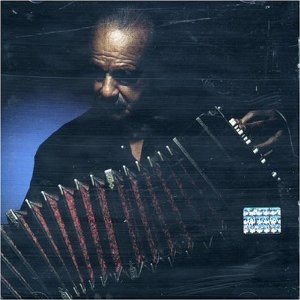
I'd Love to Turn You On #11: Astor Piazzolla - Tango: Zero Hour

Welcome to Twist & Shout’s “I’d Love To Turn You On” a fortnightly column by our deeply knowledgeable staff of hardcore collectors and music lovers who want to spend some time turning you on to some of their favorite releases of yore; titles that may have slipped out of the public favor, or perhaps never quite found the audience they deserve. Dig in to some terrific musical esoterica and enjoy the sounds.

I wouldn't even begin to suggest that I enough enough about tango music - hell, even about Astor Piazzolla's output - to tell anybody how these stand up as a representation of Argentina's most famous musical export, or of the extensive catalog of its premier composer. Nor would I offer up the idea that I could place Piazzolla within the continuum of tango's development - is he a traditionalist? A rebel? An avant-gardist in relation to the music as a whole? All of the above? (This seems to be the correct answer.)

But what I can suggest - hell, I can say with utter confidence - is that this is a great album. Piazzolla himself, who began his performing and recording career in the 1940's before solidifying his own style of tango (known as New Tango) said of this 1986 album: "This is absolutely the greatest record I've made in my entire life. We gave our souls to this record." And you can hear it in every track here. Piazzolla's quintet - violin, piano, guitar, bass and Piazzolla himself masterfully playing the bandoneon (a bulkier cousin to the accordion) - puts across his ideas with tunes and playing that at once evoke not just the soulful Romanticism of the tango, but also the rhythmic flexibility and improvisation of jazz, and the complexity and structure of the classical music that Piazzolla studied, wrote, and performed for decades alongside his native Argentinean tango. It's also a marvelous vehicle for Piazzolla's compositions, which in addition to evoking the melange of music that he was versed in, also manage to draw listeners across every mood imaginable, from the propulsive, moody drive of the opening track and the lighter feel of "Milonga Loca" to the lengthier multi-part suites that whip you back and forth from elation to the soledad (solitude, loneliness) that is tango's hallmark. And know that however masterful Piazzolla's bandoneon playing is, he's equalled by the work of his New Tango Quintet here, especially the violin of Fernando Suarez Paz. New Tango is the soundtrack to a dozen or a hundred relationships, it's the sound of love and life. As they note: Tango + Tragedy + Comedy + Kilombo (Whorehouse) = New Tango. -- Patrick

Monday, June 7, 2010

Several Species of Small Furry Thoughts - Death Surrounds Us.

An interesting couple of weeks for me. I got a call from a woman who wanted me to come to a house and appraise a collection. It was in North Boulder, so I had a somewhat bad attitude about driving up there and looking at it. In addition she seemed kind of confused. She told me she wanted someone to “appraise” the collection as opposed to buying it. So I went up there and found an extremely unassuming house on a quiet side-street. When I went in, the woman took me to the basement where there was a HUGE DVD, record and CD collection. Everything was incredibly organized, and showed a meticulous sense of order and completeness. I started looking. I made a few offhand comments like; “wow this guy was sure organized,” or “jeez, he sure did buy a lot of teevee shows.” For the most part she was tight-lipped and didn’t respond. Finally I said, “was this your son’s collection?” taking a stab. “No” she replied, she was working for a realtor readying the house for sale. I continued looking. After perusing carefully for about a half hour I said; “this guy really loved his childhood.” She looked at me and then started to open up a little bit. It turns out the collection I was looking at was owned by a man who a couple of weeks earlier had killed the owners of the business he worked at, and then turned the gun on himself. He was pissed about his pay situation. Obviously this information changed my attitude and I became more interested and less business-like. As the details emerged, I discovered the man was just a year younger than me, well educated, and highly skilled in computers and engineering.

I told her I was not that interested in appraising the collection as much as making an offer to buy it. She said that was fine so I made arrangements to take the collection to the store and make an offer. Before I left I asked her if I could look around the house a little. She said that was fine. It was very sparse except for his collections. He had cheap, crappy furniture that looked like it never got used very much. Same with the kitchen and bathrooms - a classic loner. He slept on his couch (eschewing the four brand new beds in his bedrooms), and watched movies. Seemingly, that was the entirety of his life. I looked in a bedroom that functioned as his library. When I looked closely at the book titles, my heart sank a bit deeper. He had complete collections of Hardy Boys, Tom Swift and Nancy Drew books. His name was in them - the way we used to do when we bought new books - we would sign and date them. He did this, and it was clear this was his collection of books from his childhood. His interests were similar to mine - science fiction, boys adventure, super heroes etc. My mood was darkening by the second. This guy was a perfect example of something I have talked about for years. I believe many of us collectors are deeply involved in carefully curating the “Museum Of Me.” In other words, we are trying to accumulate and/or display all the cultural artifacts that gave our life meaning and happiness. Not everyone collects this way. Some people collect only stuff that is new and novel, or things that fit into their aesthetic sensibilities. For instance, “I’m into modern jazz,” or “I collect music from all the cultures of the world.” Some however want to create a shrine to their own life experience. I confess this is part of my own motivation for collecting. My proudest possession is the Groucho Marx 78 (“The Funniest Song In The World”) that my Mother and I sang along to when I was young. If I had to keep just one thing - it would be that 78.

It is hard to explain all the complex feelings I have surrounding this experience, but the overall mood was blue. I’ve felt sad and alone for the last couple of weeks as I pondered this man’s lonely existence and the implications it holds for all of us who collect. Here’s what I’ve come up with; do you remember the trial where the kids attempted suicide after listening to Judas Priest backwards and then tried to say it was the band’s fault for influencing them? At the time I found this to be outrageous. I believe then and now that art is really neutral, and we bring our own issues to it, not vice-versa. This is an oversimplification but I do believe that bad things happen because of the evil inherent in men’s hearts, not because of the art they are exposed to. Same with this guy in Boulder: his collection represented something good and comforting in his life, it wasn’t a symptom of his illness. I refuse to believe that holding dearly to his Hardy Boys books or DVDs of early Lassie shows made this man a murderer. In fact I think it probably kept him from acting on his impulses for a long time. It was when he could no longer hide with Shirley Temple or The Swiss Family Robinson or The Monkees that the pain of the world became too much to bare.

As I have done with many collections that touch my heart, I took a Tom Swift book home with me. His name was written in it with the date. I know the boy who wrote his name in that book was happier than the man who left it behind to commit murder. I’m trying to focus on the boy.

At the same time, more stuff happens that makes me ponder death. Gary Coleman died the same day I first went to look at the collection. I was not a big fan, or even a casual fan. I never saw his show, and didn’t really follow his post “Diff’rent Strokes” life, but all the media coverage of his sad death made me ponder the woeful fate of this man/child. The thing that gets to me is that he seems to have spent his entire adult life as a laughing stock. He brought people great happiness as an adorable child, and when he was no longer “as” cute, he wasn’t tossed aside or ignored - he was kept around as public totem of humiliation and a wasted life. The day I went to pick up the collection, another confusing public figure, Dennis Hopper, died. Unlike Gary Coleman I loved Dennis Hopper. I was totally turned on by Easy Rider and followed his career ups and downs with great interest. I always thought Hopper was a great symbol of the 60’s. He was brash and arrogant in his youth - a perfect anti-hero, and then he was pitiful and wasted in his middle age, and then he made a remarkable comeback, turning his youthful foolishness into a kind of shy humility that endeared him to a whole new generation of movie-goers, and offered a great story of redemption to baby-boomers.

I can’t pretend that there is a clear link between these events, there isn’t. I can claim that the confluence of these deaths has made me think hard about art and its confusing role in making us happy or sad, and how it reflects our life for good or ill. It ushers in the highest of highs and the lowest of lows and that is why it is the most important accomplishment to come from our species.

Friday, June 4, 2010

I'd Love to Turn You On #10: Bjork - Post

Welcome to Twist & Shout’s “I’d Love To Turn You On” a fortnightly column by our deeply knowledgeable staff of hardcore collectors and music lovers who want to spend some time turning you on to some of their favorite releases of yore; titles that may have slipped out of the public favor, or perhaps never quite found the audience they deserve. Dig in to some terrific musical esoterica and enjoy the sounds.


Few artists within the last 20 years have been able to change the landscape of the pop genre as dramatically as Bjork. Throughout the 90's and 2000's Bjork's simplistically deep lyrics, her raw vocals and the artistic willingness to experiment with a plethora of musical styles have made her one of the most unique and memorable musical artists around.

Post is arguably the most important album in this Icelandic diva's discography. The album before Post, Debut, was centered on making a new beginning as she moved to England. Post focused more on the adventure after establishing one’s self, and the infinite possibility that she faced as an artist and a woman in a new land. The album is full of lyrics of possibility and the unknown future, illustrated in songs like “Possibly Maybe,” or “Enjoy,” a song about falling in love with someone who she had never met nor seen before.

Post collects influences from many genres and includes artists/producers Nellee Hooper, Graham Massey, Tricky, Howie B, and Marius de Vries. The musical styles range from electronic tribal rhythms mixed with various horns to Big Band, Industrial, Trip Hop and epic soundtrack-esque pieces, all peppered in appropriately to illustrate the scattered emotions of her life at the time.

The album did more than well when released on June 13th, 1995 (15 years ago this month!). Rolling Stone gave the album four stars and stated, "when Post comes to an end, it feels like getting back from a good vacation: the last thing you want to do is re-enter the real world." The album went on to go platinum in five different countries and also spawned a remix album, Telegram, the following year.

Most of the album is stitched carefully together with smooth and unique production that seems to hold in an almost overwhelming, maddening happiness that threatens to burst free from the seams, and it does in tracks like "It's Oh So Quiet" and "Possibly Maybe" where the vocally raw and wild Bjork sets free all of her emotions and happiness at an unwritten future. The depth in Post is vast and the variety of styles draws a clear picture of Bjork's personality at the time and her struggles with music and relationships. "Hyperballad," while inspired by a dream, illustrates the need to destroy things in order to be happy about what one may have. This track is a great example of her uncertainty and perhaps misgivings in relationships. In "Cover Me" she sings "While I crawl into the unknown, cover me...I'm going to prove the impossible really exists." This track was written as a thank you to Nellee Hooper for helping produce the album, and a clear statement of her uncertainty, yet fearlessness to musically explore new horizons.

Post was considered by Bjork to be the “looking” album, and the following album, Homogenic, is what she had “found.” While Homogenic is also an undeniably incredible album, it's the endless possibility and love for the unknown presented in this album that has made Post a necessary listen for any music fan with eclectic tastes or anyone going though a lot of change and experiencing new things. Her ability to meld tons of musical styles, and match them with similar emotion has made Post an unforgettable album and has continued throughout her entire career. The musical variety and raw emotions in Post reflect most of her career and also make the album a great starting point for anyone new to Bjork. Take a listen!

Chris.

Friday, May 28, 2010

Kings Go Forth- The Outsiders Are Back


What makes R&B sound authentic? Good question. There is a whole crop of newish musicians who are staking a claim on the legacy front; Sharon Jones, Raphael Saadiq, Ryan Shaw etc. have all made credible stabs at producing modern R&B that sounds like the stuff from the 60’s and 70’s. Some get it better than others. David Byrne’s Luaka Bop label has offered up a band called Kings Go Forth who really get it. As I listened to their debut album, The Outsiders Are Back I was stunned by the very real sounding R&B emanating from the speakers. There were Stax style horn arrangements, Gamble and Huff-like productions with strings and soaring vocal choruses, and a searing energy on every track. The more I listened the more I was able to pick out what made this group different. Aside from the familiar style of songwriting and strong arrangements, the production of Kings Go Forth is truly special. Whoever engineered this album deserves some credit because the thing that makes this album so special is the way the drums and vocals are recorded. Unlike most modern recordings, the keyboards and guitars are buried deep in the mix, and the drums, which are simple and straightforward, just explode. At times they almost seem on the verge of being over-recorded, but then they carry the tune to a new level and you realize it is just right. Slapping, whacking, thumping and bumping, it is real muscle, holding real sticks and kicking out real jams. There is no whiff of electronic pads or processed beats. Similarly the vocals are real and in your face. Nothing has been pitch corrected or sweetened up. It really sounds like a group of people giving it their all - straining at times, but belting it out with guts and feeling.

I had this CD in my car for the last week and I would just let it run. Everytime I would get in the car, The Outsiders Are Back would pick up where I left off. Each time I would have a moment of “Who or what is this?” Each time I would think it was something different - world, reggae, gospel - it was just a wash of soulful sound coming from the stereo. My inclination was never to turn it off, but to turn it up. Kings Go Forth manage to take elements of all the music they love and grind it into a mighty tasty R&B sausage. It has the ring of old school, but they are clearly sophisticated modern listeners who are able to integrate all modern music into their purist soul vision. -- Paul Epstein

Friday, May 21, 2010

Several Species of Small Furry Thoughts - Paul’s open forum

From left: Kevin Deal (PrimaLuna) John Atkinson (Stereophile), Joe Harley (Music Matters/AudioQuest). Photo: Eric Starling, ListenUp
On Wednesday night I participated in the annual Listen Up Music Matters event. It was an interesting experience on a number of levels. First off it was held at the Pearl Street location of Listen Up, which is a half a block from the original Twist and Shout location at 724 so. Pearl. Being on that block always brings me a bittersweet sensation as I both relish the memories of those early, simpler, more innocent times, and it allows me to reflect on the great distance we have come. When we started my only goal was to not teach high school anymore and to spend all my time in the music zone. Obviously things are never as simple as you would imagine, but overall I haven’t had to return to the public schools and I am still ass deep in music. It is the main thing in my life to this day, and getting that modest store on Pearl was the start of it all.

The Music Matters event was also a chance for me to see a bunch of music fanatics (many of them Twist and Shout customers) in their element, but not at Twist and Shout. Beside concerts I usually don’t see that many customers out and about. It was cool to see people exercising their music mojo and geeking out in a public space that wasn’t MY public space. The good folks at Listen Up put on a great event, full of good info on products and innovations and I got to talk records with a bunch of people. Aside from confirming what I already knew about the renaissance of vinyl, I was heartened to see so many people who were really conscious of the sound differences involved. I spoke to a number of people who were fully informed about all the great labels that are now on the market specializing in high quality vinyl pressings. I had lots of great conversations about what sounds great and why.

The big buzz, musically was a very un-high-quality recording - the remaster of Exile On Main Street. I brought copies with me and sold a handful of them. It is a phenomenal package, and an album that seems to bring out the collector in everyone. There are lots of strong feelings about this classic album and everyone seems excited to hear it again. The extra songs are a very interesting mixed bag. My favorites right off the bat were the demo of “Lovin’ Cup” and the version of “Soul Survivor” with Keith on lead vocals and the chorus missing.

Another interesting thing that happened was that at least five different people, of different ages, made mention to me of Twist and Shout’s always increasing online presence. Specifically, I was hearing about our Twitter and Facebook profiles. If you want a good example of how successful it is, look no further than the record-time sellout of our Widespread Panic instore. On the strength of one Tweet and one mention on Facebook we had a torrent of activity. The reaction of the people at the Music Matters event confirmed this again. Here were guys in their 50’s telling me they love getting updated via these avenues and that they hear about all sorts of new stuff that way. I am as surprised as I am delighted. Look for more and more online activity from us technophobes here at hippy central.

Tuesday, May 18, 2010

I'd Love to Turn You On #9: Traffic - Traffic

Welcome to Twist & Shout’s “I’d Love To Turn You On” a fortnightly column by our deeply knowledgeable staff of hardcore collectors and music lovers who want to spend some time turning you on to some of their favorite releases of yore; titles that may have slipped out of the public favor, or perhaps never quite found the audience they deserve. Dig in to some terrific musical esoterica and enjoy the sounds.


Do you know the phenomenon of being in a record store and seeing an LP or CD cover and having that momentary pulse-quickening excitement where you think; “oh I gotta have that record?” Then the rational side of your brain takes over and you remind yourself that you already have it. The funny thing is that there is a moment of sadness as real as the excitement you felt at seeing it in the first place. You are sad because you can’t buy it and have the experience of listening to it for the first time again. Traffic’s self-titled second album is that album for me. Every time I see it in the racks or in a collection that I am buying I stop and pine for the day I first discovered this wondrous thing. Recorded in 1968, this album is everything I want out of a rock album. Start with the cover. Has a band ever looked cooler? The first time I saw Stevie Winwood’s outfit and Jim Capaldi’s beads and red socks and Dave Mason’s battered cowboy hat or Chris Wood’s knowing smile, I knew these guys were part of a club I had to join. That’s the least of it. Honestly, I can’t think of a more sublime album from start to finish. Let me break it down song by song.
“You Can All Join In” – Common wisdom is that the three-man line-up of Traffic (which produced the great John Barleycorn Must Die) is the ultimate version. Not in my opinion. I feel that Dave Mason’s contribution was key to the greatness of Traffic. It certainly is on this album. Opening with Mason’s upbeat anthem to hippie inclusiveness, “You Can All Join In” is as buoyant and pleasing as a slow boat ride on a summer day. Propelled by Mason’s roiling acoustic guitar and nursery rhyme lyrics it is a perfect opening. Winwood adds some beautiful electric guitar lines while Chris Wood chugs along in the background on sax and the whole thing sets the album off on a light positive note.
“Pearly Queen” – is another type of animal altogether. Starting with a snaky organ line, this masterpiece unfolds as a musical and lyrical tribute to Winwood’s greatness. He sings, plays guitar, organ and bass, and the song is probably the most persuasive argument that he is everything his fans think he is. Jimmy Miller’s woozy production (panning the guitar solos from speaker to speaker) adds a mystical quality to the song, but the complex lyrics (which my poor adolescent brain just couldn’t quite grasp) are everything the 60’s were about; insinuating, yearning, and ultimately confusion. The song unfolds like a coiled snake, both mesmerizing and threatening at the same time.
“Don’t Be Sad” – Another fine example of Dave Mason’s important contribution to the band. Mason’s pleading vocals are wrapped in a cocoon of his own guitar lines, lovely harmonica work and a layer of Winwood’s lush organ playing. The quadruple threat nature of Winwood’s talent (singer, songwriter, guitar, organ) was always central to Traffic’s appeal, but with the added bonus of singer, songwriter, guitarist Dave Mason the band was exploding with great songs and musical ideas.
“Who Knows What Tomorrow May Bring” – When, in 1968, I heard the first lines of this song “We are not like all the rest you can see us any day of the week/Come around, sit down, take a sniff, fall asleep, Baby you don’t have to speak” I felt as though I found the club I wanted to join. I knew it wasn’t the Boy Scouts or ROTC - it was THIS place where people were free to come and go, and sniff things and the line between waking and dreaming was blurred. Yeah, this was where I wanted to be. Musically, it’s all Winwood. He plays everything but drums, and his musicianship is sublime. His organ playing is impossibly loose and precise at the same time. No player in rock has come close to Winwood’s mastery of this instrument. A stoned, funky groove from start to finish - this might be my favorite song on the album.
“Feelin’ Alright” – But then there is “Feelin’ Alright.” This song defines classic. Covered by everyone from Joe Cocker to The Jackson Five, it has a magical vibe about it that has made it one of the most beloved songs of the 60’s. It skirts the line between psychedelic wizardry and soulful strut with careful aplomb. It shows Dave Mason to be a great songwriter and his sly vocal is the best of all the many versions. When the song rounds the corner and Mason and Winwood are both wailing on vocals, it’s a pretty strong argument for this lineup of Traffic. This song is all about the details: Jim Capaldi’s cricket-like percussion, Chris Woods’ woodwind work, Winwood’s subtle piano. At their best, Traffic were not about individuals soloing, it was about an almost baroque ensemble form of playing.
“Vagabond Virgin” – Side two opens with this charming slice of English folk, anchored by Chris Wood’s snaky flute playing, some tasteful acoustic piano and Mason’s great lyric about innocence and lack thereof, it is the pastoral side of Traffic.
“40,000 Headmen” – One of Steve Winwood’s most mysterious and very best songs, it’s hard to overstate what a profound effect it had on me as a youth. I would listen to this song over and over trying to understand the lyrics - following along in the lyric book included with the album. That’s something else worth mentioning. The package of the original LP was just amazing. It had a 10 page booklet with great photos of the band (were they passing a joint in that one photo?) and all the lyrics, and information about who played what. You could really spend some time with this record and then you felt like you knew the band.
“Crying To Be Heard” – Dave Mason’s last song on the album starts with an explosive chorus and masterful organ and harpsichord flourishes by Winwood. There are lyrical hints at the tensions between Mason and the rest of the band. Producer Miller again employs some crazy special effects for some very trippy results.
“No Time To Live” – A slow, moving Winwood ballad, it is a showcase for his otherworldly vocal abilities. Chris Wood adds some spooky soprano sax wailing and Mason takes a turn at the organ to pretty good effect. This song should be a standard among soul singers. Ray Charles could have killed with it.
“Means To An End” – A very soulful Winwood offering with his own exciting guitar work and Jim Capaldi’s propulsive drumming and percussion pushing it along. When I read the final lines “O sweet silence without kings and queens/No one here has ever reached your centre/Better to be quiet than to speak/without a thought or you may loose/ The meaning of your venture/Save as who knows” I knew I had my work cut out for me.
It was clear that I could now spend some of my life (the rest of my life as it turned out) exploring and trying to understand music. As much as any album I’ve heard, Traffic by Traffic is responsible for that quest. If you don’t have this album and are going to buy it and hear it for the first time today, I envy you.

--Paul Epstein

Friday, May 14, 2010

Holy Fuck – Latin

Sometimes when we play new releases in the store I am immediately excited by them, but after repeated listens I find that my initial enthusiasm has waned and it wasn’t as good as I thought. When the aptly named Holy Fuck’s new album came on the other day I was quite excited. Their all-instrumental sound is a wild amalgam of refined melodic sensibility, electronic experimentation, shoe-gazing guitar rock and hypnotic dance music. There is ample use of modern technology, with loops and splices and samples, but there is also a pleasing (to my ear) attention to old-school details like noisy guitars, washes of feedback and lots of weird retro keyboard treatments. It is easy to see how fans of many kinds of music can enjoy this band. They have the non-stop buildup and release attraction of dance music, but there is substance to their tunes and their flourishes bring to mind the work of Kraftwerk, My Bloody Valentine, Sonic Youth, Tangerine Dream and even Pink Floyd.
After listening to Latin in several locations and several states of mind, I can confirm that I not only still like it, I think I REALLY like it. Music for your head.
Paul Epstein

Widespread Panic - Dirty Side Down

It is not surprising that Panic’s first studio album with guitarist Jimmy Herring on board is their most satisfying work since original member Michael Houser passed. It is a mature album filled with carefully crafted songs and great playing, and feels like a band back on top after a shaky few years. Having longtime collaborator John Keane back in the producer’s chair and contributing guitars and vocals is the first thing you notice. It sounds like Widespread Panic again. His spacious and lean production gives the band the room they need to inhabit their songs, allowing them to approximate the vibe they get on stage (listen to the instrumental “St. Louis” for a nice example). Principal songwriter and vocalist John Bell has never sounded better vocally as he demonstrates on “Shut Up and Drive” (which includes a completely deranged solo by Herring -almost like Zappa) or the complex opening song “St. Ex.” His vocals are an acquired taste for some, but he has grown into his voice and expanded his range enough to accommodate more difficult ballads, in addition to the warm growl he employs on up-tempo numbers. Two of the best songs on the album are written by familiar friends of the band; Jerry Joseph’s “North” is a song that they have been playing for at least a decade and goes back to Joseph’s Boulder based band Little Women before that. It is a perfect song for Panic and this is a nice version to memorialize it. It captures much of the live excitement. The recently departed songwriter Vic Chesnutt is paid tribute on his haunting “This Cruel Thing” which JB does proud. Saving best for last is the new song “Cotton Was King” which is an immediate classic and fertile ground for live treatment. A classic album cover often bodes well, and in this case it looks and sounds like a big return to form for Widespread Panic.

So you may have heard we are doing a Widespread Panic instore on June 24th. Yes, hard to believe-they are actually going to perform in a record store. That is indeed the good news. The slightly less good news is if you don’t already have your golden ticket the boat has already sailed. In an unbelievable display of internet connectedness, we made one tweet, and one mention on facebook and within 12 hours we had sold out the event and the Onion was making snarky remarks about hippies on Colfax. We have a long history with the band and this is their third time visiting Twist & Shout, but this happened fast! So what can we do for you? How’s this: Submit your favorite Widespread Panic memory to contests@twistandshout.com and we will pick our two favorites. Those people will get a very special poster that we're making for the Widespread Panic event at the store that will be signed by the band. Unfortunately we're already at capacity and can't give out tickets to the winner, because the fire marshall may have an aneurism, but we'll post a handful of essays here on Spork... Is that incentive to write like you haven’t written since ninth grade study hall???

Tuesday, May 4, 2010

Cup of Sugar: It's the Economy

Welcome to "A Cup Of Sugar". We're borrowing a few reviews from our neighbors at Tattered Cover to make something that we hope everyone will like. So dig in to the treats they've helped us make here; they've come up with some delicious reviews.


Too Big to Fail (Hardcover)
By Andrew Ross Sorkin


An inside look at the really big players. A gripping narrative of how the men and women in the headlines responded to the financial meltdown. Detailed, moment by moment account of one of the most calamitous times in our history.
A real-life thriller about the most tumultuous period in America's financial history by an acclaimed New York Times Reporter Andrew Ross Sorkin delivers the first true behind-the-scenes, moment-by-moment account of how the greatest financial crisis since the Great Depression developed into a global tsunami. From inside the corner office at Lehman Brothers to secret meetings in South Korea, and the corridors of Washington, Too Big to Fail is the definitive story of the most powerful men and women in finance and politics grappling with success and failure, ego and greed, and, ultimately, the fate of the world's economy. "We've got to get some foam down on the runway!" a sleepless Timothy Geithner, the then-president of the Federal Reserve of New York, would tell Henry M. Paulson, the Treasury secretary, about the catastrophic crash the world's financial system would experience. Through unprecedented access to the players involved, Too Big to Fail re-creates all the drama and turmoil, revealing neverdisclosed details and elucidating how decisions made on Wall Street over the past decade sowed the seeds of the debacle. This true story is not just a look at banks that were "too big to fail," it is a real-life thriller with a cast of bold-faced names who themselves thought they were too big to fail.

Monday, May 3, 2010

A real treasure trove of live music

The Collector’s Choice label has long been up there with Rhino and Shout Factory as one of the premier venues for well-made reissues of classic albums. They have tackled the catalogs of many bands as important as The Everly Brothers, the Association and the Kingston Trio, and as obscure as The Electric Prunes, The Beau Brummels and Fred Neil. They do an equally fantastic job with both and have quietly built up a huge catalog of desirable music. With their new series called “Collector’s Choice Music Live" they are moving into new and exciting territory. Their first four releases are all taken from deep within the Sony vaults and are each amazing in their own right. These are not radio broadcasts or spurious live recordings that are being dredged up to cash in, no these are beautifully recorded sets in front of small audiences that were often slated for release then somehow lost to time. Here is the breakdown of the first four:

Poco - Live At Columbia Studios 9-30-71 (available Tuesday, May 11th!)
Sounding almost like a studio recording, this stunning concert captures Richie Furay, Timothy B. Schmidt and company at their very best - sounding like a cross between Buffalo Springfield and The Eagles. Tthe performance has the energy and perfection of their great live album Deliverin’ but offers up a different setlist and some even tastier playing. Poco has never been given their due as an important link between country and rock, or for being one of the bands that defined the early 70’s FM sound. Highlighted by a medley of “Hard Luck,” Springfield’s “Child’s Claim To Fame” and “Pickin’ Up The Pieces” this is high energy country rock at it’s best.

Johnny Winter - Live At The Fillmore East 10-3-70 (available Tuesday, May 11th!)
This is the legendary and short-lived Johnny Winter Group that featured second guitarist Rick Derringer and which blew the mind of every guitar obsessed kid in the late 60’s. Winter’s M.O. is loud fast and over the top! It will be obvious to any listener why Winter is considered such a “heavy” guitarist after listening to the 22 minute version of “It’s My Own Fault” or an 18 minute “Mean Town Blues” whereby Winter and Derringer wring every possible note out of their axes to the point of it almost being unbelievable. It is very different from what guitarists do today, there is no restraint whatsoever as they just wail away on the blues for seemingly impossible lengths. As we played it in the store I overheard some employees remarking on the “old school” delivery and I was thinking “damn right!”

John Denver - Live At Cedar Rapids 12-10-87
Honestly, I have very little experience with John Denver. I know him, as everyone does, as the writer of huge hits, the family-oriented actor and the all-around wholesome nice folk singer from the 70s. As I listened to this double CD I was struck by the sincerity and warmth of his songs and delivery, and by the excellence of his songwriting. It is really easy to look down your nose and take for granted a song like “Grandma’s Feather Bed,” “Fly Away” or even “Rocky Mountain High” however I would caution anyone who scoffs to try and write a song like that. As someone who has tried his hand at writing songs I can say that often the simplest of emotions are the hardest to convey, and to convey them with the heartfelt clarity of “Take Me Home Country Roads” or the lovely “Annie’s Song” is a rare talent indeed. I enjoyed all four of these releases, but this one was the biggest surprise.

Hot Tuna - Live At New Orleans House Berkely, Ca. 09/69 (available Tuesday, May 11th!)
Taken from the series of shows that comprised their first, self-titled album, this release was my favorite of the four, and it provides the biggest thrill for established fans of this Jefferson Airplane offshoot. Guitarist/Vocalist Jorma Kaukonen and Bassist Jack Cassady are joined by Harmonica ace Will Scarlett as they tear though an exquisite set of acoustic blues and folk that clearly illustrates what masters these guys are. Whether it is Jorma’s intricate fingerpicked versions of Lightning Hopkins, Blind Blake or Rev. Gary Davis, or his swaggering take on folk numbers like “Keep On Truckin’ or Jellyroll Morton’s “Don’t You Leave Me here” the Tuna boys are dead-on in their capturing the spirit of early 20th century idiomatic song. There are also a handful of Jorma’s originals included that adds another dimension to this complex and talented musician. The highlight is the rarely heard “Sea Child” stretched to 10 hypnotic minutes, it showcases both Jorma’s original playing and his image-rich lyrical abilities. This release has all the magic of that first Tuna record, but it is filled with unheard songs that only expand on it’s greatness. Long time Tuna fiends are going to flip over this.

--Paul Epstein

I'd Love to Turn You On #8: Digable Planets - Blowout Comb

Welcome to Twist & Shout’s “I’d Love To Turn You On” a fortnightly column by our deeply knowledgeable staff of hardcore collectors and music lovers who want to spend some time turning you on to some of their favorite releases of yore; titles that may have slipped out of the public favor, or perhaps never quite found the audience they deserve. Dig in to some terrific musical esoterica and enjoy the sounds.

The celebratory, somehow secretive horns on the “May 4th Movement starring Doodlebug,” that open this album are a slick preparation which ease the listener into the forthcoming onslaught of "creamy bullets," lyrically flying amidst one of the funkiest rides and loftiest endeavors in hip-hop history. Digable Planets’ sophomore – and to date, last – effort may throw one off a bit as its depth and richness is only hinted at on their debut Reachin’.

As a cohesive effort, with a multitude of positive messages delivered in superb fashion, the overall flow of Blowout Comb offers commanding twists and turns and a Candyland type ride full of hedonistic pleasures which derive not from the gold on their necks, but from the richness of the people they encounter. Some of those people include Guru, the recently passed on and massively talented voice of hip-hop music. Also, the influential Gang Starr Foundation, Jeru the Damaja and other gifted young artists such as Sulaiman round out and perfect the record.


Although it is commanded by Digable Planets to listen "one time, for your mind," this album is honestly a whole bunch of fun. It is a party to end all parties, at every turn the unexpected bumps and oddities make for a wild, delirious journey, providing all the blueprints necessary for groovin’ and spacing out. The album’s easy vibe disarms the listener, providing soft, fertile ground in which Digables plant plenty of juicy thoughtful seedlings – stoic and solemn lyrical pleas for the correction of injustices and freedom for imprisoned political prisoners, among other things. There is no compromise on any level in this production. If this is the last thing they had to say, they "came correct, no question." Digable Planets beg for togetherness, unity, more pleasure and love, and less hurting and hating. But do not be fooled, their delivery and no nonsense approach make this a serious and provocative effort. This is in no way hip-hop lite. Its lack of obviousness, so-fresh-it's-the-future delivery, and clever lyrics make me return to this album almost every summer with nostalgic glee.

It is true that this album holds much sentimental value for me. I bought this album on the way to Colorado from Las Vegas in the summer of 1994. Much like the move here, I did not know what to expect but was more than just pleasantly surprised at the richness of the landscapes and diversity of the big city. I left Colorado and came back many times. Every time I came back to this magnificent place I wanted to hear Blowout Comb again and it was always the perfect album to put on. It reminds me of the summer I was 18, when I had such great hopes for the future and although life hasn't turned out perfectly, there have been perfect moments and albums like this remind me of those times in the past and yet somehow still evoke those same hopes for the future.

What really makes this album so timeless is its ability to delve deep into the past and still remain completely in the Digable Planets’ own world. This is beautifully exemplified by the Roy-Ayers-sampling "Borough Check," a masterpiece touched by the hip-hop Midas himself, Guru. They delve into the lush libraries of NYC for source material, and also into the darkest corners of daredevil graffiti-laden subway tunnels, so slickly displayed on "Graffiti." "The Art Of Easing" flows cleverly in response to critics’ disses that they were not real rappers. The art of easing through the streets of NYC comes, after all, with knowing its ins and outs. They also remind us that easing through NYC is not for the weak of heart and being "freshly dipped" and groovin’ on funky beats helps out a lot sometimes. The hook "noise, noise, noise" on "Graffiti" reminds me of a Brooklynite I knew who couldn't sleep in California at all because it was too quiet. She needed the sound of fights, music, traffic, and breaking bottles to soothe her to sleep. Everywhere outside of Brooklyn just wasn't alive enough. That is the feeling of this album, it is the ultimate non-stop party - too much too pay attention to in just one visit. But they ease you into such a groove, you will find yourself wanting to return to Blowout Comb many times and find yourself surprisingly at ease amongst the initial chaos when you do.

-Christianne Chowning
RIP Keith Elam AKA Guru