Monday, January 31, 2011

I'd Love To Turn You on #26 - Aqua – Aquarium (1997 – MCA Records)

“Hiya Barbie
Hi Ken!
You wanna go for a ride?
Sure, Ken!
Jump in!”
Aqua's Aquarium is, for many, one of the defining albums of late 90's pop. From the instant (and over played) classic “Barbie Girl” to the anthem-esque “Roses are Red” or the bouncy, beat-dropping “Lollipop (Candyman)” this album is filled to the brim with classic late 90's dance production that can be considered on first listen as “cheesy,” but given the right volume setting and enough room to dance, one can enjoy this album as 90's pop at its very best!
Aqua's roots go back to 1989 when they were called Joyspeed. By 1994 they had their first record deal and were renamed as Aqua. After a failed single, and much disappointment, they were finally able to get a major record deal with Universal Denmark in 1996. By February 1997 they released their first complete album, Aquarium. The album was a huge success for the band. It made number one in the United Kingdom for four weeks, in Australia for three weeks, and even managed to make the top ten of the Billboard Top 100 - something rarely achieved at the time by European pop acts.
The best-known song on this album is, of course, “Barbie Girl.” The song's success was due not only to its melody and drum machine driven beats, but also to its controversial content. The track, while suggesting that it’s about a child's toy, offers sexual undertones such as "You can brush my hair, undress me everywhere," "You can touch, you can play," and "Kiss me here, touch me there, hanky-panky.” The association of sexuality with a toy and the blatant social commentary immediately put the band under a great deal of international criticism; so much so that Barbie manufacturer Mattel decided to file a lawsuit against Aqua in 2002 claiming that the song had “damaged the reputation of the Barbie brand.” Luckily, the lawsuit was later thrown out of court.
Aquarium, however, goes far beyond just “Barbie Girl.” The album is, for the most part, fast-paced and full of electric pop energy that only the Danish can provide. It also takes breaks for some slower, silly pop hits like “Be a Man,” a “serious” pop ballad, or “Turn Back Time,” a contemplative look at the passing of years, as only 90's pop can tell. The rest of the album, however, is full of synthesizers and drum machines, nasal, happy vocals and a sense of hyper pop energy that can only be matched by its own exaggerated, cute and at times melodramatic lyrics, that were not always what they seemed at be at first listen.
Aquarium is a classic pop album that just gets better with time. It may be the increasing level of “cheese” it collects over the years that makes it fun, or it may be that it's nice to listen to a pop album from a time when pop seemed to be a bit more simple and didn't take itself so seriously. Or maybe it's just that Aqua really knew how to make a truly amazing pop album true to the genre's characteristics. Regardless of why, this album is amazing.
If you're willing to step out of your shell for an hour and take yourself a little less seriously, try taking a listen to this album. It's sure to have you smiling, laughing and dancing around like a fool. A definite for a small dance party with friends. I dare you to grab this album, blare it in your car, or while you're cleaning your house and try not to sing along or bounce around!
- Chris Berstler

Friday, January 28, 2011

Several Species Of Small Furry Thoughts - Wanda Jackson

It is tempting to base a review of the stunning new Wanda Jackson album The Party Ain’t Over entirely on its producer and guiding spirit Jack White, but Miss Jackson herself is so compelling a figure that she actually outshines White’s light. It is also almost impossible to NOT compare this album to Van Lear Rose, the album White produced for another country legend, Loretta Lynn, in 2004. While Van Lear Rose was a sweeping, epic, ballads album, The Party Ain’t Over is a claustrophobic, jumpin’ good-time album, where the stars of the show - Miss Jackson’s incredible, cartoonish voice, and White’s revved up guitar sound - are inches from you face and everything is squeezed up tight into the middle of the sonic field stimulating that maximum excitement. Just like hits in the 50’s and early 60’s used to sound. They knew how to make that single, mono speaker in the middle of your dashboard sound like heaven back then and Jack White in his Third Man Studio really knows how to get that sound.
It’s not really correct to call Wanda Jackson country because even though her roots are clearly in that genre, she is truly the queen of rockabilly. Her first hits (in 1955) are a groundbreaking fusion of country and early rock and roll that make Elvis look like a stroll in the park. She had a gutsy vocal style and an appreciation for pulse-quickening tempos that made her a true pioneer. And, amazingly, she seems to have lost none of her fire. On The Party Ain’t Over White helps her choose a perfect program of classic and modern rockers that just light up the speakers. Kicking off with the great Johnny Kidd and The Pirates hit “Shakin’ All Over” it is clear that Jackson still has her pipes and has surrounded herself with a young kick-ass band that can really rock. Numbers like “Rip It Up,” “Nervous Breakdown,” “Rum and Coca Cola” and “Busted” really play to her obvious strengths, allowing her the comfort and room to stretch out her phrasing and make the songs her own. White’s production is so completely on the money - paying tribute to her heritage while yanking her into the present - that you have to wonder how he figured it all out. I’ve always hated when adults talk to kids like they are stupid and can’t understand what you are saying. Likewise, I have hated when young people show older, more experienced folks too much deference, denying their viability as still active members of the human race. That line is walked with such gentle precision on this album that one has to say bravo! Jack White, bravo! He gets how special this woman is, but that’s not going to stop him from turning it up to 11 and doing what he knows his fans want.
Possibly the two greatest performances on The Party Ain’t Over are covers of Bob Dylan and Amy Winehouse, respectively. On Winehouse’s “You Know I’m No Good” Jackson takes a completely modern lyric and tune and makes them feel like they were always hers. She inhabits the bittersweet lyrics and finds a ray of optimism in an otherwise bleak tune. The real masterpiece here though is her completely wild take on Dylan’s “Thunder On The Mountain” from his Modern Times album. Propelled by a punchy horn chart and White’s stinging lead guitar, the song explodes with energy and joy - things that used to regularly be part of rock music. Jackson cleverly changes Dylan’s name check of “Alicia Keys” to “Jerry Lee” in a perfect nod to her place in history. Apparently her old friend Bob Dylan was the one who suggested she do this tune, and it is an absolute stroke of genius.
The Party Ain’t Over is such an unexpected blast of pure rock fun, that it is tempting to doubt its veracity. It’s for real folks! Check this video of “Thunder On The Mountain” (below). If that doesn’t get you excited and wanting this album, better check your pulse.
-Paul Epstein

Monday, January 24, 2011

I'd Love To Turn You On - At The Movies #5 - Heaven Help Us (1985, dir. Michael Dinner)


Heaven Help Us seemed to slip by relatively unnoticed amongst the other hit movies of 1985 (Goonies, Back To the Future, Breakfast Club), but is a quality film nonetheless. The movie has a great combination of serious drama and rated R humor with a brief and semi-tragic love story, set in Brooklyn, 1965, at an all-boys Catholic school that uses corporal punishment to help enforce their strict religious teaching. A core group of five misfits find trouble often while trying to fit in, which brings hilarity and can show the harsh punishment that follows. It is directed by Michael Dinner, who is mostly known for TV work like The Wonder Years and Chicago Hope.
The cast: a young Andrew McCarthy, Mary Stuart Masterson (very cute and likable), Donald Sutherland, a great early role for Kevin Dillon (Entourage), Dana Barron (Audrey in the original National Lampoon's Vacation), Yeardley Smith (voice of Lisa Simpson), a pre-McDreamy Patrick Dempsey and even Wallace Shawn (Princess Bride) who has a great pre-dance speech about LUST! Inconceivable.
The music: some classic '60s soul from Marvin Gaye, The Four Tops, Smokey Robinson, The Temptations and the great Otis Redding doing “I've Been Loving You Too Long.” The slow dance scene goes perfectly with this song and made me really 'hear' it and give proper attention to Otis' music. A great movie overall that I find myself watching every few months.

Joel

Flaming Lips’ Freak Out 2011

For the last five years or so, my wife and I have stayed in on New Year’s Eve. But not this year. To celebrate what we hope will be an important, breakthrough year for us, Allie and I packed up the car and drove down to Oklahoma City to catch the annual Flaming Lips’ Freak Out.
The prospect of this adventure reminded me of one I took 24 years ago to Oakland to see the Grateful Dead for the first time in my life. The story’s worth repeating here because it (briefly) involves a certain high school teacher who went on to own a certain kick ass record store. I lied to my mom to get her permission to go, telling her my friend Dave was going with me. I went alone. I was 18. At the first show of the four-night stand I sat front row center in the balcony at the Henry J. Kaiser Auditorium. I kept thinking I was dropping stuff out of my pockets. So did the guy sitting next to me. But when we looked under our seats, we saw nothing. Also, my lap melted. I kept hoping to run into my teacher, but I didn’t until the last night, New Year’s Eve. I ran up to him, all skinny and out of breath, wearing a very loud button down shirt I’d made my mom buy for me on a trip to the Aurora Mall. We only talked for about 15 seconds, but I’m quite certain I succeeded in adding an unexpected and abiding level of terror to my teacher’s night. 
Anyway, the Lips’ Freak Out was an amazing trip from start to finish. From before the start, actually. It takes about six hours to drive from Kansas City to Oklahoma City. On the morning of our trip, an ice storm had passed the Flint Hills between Emporia and Wichita. The sun broke through the clouds just as Allie and I arrived there and it backlit the frozen grass, making the countryside glow. We found a classical music station with a signal that spanned the entire state. 
After checking into our hotel and eating Chinese food, we drove a long, two-lane city street into downtown Oklahoma City. As we got closer, a skyscraper emerged from dark horizon with its windows lit in the form of a cross. Then a second cross-bearing tower appeared. There was road construction everywhere, traffic beacons flashing orange light. It felt as if we were sneaking past a post-apocalypse Mount Cavalry to participate in a semi-clandestine cosmo-pagan ritual.  
We had to park a few blocks away from the concert. We walked toward what we thought was the concert venue, a hulking arena that glowed dramatically, but a security guard directed us to a squat and boxy convention hall. There were no ticket takers at the door. We entered a long hall full of people milling around, some in winter coats, some with glittery green cardboard hats. A man with a cowboy hat stood near an escalator singing and playing guitar. Doors along the left side of the hallway opened to several large ballrooms, each with a stage at the end of it. One room was full of junior-high-aged kids, another was full of black families. An easel placed outside one of the rooms held a placard that read, “Meridians New Year’s Celebration.” We caught glimpses through the doorways on the right side of the hall of a spectacular light show and we could hear the muffled throbbing of a rock and roll show. 
I can’t overemphasize how weird this was. To walk into a familiar space, a generic convention space in need of a remodel, and to find among the normal and mundane festivities a space that is completely overtaken by unbridled strangeness—my god, it was beautiful.
Inside, Allie spotted a bunny. I saw Jesus dressed in red Converse high tops. Just about every other person wore a necklace with a green strobe light amulet. We grabbed a couple of beers, found our seats, and settled in to take in the scene. The arena lights were dimmed and Miles Davis’s On the Corner was cranked on the sound system. Great big balloons bounced on the crowd in front of the stage. Giant smiling flowers and caterpillars wandered around near the sound board. On stage, men in prison jumpsuits checked wire connections and every once in a while one of the members of the Flaming Lips would come out and fiddle with an instrument. Michael Ivins thumbed a handful of low notes that shook the air and drowned out Miles. Wayne Coyne grabbed a confetti gun and shot it into the air. He tested a camera that was attached to his microphone. The half-circle screen behind the stage filled with the image of his face. He said, “Just so everybody has an idea of what’s going to happen, we’re going to come out and play until right before midnight, then we’re gonna sort of stop; we’re basking in a sort of New Year’s glow and love and we’re floating in this room together. Then we’ll come back out and play The Soft Bulletin.” 
“He’s like a pre-school teacher,” Allie said.
The arena went dark and the screen behind the stage filled with the image of a naked woman who glowed bright. She danced. A point of light emanated from her vagina and grew in size and intensity as she laid down and spread her legs toward the audience and so that the members of the band could emerge from her one after another. A clear membrane rose from the center of the stage with Coyne struggling inside, pushing against the sides of it, forcing it into the shape of a bubble. He stood and walked toward the edge of the stage, the bubble rolling under his steps like a hamster ball, and he stepped off onto the crowd. The audience’s hands glowed green under the stage lights. Allie told me she thought it looked like a sea creature.
They played “She Don’t Use Jelly,” “Yoshimi Battles The Pink Robots Pt. 2,” a bunch of cuts from Embryonic. The flowers and giant bugs we’d seen earlier stood in clusters on both sides of the stage and danced. Coyne told us “There are people at home at their computers wishing they were you.” A bear picked him up and carried him around on its shoulders while he sang, and then whispered in his ear as a man and woman dressed in luminescent garments walked out onto the stage. “Mr. Bear told me these people are here to be married by the Flaming Lips,” Coyne said. The woman wore a green veil and the man had a long, white beard. “By the power vested in me as the unofficial master of my universe,” Coyne said, raising a hand like a preacher, “I hereby do proclaim that this man and woman realize they’re floating in space.” The Lips closed the set with the song the “floating in space” line comes from, during which I looked around and saw a man a few rows back dressed in a corduroy blazer with streaks of tears running down his face. A woman grabbed his hands and squeezed them tightly. 
At a few minutes before twelve, huge balloons came cascading down the risers behind the stage and onto the crowd. Coyne told us, “The balloons could not wait to come down and join the fucking party.” He said that it was time to sing a song. “We don’t know the words to this song,” he said. “But you’ve got to sing this song every New Year’s Eve. Come on.” After we all sang, countdown clock filled the screen and it ticked off sixty seconds, at the end of which I kissed Allie, and then the numbers counted upward from zero to 2011. As the numbers flashed, Allie and I thought of all the epochs of history that we could remember. At 1968 I shouted, “I was born.” At 1973, “You were born!” 2000: “We met!” 2007: “We were married!” 2011, “Happy New Year!” That moment, we later learned from someone with an iPhone, was the actual stroke of midnight. 
The Lips came back on at about 12:30 to play The Soft Bulletin, an album I’d always liked but had never loved in the way I love Yoshimi and Embryonic. In this setting, though, it was entirely new. They began with a prelude, a soft and lovely variation of the opening riff of “Race for the Prize.” Coyne told us that they could never make another album like this one because it was made during a period of extreme highs and lows and artistic exploration that can only happen once in a lifetime. Throughout the performance of the album he paused to tell tales from that time and to give insight to the songs. Before each verse in “The Spiderbite Song” he told the story behind it and professed his love to his bandmates, both of whom nearly died during the time the album was being made. When he did this the screen behind was filled with his face so we could all see his sincerity starkly. During “What is the Light?” the whole place went dark. Drops of light dripped from the ceiling and the stage filled with a galaxy of starlight that exploded outward, swirled around and collapsed into itself to form the words of the song, one word at a time.
When we got back to the hotel we found a Twilight Zone marathon on the SyFy Channel. It was still going the next morning. In the free-breakfast room by the lobby I eavesdropped on some kids who had driven down from suburban Kansas City to catch the show. A couple of them said they’d left early. The Soft Bulletin isn’t their favorite record, one of them explained. That night, when we got home, Allie and I listened to the album and it was as if I’d never heard it before. I always thought it sounded thin compared to their later works. Genius in aspiration, I thought, but played by a band not yet accomplished enough to realize their vision. But this time, on a new (for me) stereo, it revealed itself as the perfect masterpiece that it is. I thought back to the concert, remembering how it felt to hold Allie and sway with her to the music. In Oklahoma City, I kept wishing that they would release a live recording of the show, preferably on vinyl. And that would be great. But unnecessary. 
All that’s left for me to do now is to by it on LP to — as an old high school teacher of mine once said — “properly consummate the relationship.”
Friday, January 21, 2011

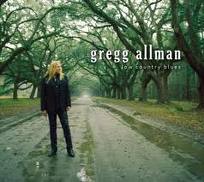
Several Species Of Small Furry Thoughts - Gregg Allman

Gregg Allman has always been a complicated figure. Initially under the shadow of big brother Duane, he seemed like the perennially shy, reluctant frontman. After Duane’s death, his reluctance never subsided. Within the Allman Brothers cosmology he has always allowed others - Dickie Betts, Chuck Leavell, Warren Haynes, Derek Trucks - to stand in the spotlight while he stays off to the side and anchors the band’s soul with his earthy Hammond playing and gritty vocals. His solo career has been characterized by “few and far between.” None of his solo albums have revealed the depths of Gregg’s heart to his fans. None until now! His new album, Low Country Blues finally delivers on the promise of Gregg Allman. Under the careful guidance of producer T-Bone Burnett, Gregg is surrounded by a simple and sympathetic band (highlighted by Dr. John on piano and Doyle Bramhall II and Mr. Burnett on guitars, as well as superb rhythm section Jay Bellarose on drums and Dennis Crouch on acoustic bass) and leads them through a program of blues and soul that showcases all his strengths. Allman’s vocals have always been remarkable. He is one of very few white people who can legitimately sing the blues and not sound affected. His approach is always slow and deep. He never partakes in the over-souled histrionics of his contemporaries; instead delivering songs with a laconic authority that can’t be learned. Of all his peers, Allman has always seemed like he had come the closest to the fires of Hell, and rather than brag about it, he has hidden his knowledge in the painful sincerity of his delivery. There is never any fake white-boy growl in his voice, instead, like on Amos Milburn’s “Tears Tears Tears” he merely seems to open his mouth a little wider, and like a lion his roar is natural and unaffected. 
Throughout the 11 covers and one original on this album, the listener never questions Allman’s right to this material. He tackles, Muddy Waters, B.B. King, Otis Rush, Sleepy John Estes, Skip James and others, and delivers on every single track. The best are those when T-Bone Burnett is able to capture a simple, haunting beat and let Allman’s other-worldly vocals take center stage. They succeed to greatest effect on Skip James’ “Devil Got My Woman,” Muddy’s “I Can’t Be Satisfied” and a couple of public domain numbers, “I Believe I’ll Go Back Home” and “Rollin’ Stone” which features a haunting Dobro part by Colin Linden. 

Gregg Allman has always been a natural for the enjoyable blues rock of The Allman Brothers Band, but many have suspected that below the surface their lurked a darker soul and more profound talent. Low Country Blues shows that that talent is indeed there, flowing in the same river as his heroes. He is part of the continuum of American Roots Music that he has always paid tribute to. He is home. 


Thursday, January 20, 2011

I'd Love To Turn You on #25 - Al Green - The Belle Album

Over the course of ten albums in seven years, Al Green and producer Willie Mitchell turned Hi Records from a Stax-wannabe into the R&B label others tried to emulate, a reputation staked largely on Green’s recordings. Though other artists – notably Ann Peebles – were also the beneficiaries of Mitchell’s ideas, it was Green’s sensuous voice coupled with Mitchell’s lush productions and their pairing as a songwriting team that catapulted Hi to the commercial forefront. It would seem downright foolish to break up such a worthy partnership, but that’s exactly what happened at Hi for album eleven as Al’s previous three albums saw declining sales and fewer hit singles and public favor began to turn to disco, funk, and other forms of R&B, supplanting Green and Mitchell’s slow, sultry soul. Needing a shake-up, Mitchell was out and Green himself took the production reins, gathered a new band, and created his strongest album in years and very possibly his greatest album after the immortal Call Me.
Where most of Green’s albums hook you with their most up-front cuts and then over time work their way into you, this one uncharacteristically reaches out and shakes you up, an odd result when he goes largely acoustic and goes for more or less the same subtle grooves that he’d pursued for most of his career. It’s probably significant that Green had recently decided he needed a philosophical shift in his life, matched here by this musical shift. While God was never absent from Al's previous albums, here He's moved front and center thematically with Al leading the album telling Belle that it's her that he wants, "but Him that I need." From there things stay largely secular, though often tinged with the idea - especially in "Chariots of Fire" - that other realms are never far from Al's mind and even can be read into some of the other lyrics. Musically it's more assured (and varied) than Al's last few records - stronger and more consistent as a whole than anything since Call Me in fact - and in "Georgia Boy" he's found the perfect hot, hazy groove that feels all too short at seven minutes. But from the laid-back funk of “Georgia Boy” to the disco-tinged “I Feel Good” and back to the brilliant ballad “Belle” on down to the languorous “Dream” he makes one of his strongest album statements here.
Rather than signaling a commercial restart for Green, The Belle Album was his lowest charting record at Hi, “Belle” failed to chart as a single, and Green only made one more secular album, the 26-minute Truth N’ Time, before devoting himself fully to spiritual music for the better part of two decades. While he made some fascinating religious music and has since made a credible return to secular music, he has never again hit the heights of this terrific album.
Patrick Brown

Friday, January 14, 2011

Kylesa-Spiral Shadow

There's been a wealth of quality, innovative hard and heavy bands coming up from the South in recent years. Hailing from Savannah, GA, Kylesa joins the ranks of bands like Mastodon and Baroness in creating exciting new avenues for heavy rock music. Their latest album, Spiral Shadow, shows a deft mix of prog-metal, psych jams, and doomy riffs all powered by a two drummer attack. The vocal interplay between the gruff Phillip Cope and the dreamy Laura Pleasants is another unique aspect of the band's sound. The album is highlighted by the anthemic "Don't Look Back," which could end up as the metal equivalent of the Arcade Fire's "Wake Up." Kylesa is one of the strongest bands around right now and Spiral Shadow is one of 2010's top releases.
-Adam R.

Monday, January 10, 2011

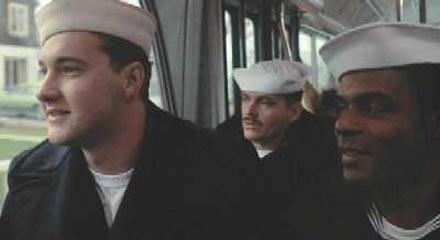
I'd Love To Turn You On: At the Movies #4 - The Last Detail – (dir. Hal Ashby, 1973)


Sometime in the early 1970’s, Jack Nicholson went from being a competent character actor, specializing in edgy, creepy misfits, to being the most respected American actor of several decades. I’ve always pegged this change as falling between Five Easy Pieces and One Flew Over The Cuckoo’s Nest. The Last Detail is right in the middle of this period (1973) and it marks one of Nicholson’s most deceptively complex roles. In it, he plays a hardened Navy lifer named “Badass” Buddusky who, along with another M.P. (military police), “Mule” Mulhall (the fine actor Otis Young) must transport a young criminal (Randy Quaid) to a military prison on the other side of the country. Within the first few minutes we learn that Quaid is a guileless schnook who is being made an example of to satisfy a general’s wife. Badass and Mule begin their journey in typical military fashion, but quickly realize their job, or detail, is not just another case of following orders.
Nicholson immediately distinguishes himself in this role. He goes from explosive asshole to sensitive realist as he starts to grasp the enormity of the injustice being heaped on this poor sap he is transporting. Randy Quaid as Seaman First Class Meadows is heartbreakingly convincing. He is a troubled, stupid kid who has gotten bad breaks his whole life. He isn’t “everyman,” he is “everyscapegoat” representing all sensitive kids who ever got destroyed by the rule-spouting machine that is the military.
The beauty of The Last Detail comes in the subtle changes in Nicholson’s character, as he has to confront issues of duty, justice and ultimately his own humanity. The more time he spends with Meadows, the more he realizes the questionable morality of his actions. Pity starts to turn to empathy when the men stop in Meadows’ home- town. The three look into the home Meadows grew up in, and as they survey the squalid, sad reality of it, the scales of rank and circumstance start to fall from their eyes and the two guards see themselves in Meadows. From here, the attempts to show Meadows a good time before he goes up the river become increasingly frantic, and ultimately sadder and sadder. Nicholson insists they take him to a prostitute, and the encounter (with a young, dark-eyed Carol Kane) is painfully realistic. They encounter a group of Buddhists and end up at a party that is so tremendously uncomfortable and inappropriate that the viewer is crawling out of his skin to get out of there.
Ultimately the two guards are faced with the sad reality that this poor kid is going away to have his life ruined forever. They know he will be eaten alive at the tough Marine prison. The saddest scene comes near the end of the film as Meadows is unceremoniously taken away by Marine guards and he and Badass and Mule do not exchange a word or even so much as a look. It is a devastatingly inhumane experience. Mule and Badass leave the prison under a cloudy sky and the cruelty and futility of this “detail” is written all over their faces.
The Last Detail was originally billed as a comedy, which is hard for me to understand. Nicholson displays some classic, salty ribaldry and uses the f-word a record number of times, but there is ultimately nothing funny about this movie. It is a small, carefully drawn tale that explores the kind of slow changes in understanding that have to occur to make a difference in one’s basic humanity. One doesn’t believe that Nicholson is going to change his name to “Sweetass” Buddusky after this experience, but we feel sure that it has changed him in some fundamental way. Director Hal Ashby uses a deft hand in showing us the changes in Buddusky’s character, and it is the touching subtlety of this slow shift that makes The Last Detail such a compelling movie.
-Paul Epstein

Thursday, December 30, 2010

Several Species OF Small Furry Thoughts - 2010


I’d like to say this year was somehow different from the other previous 21 years here at Twist and Shout, but honestly, it still feels about like it did in the beginning. Things have definitely changed but the basic feeling of being in a record store, turning people on to music, and validating their identities is still pretty much the same.

The changes seem like they are going on around, or in spite of us. More and more people download music. Unbelievably there has been a massive shift in the way our world consumes music. In the blink of an eye, entire generations of people have turned their backs on the advances made in sound replication in favor of storage ease. (Wow, Steve Jobs paid attention when he heard the axiom about never going broke by underestimating the gullibility of the American public.) Along with that, the social aspects so integral to listening to the music we so revered in the 60’s and 70’s have just disappeared overnight. Young people don’t listen to music together the way they used to. They can’t. The Ipod has created a self-sufficient bubble for each individual. There are devices for listening over crappy little speakers but from what I can tell, it is only adults who use these, and then wish they had never gotten rid of their turntable. For the most part, the social dynamic associated with popular music has shifted.  Does this mean that people have stopped loving music? No, it does not. In fact, I am seeing those kids who do take it seriously start to poke their heads in here again. As they become enamored of certain artists, they want to see what this “collecting” thing is all about. The artwork, feel, texture, smell and “life-force” of the actual object (CD, LP, 45 or DVD) brings an artist to life in ways that a download simply never will. To hold an LP by Muddy Waters is quite something special compared to downloading ten Muddy Waters songs.  I don’t labor under the false hope that downloads are going away - they are the future - but, as I had hoped, there is still a place for the real stuff. It is the final step in the life of a collector, no matter their age. If you love The Beatles, eventually some physical form of The Beatles is going to make its way into your life. So, the downloading of music has become a stepping-stone to collecting - as once the transistor radio was. Get a taste for it cheap or even free, then when you are ready to get serious, we’re here for you.

So what physical stuff did we sell this year? Vinyl Vinyl Vinyl. It is not a flash in the pan! It is back in a significant way. We have seen tremendous and sustained growth in the most physical of all formats. Across the board, artists and labels are starting to see the real value in offering their fans records. It illustrates my earlier point; once you have fallen for, say Godspeed You Black Emperor the reality of your love for that band can only be consummated in the soft flesh of a record. Once you hold something close and dear, it becomes so much more real. Over and over this year, I saw kids with that libidinous glow of pride as they approached the register with an LP or 7” by their favorite band. The smart bands truly get it. I would not expect Gaslight Anthem or The Black Angels or Animal Collective to ever release another album without a vinyl version. Their fans will demand it at this point. Of course, the limited nature of most vinyl issues insures that they will go up in value. Some of our biggest successes on Ebay this year have been with records that are less than five years old.

And let us not forget our old friend the CD. While it has been battered and insulted, proclaimed dead every year for the last decade and a half, it still is our biggest seller. Don’t believe the hype; the music industry still turns on the sales of the CD - period. Anyone who tells you differently is either a fool or a liar. It is still the format of choice for the vast majority of serious music listeners. It is over 60% of our sales and it still represents billions of dollars of sales to the industry. CD-wise, there was a difference this year; the biggest sellers were almost all newer acts. Sure, Eric Clapton and Neil Young both have new records that we are selling quite well, and the Elton/Leon album is something of a phenomenon, but the real winners this year at Twist are The Black Keys, Mumford and Sons, Arcade Fire, Cee-Lo Green, Ray Lamontagne, Bruno Mars, Kanye West, The National and countless other bands that have made their mark since the third Woodstock festival. In other words, that first and second graduating class of rock royalty no longer sits on the sales throne. Those artists still matter, but the young bloods matter just as much. And that is a good thing. If we are going to stay valid then the new artists need the same love and honor we give Elvis, Mick and Jimi. We have, we do, and we always shall stay excited about new music at Twist and Shout.

And then there is all the other stuff. A number of years ago when I paraphrased our friends at the great California store Salzers by saying “when people in Colorado think gift, I want them to think Twist and Shout” I didn’t know how real this idea would become. Sales of what we call our boutique regularly hover between 15-20% and this Christmas they were even bigger. I saw plenty of people who were shopping here just for the gifts - no music or movies at all. That’s just fine with us. There is a thin line between a new album and the shirt you wear while listening to it. It all adds up to who we are as individuals.

Like every recent year, people will come up to me in the coming weeks and hesitatingly ask how it went. I will be able to tell from their downturned eyes that they expect the worst answer possible. But, just like all the other years I am filled with optimism and fully believe in the mission - still and always. 
See you in the aisles,
Paul Epstein

Monday, December 20, 2010

I'd Love To Turn You On: At the Movies #3 - Cat People

Cat People (1942, dir. Jacques Tourneur) / Curse of the Cat People (1944, dir. Robert Wise)


Here on one mid-priced DVD, we have two very different films bearing the same tawdry kinds of titles that belie the subtlety and craft that went into the films themselves. First off, there’s Cat People, one of the great horror films of the 1940’s. Director Jacques Tourneur and producer Val Lewton (who was responsible for a terrific run of films at RKO studios at the time) worked together with a minimal budget to create a film long on atmosphere and suggestion, knowing that a few well placed sound effects, some spare lighting, and good performances from their actors were worth ten times more than the shock of showing a big budgeted monster effect that then took

all the imagination out of the equation. In the film, Simone Simon plays Irena Dubrovna, a Serbian-born woman living in New York, who begins to suspect that meeting her new husband Oliver Reed (played by Kent Smith) will awaken her familial curse and turn her into a murderous panther. Whether this curse exists or is the work of her emotional state and suppressed sexuality coming to the fore is a question left to the viewer as Tourneur and Lewton brilliantly and eerily suggest both possibilities – she may be a dangerous shape-shifter or an emotionally disturbed young woman. When Oliverturns to a co-worker for companionship that his wife is unable to provide, is he about to unleash the emotions of a jealous wife, or a deadly feline wreaking vengeance? Find out, in Cat People!
Two years later, Lewton returned to the success of his Cat People with the sorely mis-titled Curse of the Cat People. For this film he enlisted the aid of director Robert Wise, a journeyman Hollywood director able to take on projects as diverse as this film, The Day the Earth Stood Still, The Haunting, West Side Story, The Sound of Music, and Star Trek: The Motion Picture, just to name a few of his 40+ director credits. Lewton and Wise did not have a psycho-sexual thriller in mind this time though, instead this film, which takes place six years after the original, focuses on shy, withdrawn Amy Reed, the daughter of the original film’s Oliver Reed (a role briefly reprised here by Kent Smith). Amy talks to herself and to her imaginary friend rather than engaging with playmates her own age. Could she be the victim of a curse as well? Or is she simply a child living in her imagination, in need of attention and help being drawn out of her fantasy world? The film’s evocation of the child’s interior life – which unduly concerns her parents – is miraculous; it’s one of the few children’s fantasy films that feels like it really understands the child inside and out, rather than portraying childhood in the cloyingly sentimental glow of adult reminiscence. Go in expecting more dangerous panther-women and you’ll undoubtedly be disappointed. But if you’re prepared to set aside your expectations of the spooky horror of Cat People and instead to experience one of the great fantasy films about childhood, you’re in for an absolutely classic double feature.

- Patrick

Monday, December 13, 2010

I'd Love To Turn You on #24 - Quicksilver Messenger Service - Happy Trails

When one thinks about the music of the 1960’s several different locales come to mind; London, New York City, Dee-troit, Memphis and of course, San Francisco. Of the San Francisco bands, The Grateful Dead, The Jefferson Airplane and Santana seem to get the most attention, yet the work of Moby Grape, The Charlatans and most importantly Quicksilver Messenger Service deserve to be mentioned in the same breath. In fact, if push came to shove I might have to name Happy Trails the most compelling argument of the Bay Area’s impact on rock. There is no better illustration of the potency of jamming wildly while on LSD than this incredible album.
The first side is just one song; Bo Diddley’s “Who Do You Love”, recorded live at The Fillmore and stretched to the limits of psychedelic imagination. Guitarists Gary Duncan and the great John Cipollina elongate the song to its artistic and sonic limits, intertwining their similar, yet always distinguishable styles into a snake of many heads. They play with such sympathy and telepathy that at times one can’t believe this is improvised music. They seem to know exactly where the other is going at all times and the result is a guitar freak’s wet dream. There is no other album that will drive a normally sedate 50-something man into such a frenzy of air-guitar as to worry his family. “I haven’t seen him this amped up over an album since the last time he listened to Quicksilver.” For me, there is no more distinctive and criminally under-appreciated guitar player than John Cipollina. Listen to the part of the song subtitled “How You Love” and hear Cipollina wrench vibrato and note bending out of his guitar like nobody this side of Hendrix. His practice of wearing a pick on each finger of his right hand combined with his completely muscular and manic left hand attack make him sound like no other player. He is the definition of day-glo guitar. Flower Power given body.
Side two is also largely taken up by one Bo Diddley song. This time it is “Mona” whose pounding, archetypical rock and roll beat opens up and lets Cipollina again ride a multi-colored beast around the Fillmore like nobody’s business. I have always considered Jerry and Jimi and Mick Taylor to be the tops, but I hold a completely special and unique place in my musical heart for John Cipollina. He burned so brightly and produced such a recognizable, stinging sound from his customized Gibson SG that he is just hard to beat. Check this picture out. It is his guitar and amp stack on permanent display at the Rock And Roll Hall Of Fame. I always loved seeing him live up until his untimely death in 1989, but I have to admit that he never topped the playing he did on the first two Quicksilver albums.

After “Mona” romps through the Elysian Fields for about seven minutes, side two continues with Gary Duncan’s gorgeous instrumental “Maiden Of The Cancer Moon” before a sly edit takes us from the live milieu to the studio for another beautiful, feedback-laden guitar workout titled “Calvary.” At about three minutes in, when Duncan is majestically strumming acoustic and Cipollina is wringing the neck of his guitar within an inch of its life…bliss. “Calvary” might be the definitive acid-guitar instrumental. Happy Trails ends on an upbeat, funny note by winking at the freaks ou
t there andthe band singing the Roy Rogers and Dale Evans classic “Happy Trails.” I guess trails can be taken to mean several things.
When I first got the idea for this ongoing column, I’d Love To Turn You On, this was precisely the kind of album I had in mind. Something that I would give friends or customers that they were unfamiliar with, then, without fail, a month or two later I would see them; “wow, how did I not know about this album? This is the greatest thing I’ve heard. Who is this guitar player? I gotta hear more.” That type of reaction is what we, here at the record store, live for. In addition to the awe-inspiring music, Happy Trails is also blessed with one of the most pastoral and iconic covers of the 60’s. It perfectly captures the heady blend of modern thinking and a respect for an older sense of style that San Francisco has always embodied. Put on Happy Trails and it IS 1969.
Paul Epstein

Friday, December 10, 2010

Several species of small furry thoughts - Memories of Ebbets Field

I first started going to concerts in the Denver area in about 1971 and by the time Ebbets Field opened in early 1973 I was starting to venture into clubs that would allow people under 21 to see the acts. Ebbets was one of those. You would get hand-stamped or wristbanded and were allowed to enter and see the best acts of the day in a tiny, intimate setting and buy overpriced cokes (there was a two drink minimum as I recall). I remember going to my first show there (Taj Mahal and Corky Siegel) with what would also be my first date. A great show where I learned about the magic of seeing a band up close and the horror of the first date. The girl’s name was Miriam (same as my mother) and she was totally beautiful and I just couldn’t quite put together that she was there WITH me and I was her date too. That part didn’t go so well, but I was smitten with seeing bands in clubs. I’d sort of figure the woman thing out - thank god for Jill - later in life, but rock and roll was very clear to me from the beginning. Some of the great shows I saw at Ebbets field were Country Joe McDonald, Renaissance, Roger McGuinn, Lynyrd Skynyrd and Peter Frampton among many others. It was such a special place to see a show. At the furthest you were maybe 25 yards from the band and the sound system that Listen Up installed and ran was many people’s first exposure to really world-class sound.
You wouldn’t know it now, but going in to downtown Denver in those days was more of a rare occurrence. In the early 70’s, when you came into downtown after 5 pm or so, it was quite literally a ghost town. There was very little going on, and Ebbets was an early glimmer of the cosmopolitan life that awaited Denver in the decades to come. In other words, it was a glittering, special event to go see a band at Ebbets. Denver was also not the primary concert market that it has become in recent years. We didn’t get all the great bands back then like we do now. Chuck Morris, Barry Fey and their early efforts to put Denver on the musical map really did accomplish that goal. We are now as good a market as any city in the country, and the first tentative steps represented by Ebbets, Tulagi’s and later the Rainbow Music Hall were milestones in Denver’s development. 
And so, our friends at Listen Up have released the 4th volume of their Live From Ebbets Field series. For you see, Listen Up not only ran the sound in the legendary club, but they recorded the shows and broadcast many of them on the radio. For years I loved listening to these shows surface on various radio stations, and the series of CDs that have been released have brought back many great memories. Volume 4, which benefits The Morgan Adams Foundation, is a wonderful disc that really captures the magical intimacy of these performances, but also the eclectic and hip nature of the booking. Highlights of Volume 4 include Cheech and Chong introducing The Beau Brummels as “The Bro Bummers,” ex-Byrd Gene Clark’s riveting version of “Set You Free This Time,” a young, angel-voiced Dan Fogelberg playing “Stars,” a triple shot of blues greats with Howlin’ Wolf, Muddy Waters and Freddie King all making appearances, Doc and Merle Watson tearing up “Wabash Cannonball” and ragers by El Chicano, Spirit and The Marshall Tucker Band. This CD really reminds me of a great time in music history, and a special period in Denver’s movement toward becoming a world-class city. This is a limited release, with a charitable component, and this is the only record store where you can get it. Rush in and get 10 right now - they make great gifts. 
We also were lucky enough to get the few remaining copies left of Volume 3. This disc will benefit the - soon to be a reality - Colorado Rock and Roll Hall Of Fame (of which I am a board member). It is only $4.99 and it goes to a cause very close to my heart. Highlights of Volume 3 include an over-the-top version of “Green Grass and High Tides” by The Outlaws, “Hello Hello” by Sopwith Camel and more great stuff by Robin Trower, PeterFrampton, Pure Prarie League and many others. These discs are a wonderful reminder of a very special time and place in Denver’s music history.

-Paul Epstein

Monday, December 6, 2010

I'd Love To Turn You On: At the Movies #2 - Microcosmos

Microcosmos (1996, dir. Claude Nuridsany/Marie Pérennou)

Microcosmos is a very hard movie to really explain to people.  Well, you can explain what happens in it, but that's not the same as explaining it.  Like many films, Microcosmos features struggle, conflict, violence, death and an extended (and rather sloppy) sex scene.  Unlike most such films, this one is rated G.  And unlike most such films, nobody is acting.
Microcosmos took three years to create (between designing the cameras and filming all the footage). The filmmakers take you down into the grass, into the world of insects.  And then...they leave you there.  With nearly no voice-over and not much music, you're simply allowed to watch as insects go about their daily lives.  You spend a few seconds with some insects, and several minutes with others. The insects scavenge for food.  They eat.  They attempt to avoid getting eaten.  They search for mates. They procreate.  They sleep.  And a few of them die.  
As I said, this explains what happens in the movie, but it doesn't explain the movie itself.  As somebody once wisely proclaimed, "it's not what it's about - it's how it's about what it's about that matters".  And directors Claude Nuridsany and Marie Perennou really did something remarkable here.  This might have been just another (rather interesting) documentary, but it's not a documentary at all.  The filmmakers in fact took a bit of grief when this film was first released.  Apparently several of the scenes were "staged" - the settings were provided, the insects placed into them, and the cameras rolled.  But that just means that Microcosmos isn't a documentary in the traditional sense.  It might have been, if the camera had moved back more, if they had hired a stern-voiced British actor to explain what we were seeing at all times. But that's not how most movies work.  We rarely have any need for a narrator explaining what movie characters are doing, and why they're doing it - the movie trusts us to figure that out by watching the characters interact.  And this is what the directors have done - they bring us in close, and they simply let us watch what's going on.  Sometimes, it isn't exactly clear what we're seeing, or the insects' motivation for doing what they're doing.  But in a sense, that's part of the appeal.  What ARE those two ants doing?
...and who would have thought I would ever want to know the answer to such a question?
As you can well imagine, this isn't a typical film to watch.  I'm not sure it's something you'll want to invite the whole family or a bunch of friends over to experience.  But "experience" seems to be the right word.  I never felt like cheering or crying or laughing while watching this film.  But that might be because I was so wrapped up in it.
- Alf

Monday, November 29, 2010

I'd Love to Turn You On #23: Yes – 90125 (Rhino)


Many think of Yes as the 70's prog-rock band with that fantastic alien world album cover art. As a child of the 80's, my memories of Yes are the “Owner Of A Lonely Heart” video and “Owner” on the radio, in the car, going on long road trips to Disney World with the family. At that age, I mostly disregarded any music earlier than 1980, but hey... Michael Jackson had exploded and Duran Duran captured my musical focus. It wasn't until about 10 years ago that I rediscovered Yes and their classic 1983 album 90125.


The album could very well have been 90125 by the band Cinema, the name that some members of Yes adopted when singer Jon Anderson quit the band a few years earlier along with keyboardist Rick Wakeman. After singer/guitarist Trevor Rabin entered the band for the 90125 sessions, Chris Squire played some of the music to Jon and it was enough for Jon to agree to rejoin Yes late in the album's construction. The nine tracks that ended up on the album are nothing short of fantastic. Again, this was the emerging 80's and synths were gaining popularity fast. Keyboards had almost always been prominent in Yes with Rick Wakeman's magical fingers, but at the time they were part of the prog-rock style. I can hear some of that style throughout the 90125 album, but there is something quite different going on. The pop/new wave sensibilities had influenced the band without taking over and morphing Yes into something they had not previously been.

“Owner Of A Lonely Heart” kicks off the album with a bang with its ultra-catchy verses and chorus, and ended up being the band's first and only number one single in the U.S! In my opinion “Hold On” and “Leave It” rival “Owner” as the best songs on this album full of great songs. With Jon's wonderfully majestic vocal style spearheading them, there is so much melody and intricate excitement going on. I find these songs in my head days after playing the album. A great example of the brilliance of 90125 can be found in the lyrics of “Our Song”: "Music has magic, it's good clear syncopation." Magic indeed. The guitars, keyboards, vocals, even the production by short-lived member Trevor Horn is all top-notch.

I rediscovered Yes as a band (including their 70's output), but this album brings back distant memories of songs from 90125 that I believe hold up very well at 27 years old. The peak of the band Yes is five numbers that are not a zip code of any kind: just
9 0 1 2 5!

Sincerely,
J O E L

Friday, November 26, 2010

Cee Lo Green The Lady Killer (Atlantic Records)

Cee-Lo Green's The Lady Killer finds the Grammy-winning artist in a familiar place for a superstar – on the prowl. But, much like his fellow ATLien Andre 3000 on The Love Below, the search isn't without its one night stands, lost loves and doubts. The result is a brave and complex soul-inflected journey through Green's colorful ups and downs.
By informing the listener that "my name is…not important" on album opener "The Lady Killer Theme (Intro)," Green immediately identifies with party hoppers looking for love on the dance floor. Pre-party anthem "Bright Lights Bigger City" follows, with a bass line reminiscent of "Billie Jean" and call-to-fun lyrics sure to be played on the way to clubs throughout the winter of 2010 and beyond. Like "Bright Lights Bigger City," The Lady Killer is full of invitations to relax and give in to the pleasures of spontaneity. The use of gunshots in the chorus of "Love Gun" are a positive response to M.I.A.'s "Paper Planes," turning "you shot me baby" into a winking double entendre. Elsewhere, Green exposes his disappointments in love on songs like "It's OK," and internet phenomenon "Fuck You" (which is stripped of its appeal in the cleaned up version "Forget You"). However, the true heart and soul of "The Lady Killer" comes in the latter half of the record with the three-song punch of "I Want You," "Cry Baby," and album standout "Fool For You."
Overall The Lady Killer offers a glimpse into Cee-Lo Green's journey through relationships and reveals many relatable situations. Add to that a compelling mix of R&B grooves and soul-inflected pop songs and you've got a record that not only warrants but rewards repeated listens.
- Paul Custer