Local artist Ian Cooke performed a solo set last Friday. He started off the set playing keyboards and switched to his signature instrument, the cello. His lovely voice and complex melodies sounded excellent in our room. We were celebrating the release of his new album Fortitude and 70 fans joined us for this stripped down version of Cooke’s live set. Cooke plays with a band for larger shows, but I have to admit I enjoy his solo work even more because it really shows off his talent. The crowd was eager to hear new music and to give thanks to Ian after the show. I had a chance to meet his parents and I can see where he got his pleasant demeanor and charm. The Greater Than Collective brought a keg of beer from Great Divide Brewery, so it went from a fun little in-store to a super fun party. People enjoyed free music and free beer - I couldn’t ask for a better way to end our 2011 in-store season.
Last spring, I borrowed a
hundred or so records from my uncle who used to play in rock and roll bands.
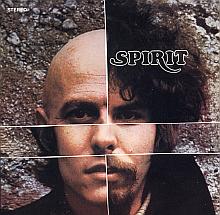
Among them were a couple by Spirit, a band I’d never heard of, probably because
they never quite made it to superstardom. They came close, but not all the way there. In fact, several members of
Spirit came close to making it big before
the band formed in LA in the late 60s. Their drummer, Ed Cassidy, had been in a
band Rising Sons that also included Taj Mahal and Ry Cooder. They’d signed with
Columbia, but Cassidy broke his hand and had to quit, and their album didn’t
come out until 1992. Spirit’s keyboardist, John Locke, was in a band with
Robbie Krieger -- right before Krieger joined The Doors. Bass player Mark Andes
was an original member of Canned Heat, but he left the group right before they
signed with a label. And at the age of 15 their guitarist, Randy California,
played in a band called Jimmy James and the Blue Flames in 1966. When the
band’s leader, whose real last name was Hendrix, left for England to form a new
band called the Experience, he invited Randy to join him, but Randy’s parents
wouldn’t let him go. In fact, Hendrix gave the young guitarist his stage name.
The near-hits kept coming after
the band came together in Los Angeles and started making records. Led Zeppelin
opened for them on their 1968 tour and went on to steal a riff from an
instrumental on their first album and built “Stairway to Heaven” out of it.
They were offered a slot at Woodstock, but their manager advised them to turn it
down because he didn’t think the festival would be a big deal. It wasn’t until
after the original lineup disbanded, in fact, that some of its members
experienced some real success. Andes moved to Boulder and was a founding member
of Firefall and later a member of Heart when the band was banging out number
one hits. Ferguson had a monster hit in 1978 with “Thunder Island” before
becoming a successful composer of movie and TV soundtracks. He wrote the theme
to The Office.
When I asked my uncle why he’d kept
those Spirit albums for all those years, he said, “They were really ahead of
their time.” He had three of their records. Having listened to them all many times, I
have to say I agree; they were ahead of their time. The question is,
what time? I’ve never heard any other band that sounds quite like them. Their
first two, their self-titled debut and The Family That Plays Together, came out a little less than a year
apart in 1968, and they’ve got that influenced-by-the-Beatles sound, especially
in the vocals. But the song arrangements are always shifting in and out of
other sounds – classical, Latin rhythms, folk, blues, jazz. Especially jazz.
Cassidy had drummed with some of the best jazz musicians in the world during
the 50s and early 60s. And keyboardist John Locke clearly had some jazz in his
blood, judging from his epic instrumental “Elijah,” which closes out side two
of their first record. Clocking in at just under 11 minutes, it calls to mind a
Dave Brubeck composition until it breaks down into a free jazz passage with a
fuzzed-out acid-rock guitar solo as its centerpiece and, later, a spacey bass
solo followed by a long drum break.
There was one glaring omission
from my uncle’s collection: Twelve Dreams
of Dr. Sardonicus. I had to buy that one myself after I found out that it’s
widely regarded as their best. When I asked my uncle why he didn’t own that
one, I could hear his cringe through the long distance wires. “Too ‘we’re in
the seventies now,’” he said. It is a
70s record, I’ll grant him that, but I don’t share his disdain. It’s a
black-light-poster-and-lava-lamp classic. It gets quite a bit heavier and more
cosmic in places than their earlier releases (with a bit of pioneering moog
mixed in), but it still has moments of quiet beauty like the earlier releases,
especially on the AOR hit “Nature’s Way” (which my uncle admitted that his band
used to cover).
Of the four, my favorite is The Family That Plays Together. Peaking
at 22 on the Billboard charts, it was their biggest hit. The album has a
brilliant flow to it, drifting seamlessly from the hard-driving hit single “I
Got a Line on You” that opens side one to the dreamy-jazzy “It Shall Be,” to
the hard-driving grooviness of “It’s All the Same,” through layered vocal
harmonies in “Poor Richard” and full orchestra on the gorgeous “Silky Sam,” to
the side’s conclusion, “Darlin’ If,” a love song so beautiful that I would put
it up against any song released in 1968. It’s stunning to know that California
was just 17 years old when he wrote it, because it shows a level of restraint
that usually takes artists years and years of hard work to develop. And so much feeling in the vocals. It’s the
kind of song auto-repeat was made for. It’s the kind of song that superstars
are made from. But the story of Spirit shows that greatness doesn’t always
hinge on artistic genius. Sometimes it’s a matter of luck. And having a manager
smart enough to know a generation-defining festival when he sees one.
Back in 2001 writer/director Richard Kelly introduced himself to the world of cult cinema with his unforgettable film Donnie Darko. The film was an odd time-traveling parable that featured a star studded cast and made a star out of a young unknown actor named Jake Gyllenhaal. The film’s release itself was something of legend; released to terrible reviews in a handful of cities to a dismal box office, the film slowly found its audience and became a small cult phenomenon. Suddenly the weird little film that could was a hit and its creator Kelly got a wee bit cocky. He did a director’s cut that did nothing but complicate the film even more and over explained some mysteries that gave the first cut its real charm. Perhaps this was the first sign of what was to become of Mr. Kelly’s future and his next film Southland Tales.
Riding the high of Donnie Darko gave Kelly major gumption to create a very ambitious project with Southland. On tap was not only a gigantic event film filled with a cast of celebrities but Kelly began work on a series of graphic novels that would be released a year before the film and would expand a large universe of back story of Star Wars proportions. Everything was going well, Southland was granted a budget three times that of Darko, anyone who was anyone in Hollywood was circling a role in the film and main casting went to Dwayne “The Rock” Johnson, Sarah Michelle Gellar, Seann William Scott and Miranda Richardson. Filling in supporting roles were Justin Timberlake, Mandy Moore, Nora Dunn, Amy Poehler and nearly every one else who read the script. People were falling over themselves to join the incredible second vision of Richard Kelly and the filming went off without a hitch. The studio trusted Kelly and gave him carte blanche on every aspect of the film and the planned universe that would surround it. Then, what luck, Southland Tales was selected to premiere at the prestigious Cannes Film Festival and Kelly was ready with his gigantic three-hour opus ready to unspool and that’s when things went downhill.
As soon as the credits rolled Southland was met with a thunderous boos from the audience and the studio and Kelly began to realize that having no limits on control was probably not the smartest choice that he’d made and as bad word quickly spread a black hole opened up and swallowed Kelly’s ambitious universe whole. The studio declared the Cannes cut un-releasable and demanded gigantic cuts and re-shoots in an effort to reclaim the money they put in to the project. Suddenly gone was the planned graphic novel release, Kelly was to change the film with no prescribed back story outside of what was on the screen. A year passed and Kelly finished a 2 hour-25 minute cut and with his tail between his legs handed it over to the studio to be released in early 2007 with nearly none of the acclaim and hullabaloo that had been dreamed about. The film hit theatres but unlike Darko, and tainted with major bad buzz, it never found its audience and disappeared quickly.
So why, you might ask, should you watch Southland Tales with all of this back story? Well, it’s because the film is one of the most interesting failures in cinematic history. Unlike big failures like Ishtar, Hudson Hawk or Cutthroat Island the time spent “fixing” the film may have been the best thing for it. Going in with as little knowledge about the plot as possible is really the best way to enjoy the film so here’s the bare idea: After a nuclear explosion in Texas the futuristic landscape of California, circa 2008, is on the brink of social, economic and environmental meltdown. When a popular action star (Dwayne Johnson) is suddenly struck with amnesia he seeks out the truth and becomes intertwined with a porn star (Sarah Michelle Gellar) whose reality television project is reaching messiah-like proportions and a police officer (Seann William Scott) whose very body and soul holds the key to a major conspiracy as vast as the whole world.
Every actor does a great job in the film, showing some level of understanding what was going on during production and though the film threatens to go off the rails at nearly every turn, be it thru small musical numbers or with the heaviness of a very prominent Jesus story on tap, nearly every frame of the film, in its own failed way, actually makes sense once the entire picture unfolds. Southland Tales stands as a warning that you should dream as big as you want to when it comes to storytelling but never let your ego get so big that it gets in the way of sharing your story with the world.
Give Southland Tales a whirl and let’s hope that Richard Kelly will rise from the ashes soon. He’s got a lot of things to say.
Each Record Store Day has gotten bigger than the last, and it feels like this week’s Black Friday version is shaping up to be a whopper. All the usual rules will apply; first come, first served, no holding of products, only one per item per customer etc. There aren’t as many products as April, but there are way more than last year’s Black Friday. Here are a couple of the highlights;
-Phish-Party Time and The White Tape-two full length LPs by Colorado favorite Phish. Last April, the 7” they put out was one of the hottest items and the first to sell out.
-Pete Townshend-The Quadrophenia Demos 1- A sweet 10” with 6 demo versions of Quadrophenia songs, including one that didn’t make the final album.
-Tom Petty-Kiss My Amps Live- 7 live tracks from the 2010 tour on a 12”
-The Beatles-Singles Box Set-very nice package –individually numbered with 4 singles, a poster, and a 45 adapter.
-Pink Floyd-The Wall-singles Box set-this is the coolest package of the day-3 singles and “another brick in the wall” box to house it all.
-Janis Joplin-Move Over-7” box set w/6 unreleased tracks!!-a bonanza for collectors
-John Lennon-Imagine-40th anniversary box-w/ Original LP, Sessions LP on white vinyl, poster and 2 postcards-beautiful.
-Iron & Wine-Morning Becomes Eclectic 12”-nice 11 song radio session.
-Syd Barrett-Octopus-Stunning Tin filled with a colored vinyl 7” and a whole book of Mick Rock photos
-Bob Dylan-Can You Please Crawl Out Your Window?-awesome box set w/ 4 mono singles in picture sleeves.
-Kings Of Leon-Massive box set with their first three lps and a fourth lp of rarities-very nice!
This is just a small sampling. There will be close to a hundred unique pieces on offer. Avoid the malls-go local! Besides you won’t find this stuff at the malls.
-Paul Epstein
For a complete list of what items Twist & Shout will carry check out our site here:
The great Judy Collins stopped by the store yesterday and it was a total thrill! I waited around later than I normally stay and found that I was getting more and more nervous at the prospect of meeting this legend. She was doing a signing of her new book Sweet Judy Blue Eyes at Tattered Cover in LoDo and offered to stop by and say hi. No big whoop right? She didn’t want it to be an open-to-the-public event, so it really came down to me, Jill, My brother Alan, his wife Peggy and employee supreme Natasha. So, I was getting nervous; what if it was weird and uncomfortable? What if I couldn’t think of anything to say? What if she was a snooty star? Well, I needn’t have worried, because when the petite, beautiful musical and cultural icon walked through the door, she immediately put everyone at ease. She was chatty, sweet and grateful for the fact that ANY record stores exist in 2011. We were all kind of star struck, but she happily signed everything we had, including our big guitar (and a few extra copies of her fine new CD Bohemian which will go to the first lucky purchasers).
One tends to forget what a pivotal star Judy Collins is. She easily bridged the folk scare of the late 50’s and early 60’s with the folk rock movement of the mid 60’s, and then continued to create lovely pop/rock records for the next four decades, all the while remaining a figure of respect and integrity. Before she left, Jill held up the back cover of Who Knows Where The Time Goes and pointed to the beautiful hippie version of Judy on the back and said “In 1969 I would have done anything to look like this.” Judy laughed a knowing laugh as we all pondered the passage of time and how wonderful its effects have been on her.
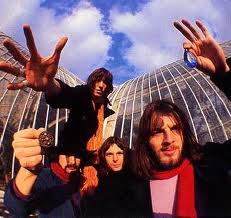
The recent flurry of Pink Floyd reissues has primarily focused on their most famous albums. Deluxe editions of Dark Side of the Moon and Wish You Were Here have already been released with The Wall due in February. These are all great albums and the bonus material is welcome. However, the story of Pink Floyd goes well beyond this Big Three. All of their other studio albums have been remastered and re-released, both in a box set and individually. My favorite Floyd album is the one that celebrates its 40th anniversary this year, 1971's Meddle. It's often referred to as a test run for Dark Side, but Meddle is truly a masterpiece of its own, each of its six tracks showing a different side of the band and demonstrating what makes Pink Floyd great.
Album opener "One of These Days" begins ominously with a pounding Roger Waters bass line and distorted effects. The drama increases with Nick Mason's thundering drums announcing the diabolical voice that screams "One of these days I'm going to cut you into little pieces!" The song then explodes into full on rock & roll led by some excellent slide guitar from David Gilmour. The album's most intense song leads into its most relaxed, the pastoral "A Pillow of Winds." Gilmour's acoustic playing and airy vocals are augmented by psychedelic effects to produce a hazy, laid back vibe. "Fearless" is the great lost Pink Floyd classic, a song that should be just as famous as "Money" or "Comfortably Numb" but is held in similarly high regard by hardcore Floyd fans. Anchored by an infectious acoustic guitar riff and some of the band's best lyrics, "Fearless" offers one of the best arguments for digging deep into the Floyd catalog.
Next comes "San Tropez," perhaps the most whimsical post-Syd Barrett Pink Floyd song. Ironically enough, this is the only song on the album where Roger Waters receives sole writing credit. It's a million miles away from the dark and angry material Waters would be writing by the end of the decade, but it's still a fun little number that shows a rarely seen lighter side of Floyd. The acoustic blues "Seamus" is also a nice change of pace. With so much forward-looking material, this tune is a nice reminder of the blues roots that influenced so many British musicians in the early to mid-60s, Floyd members included.
Finally, we reach "Echoes," the 23 minutes closing number that originally comprised all of side 2 on the vinyl release. Floyd had previously attempted extended composition on 1970's Atom Heart Mother, but even there the two long pieces were divided into individual sections. "Echoes" is definitively one piece organically growing and changing. It starts with a single mechanical blip and slowly grows to a full dramatic theme. After the two initial verses the band locks into a groove and gives a solid example of the instrumental prowess of all four members. An interlude of pre-recorded whale calls anticipates the ambient music Brian Eno would soon pioneer. This again organically develops back into the song's main theme and final verse. "Echoes" may truly be Pink Floyd's finest moment. It became a live staple throughout the 70s and the band thought so highly of it they named their 2001 2-CD career retrospective after it. If you only know Floyd through their big albums and radio hits, Meddle is the best point of entry for discovering the rest of the catalog. If you're already familiar, the new reissue is a great excuse to revisit a classic.
Last night we had a book signing with Barry Fey in celebration of his new autobiography Backstage Past.He is a well known local legend, but also a nationally renowned rock promoter.In 1968 he promoted the first Led Zeppelin show in the US.In June of 1969 he presented a three day pop festival in Denver which featured the final performance of the Jimi Hendrix Experience. His lists of credits goes on and on, which is what makes his stories so interesting.
We all want to hear about those moments with some of our favorite bands like the Rolling Stones and Jimi Hendrix. The 60s and 70s were a unique time when albums on vinyl had beautiful elaborate artwork and the music scene was so powerful it shaped people's lives.We like to keep that spirit alive and we were honored when Barry called Twist and Shout hallowed ground.
There was a great energy in the crowd of fifty folks that showed up to thank Barry for promoting some of the best rock shows in their lives.It was fun watching Barry exchange stories, anecdotes, and jokes with all of these rock fans.He was charming and appreciative. Some of his contributions really shaped our local scene for example in 1976 he started his Summer of Stars concert series at Red Rocks.This event helped place Red Rocks among the best venues to play for every group worldwide. In 1983 Barry co-produced the U2 Live at Red Rocks: Under a Blood Red Sky.So there were many folks from Barry’s generation, my generation, and much younger that came out to shake hands and pay tribute to the man Bill Clinton called a National Treasure.
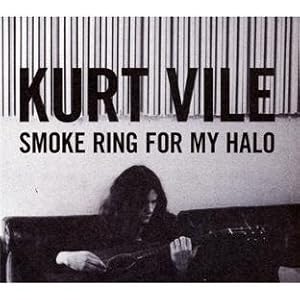
I came late to the Kurt Vile party, which is a funny thing to say because the party hasn’t been going on very long. Back in March, after the release of his most recent LP, Smoke Ring for My Halo, when the buzz around Vile was at its zenith, I got on iTunes and listened to the 90-second previews of all the songs on the album, and I wasn’t impressed (I’ve since come to the realization that I’m never impressed when I check out music this way). But then I picked up the split 7” he did with Woods for their summer tour. I bought it for the Woods tracks, and I wound up listening to the Vile side a lot more. It has an acoustic guitar number where he sings, “You’re in and out again,” over and over, and his voice is incredibly evocative -- it feels lonely, kind of sad, kind of angry, kind of indifferent, a whole range of emotions, really. And there’s a little bit of echo added to it, so every time he taps the body of his guitar or scrapes his fingers across the strings, the sound reverberates, giving the song just a touch of trippy-ness.
I was instantly hooked, and I’m now committed to buying every LP, EP and 7” of his that I can get my hands on. The first three I picked up from the record store were God is Saying This To You, the Square Shells EP and Smoke Ring for My Halo. I played them all back to back, in order of release, and the first two were more of the psychedelic folk I’d fallen in love with on the split 7” – especially God is Saying This To You, which has all kinds of outer space sounds floating gently through its simple acoustic strumming-and-singing tunes. Vile’s voice sounds distant and eerie throughout, and, like the tune on the split 7”, full of a wide range of contradictory emotions. I was particularly taken by “Red Apple,” a song that sounds alternately like a 78 recording of an old man singing a sad old song on the porch of a pine shack in the Appalachians and a drone that leads to transcendence, and “Song for John in D,” which begins with crystalline finger picking and picks up layers of spacey sounds, building toward a brief, poetic vocal interlude before finishing with a few moments of lilting slide guitar. I was taken aback, though, when I got to Smoke Ring. It’s his second LP for a big label, Matador, and his first with a pro producer, so it’s much more polished and less weird, with a full band backing him. Throughout that first listen I worried that I’d missed him in his prime, that he’d sold out. But it’s an album that dares you to keep coming back. You can tell there’s a lot going on in there, but you can’t figure out what it is. And the more I listened, the more it opened up to me, revealing a lot of freakiness – more, in fact, in places and in its own way, than on the earlier album. The difference here is that the space is all in service to the songs, and is woven tightly into their architecture. The vocals are clearer, too, more singerly, and it takes a few listens to push past the polish and find the gritty feelings they evince. But they’re there, and they’re haunting, they keep pulling me back to listen again and again. To me that’s the mark of great art, when the complex is made simple.
I haven’t had a chance yet to pick up So Outta Reach, the EP of five songs Vile recorded while he was making Smoke Ring (also included in the new deluxe CD release), but I’ve listened to a few songs online and so far they’ve confounded me in the way the LP’s songs did. But that’s nothing a few dozen listens on vinyl won’t cure, I’m sure.
I was surprised when I watched Never Cry Wolf recently and noticed for the first time that it’s a Disney film. I’ve always thought of it as an art film. Based on a memoir by Farley Mowat, it follows the adventures of a Canadian biologist named Tyler who is sent to the Arctic to study wolves and find out whether or not they’re killing off herds of caribou. On the journey north, he begins to realize the magnitude of what he’s about to do – live alone for an entire summer in a harsh wilderness, hundreds of miles from civilization – and he calms his nerves with a local beverage called “Moose Juice” – half beer, half pure grain alcohol. He grows so fond of this elixir that he buys cases and cases of it to take with him. When it comes time to take off for the final leg of the journey though, the beer combined with his mountain of supplies weighs down the two-seat prop plane, and the pilot starts chucking supplies indiscriminately—science equipment, food, toilet paper and god knows what else. He’s dropped off on a frozen lake in the middle of vast valley. He looks around, tries to light his pipe, and ponders what to do next. “The possibilities,” he thinks to himself, “are many.”
Indeed they are. He almost dies in several harrowing scenes before he starts to get a knack for the place and not only survives but becomes quite close to the wolves, even going so far as to adopt some of their traits by eating mice, howling and marking his territory by drinking a bunch of Moose Juice and pissing on every rock within a 100-yard radius. There’s also a compelling narrative thread of his interactions with Inuit natives that gives the film a satisfying layer of complexity. The storytelling is top notch throughout, with sparse and smart dialogue and voice-over narration to delicately move the plot along. But the real star here is the photography. Never Cry Wolf is filled from credit to credit with gorgeous shots of the Arctic wilds. The light up there has a thin, blue quality that’s unlike the light I’ve seen in any other film, and the director (Carroll Ballard) often pulls way back to show Tyler dwarfed by his immense and desolate surroundings, shots that carry as much thematic weight as aesthetic. Even better than the landscape shots, though, are those of the wolves. The movie really gives the feel of living with them, and they’re beautiful, fascinating creatures, with a complex social order. The best subplots in the film are the completely wordless scenes in which the wolves slowly accept Tyler into their society, and he not only comes to understand that they’re not a violent threat, he comes to love them. It’s like watching the earliest stages of humans’ relationship with dogs, and it’s very touching. But it’s never overbearing and sentimental, so it holds up to repeated viewings better, I think, than many of its siblings in the Disney family—so much so that it’s hard to believe at times that actually is a Disney film.
Last Friday Twist and Shout had the pleasure of hosting a solo performance with Luther Dickinson. He is best known for being a member of North Mississippi Allstars and the Black Crowes, but this performance solidified my respect for him as an artist in his own right. We have had the full band play in our store a few times over the years, but this was a unique and personal experience that really stands out. Luther played a lovely set for over 170 fans. His guitar playing was so impressive - when it was just him on stage I was able to watch him at work. The room was extremely engaged, people were really absorbing the music (which doesn't always happen at venues). This in-store was free from chatter and distractions - all eyes were on Luther. His wife and little girl were here for the instore and it was charming to hear his daughter cry out "Daddy!!!" when she saw him setting up to perform. He scooped up his little girl and didn't put her down again until he had to pick up his guitar. He seemed like one of those wonderful fathers that truly loves his family and draws a lot of strength from that love. It gave me a connection to his music that I didn't have before. He was so sweet and genuine with all of us, it left me a bit enamored with the person behind the music. These are the kind of in-stores that remind me about the mystical and magical human connection that lies within music. -Natasha
The fifth album by Earth Wind and Fire, Open Our Eyes, may as well be their first. Over the course of four earlier albums, drummer-singer-leader Maurice White refined his concept of a mystical jazz-soul-funk-gospel fusion and finally hit gold – literally – here, cracking the Billboard top 20 on the album charts and scoring two top 40 singles – the funky powerhouse “Mighty Mighty” and the soul staple “Devotion” (a third single, “Kalimba Story” didn’t make the top 40 but came close and was the first of EW&F’s single to put White’s interest in traditional African music out there). But the reason things worked out so well is tied directly to Colorado a couple ways.
First off, the band had shaken up its personnel over the course of the earlier albums, revamping and tightening things to be able to more clearly articulate his vision. And it was after a concert in Denver that Maurice White met Philip Bailey, East High graduate and soul singer whose range and ability impressed White enough to ask him to join the band when Bailey moved to L.A. to further his music career. And Bailey’s falsetto was key in defining the band’s sound, mixing with White’s tenor to create the stunning harmonies that characterized their music. The other Colorado tie is that the album was recorded at the famed Caribou Ranch studios outside of Nederland, and it is the vibe of the relaxed Rocky Mountains that allowed White and his band the creative space to really coalesce their ideas (and also served as the backdrop on the cover). And it paid off. They hit their stride right from the opening double shot of “Mighty Mighty” and “Devotion” and continue through the terrific shoulda-been-a-single of “Fair But So Uncool.” The LP A-side closes out on “Feelin’ Blue” and the other single “Kalimba Song” which sets up what’s going to run through the B-side, showing off their jazzier side and indulging White’s interest in African and Latin grooves. On CD, the effect of “Kalimba Story” running directly into the well-named “Drum Song” might be even better than the LP effect of closing and opening successive sides, because they’re of a piece with each other – sister songs, almost – and they sound made to segue right to the next one. The rest of the album rolls through a humorous street funk number, some straight up jazz (no fusion here) a Latinized tribute to the Caribou Ranch, and closes things out with a gospel obscurity that lends the album its title. All in all, it shows off every facet of Earth Wind & Fire’s vocal, instrumental, and songwriting abilities at their finest, and may stand as their best album.
On Friday the 4th of November, we were pleased to host an in-store with Rich Robinson of Black Crowes fame. He is currently touring to support his new album Through a Crooked Sun and dropped by the store with his drummer Joe to play a few acoustic numbers for us and the 75 fans who came to check it out before rolling out to his gig at the Soiled Dove. The crowd was entranced with Robinson's soulful singing, skillful guitar playing (he even played hard enough for us to break a string!), and laid back grooves. Check out the video below to see a taste of what you missed. And next week we will be playing host to his former bandmate Luther Dickinson of Black Crowes and North Mississippi Allstars, so it will feel like deja vu all over again!