Showing posts with label Fables of the Reconstruction. Show all posts

Tuesday, April 16, 2013

Fables of the Reconstruction: Low-Hanging Fruit Pt. 4 - Gatefolds


If you really want to get into the spirit of Record Store Day, squeeze through the used aisles and pick up a few gatefolds. These oversized works of mass-produced art are the quintessential vinyl experience. They say you can’t roll a joint on a digital download. But you can eat an entire midnight munchies meal off of an open gatefold. And many of them are cheap cheap cheap. Some of my favorites were a mere $2.99. Like the three Carole King albums I own, Tapestry, Music, and Rhymes & Reasons. All together they cost me less than the price of a good sandwich, and they’re classic specimens, especially the latter two: great big pictures of Carole at a grand piano with her husky at her side and sunlight warming through the window; soft close-ups of her smiling and lost in thought. They’ve got a matte finish with a linen texture that feels nice on your fingers. It’s intimate, like you’re in Carole’s house and sipping tea as she sings to you. And I’m not ashamed to say I love Carole King, gatefold or no. I was a little kid when her music was everywhere and it couldn’t help but shape my mind and soul. “So Far Away” gets me every time, even when Johnny Rivers sings it, which he does quite well on Home Grown, his best, in my opinion. Here the guy who sang “Secret Agent Man” goes on a jag through sunny early 70s commune-esque spirituality. This record also comes in a gatefold. Another matte finish, faux linen, but with lots of pictures of Johnny with a bushy beard, smiling, in meadows full of tall grass and flowers. He sings the hell out of some of the best songs of that era – “Our Lady of the Well,” “Rock Me On the Water,” “Fire and Rain.” Just a gorgeous record.
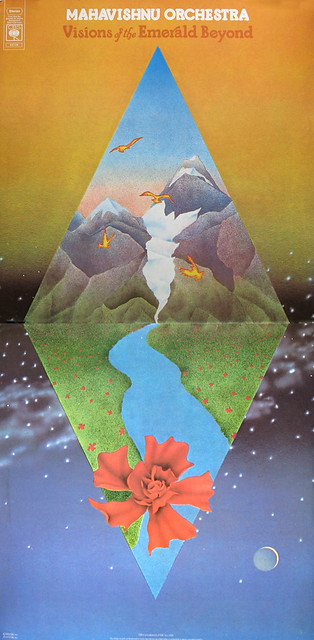
            Some classic gatefolds don’t qualify as low-hanging fruit because they’re expensive, such as the Rolling Stones Their Satanic Majesties Request, arguably the greatest album cover of all time, at least for people who have taken a lot of acid. A 3D photo of the band in wizard costumes is not easily topped. Inside is a maze and a crazy collage. I got my copy for 70 bucks in Atlanta – the exact same pressing of the one I got for Christmas my junior year in high school, brand new in the shrink-wrap. Probably cost $10 back then. No, what we’re interested in here is art for the poor man: Santana’s Caravanserai – big orange sun over a dark blue sky and desert and camels, inside a gloriously blurry sunset over the ocean; Allman Brothers Eat A Peach – peaches and melons the size of truck beds on the front and back, opens to a vast panorama of Magic Mushroom Land; Mahavishnu Orchestra’s Visions of the Emerald Beyond – mirrored pyramids that rise lengthwise, up and down, one to sunrise, the other to night; Gentle Giant’s Acquiring the Taste looks like a tongue licking an ass until you open and see it’s just a delicious peach; and all those Yes covers by Roger Dean, especially Close To the Edge, which is their best musically, too (even if you hate Yes you should own a Yes/Roger Dean gatefold, it’s an obligation of the hobby). There are so many.


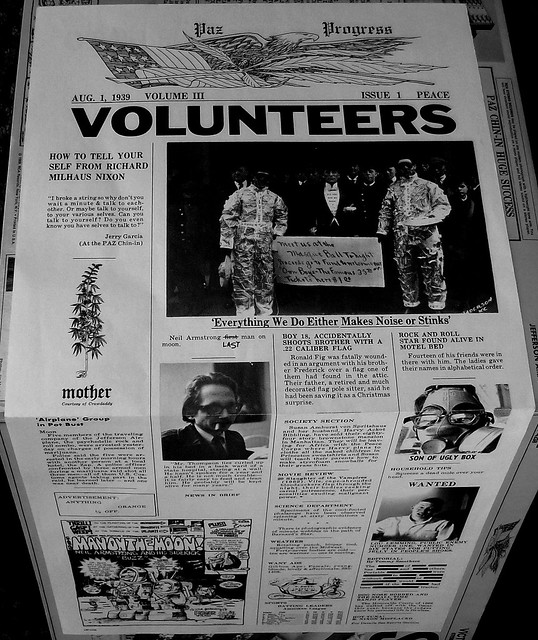
            And if a gatefold isn’t enough, there are double gatefolds, too, and gatefolds with inserts, booklets, and records that aren’t even gatefolds, they just have odd shapes, like The Low Spark of High Heeled Boys and Shoot Out at the Fantasy Factory by Traffic, which have two corners cut out and the art is an optical illusion of a 3D box that looks very real if you stare at it long enough. This kind of super packaging is generally the domain of superstars like Elton John, Jefferson Airplane, Harry Nilsson, Joni Mitchell, artists with big budgets and a fondness for excess. After Nilsson Schmilsson, Nilsson was all gatefold for the rest of the 70s. Pussy Cats and Duit On Mon Dei are both triple folds with lyrics on one spread and on the other, collages of snapshots taken during the making of the album, both of which appear to have been outrageous parties. Mitchell uses the double gatefold for her underrated tour de force Mingus to give it more of an art book feel, with her paintings of Charles in fields of white with delicate lines of text here and there. But few can top Elton and the Airplane (and still qualify as low-hanging fruit). Their more elaborately packaged albums are like mixed-media happenings you can hold in your very hands. Elton’s albums have a Hollywood flair. Tumbleweed Connection comes with a twelve-page sepia-tone booklet full of 19th Century old West etchings - trains and riverboats and guns, shots of Elton and his band and lyricist brooding dramatically. Goodbye Yellow Brick Road folds out three ways like one of those reflective things people used to hold up across their chests to get a darker tan. All the lyrics are splayed across in all different colors and each one has its own little illustration, like those old time movie posters with drawings of the actors and the most dramatic scenes. And the whole concept of Don’t Shoot Me I’m Only the Piano Player is a night at the picture show. The cover shows a couple buying tickets at a theater with album’s title across the marquee. Inside, on the left panel, the song titles and album credits are laid out just like a movie poster, and on the right is a big picture of Elton holding his hand out like a stop sign. It’s all colorized and cool looking, and so are all the other photos in the booklet it opens up to. Page after page of groovy cool-colored pictures. It’s just a wonderful artifact. I think mine cost $4. And Jefferson Airplane. Volunteers and Bark: two of the best covers ever made, and both relatively inexpensive. Bark comes in a paper bag with JA printed on the front, just like the old A&P logo. Open it up and on the other side are freak-comic portraits of the band in thick-black ink. The bag is folded over a standard record cover with picture of a dead fish wrapped in paper and tied in string with a bow. And inside is a fold-open lyric sheet printed in red and black, and on the back is a list of things you can do with the bag. A long list and, as you might imagine, some of the suggestions are quite unusual. I love this record, even though it’s not the record I reach for when I want to really listen to the Jefferson Airplane (I play it when I want to hear early, very well done hard rock). When I want the Airplane in its fullest revolutionary glory, it’s gotta be Volunteers, a Woodstock-era masterpiece with the freakiest and coolest mega-gatefold of all times. It’s done up like a newspaper published in Mescaline Land, with phony stories and lots of pictures. It has so much going on, you can stare it for hours. And that’s really what the gatefold is all about – sitting and staring and listening, slowing down, paying attention, making an event out of a collection of music. And isn’t that precisely what we celebrate when we celebrate RSD?

Friday, March 15, 2013

Fables of the Reconstruction: Herbcraft & MV+EE

Herbcraft has come a long way in the two years since their first album, Herbcraft Discovers the Bitter Water of Agartha. That one was a gem of the DIY psychedelic scene, a terrific concept – a portrait of an imaginary long-lost concept album from 1973. Matt LaJoie, the man behind Herbcraft, recorded it in his bedroom in Portland, Maine, over the course of a snowy weekend. It was one of those great ideas that catches your attention and is executed well enough to hold it through both sides. It’s a little thin and wobbly, sure, but that’s part of its charm. But now, with Herbcraft’s third LP release, The Astral Body Electric, LaJoie is playing with a full band, and the sound is nicely muscled and steady. It’s a major advance down the path to psychedelic godliness. The most dramatic improvement comes with the addition of drums, which were the most conspicuous missing element from the first two records. There’s also some flute and organ mixed in to give it a 60s-Renaissance-Star Trek sort of feel here and there, and LaJoie’s voice is fuller, more confident. Together these new dimensions make this album feel less like a third album and more like a stunning debut. But it’s still Herbcraft. If you liked space-jet-around-the-roomiverse guitar sound of Ashram to the Stars you should be happy here because this record’s full of weird noises. And if you like the plodding-spiritual-pilgrim plot of Agartha, you’ll be happy, too. The Astral Body Electric has that same Third-World-in-outer-space sound. It pulses with a vaguely Middle-Eastern rhythm that would’ve worked well as the soundtrack for just about any scene in The Last Temptation of Christ, and these beats pull the record together like a loop of thread. The structure’s not constricting - quite the opposite - it allows Herbcraft to roam further than they ever have.
            The other thing about The Astral Body Electric is that it was mastered by Matt Valentine of MV+EE, and this factors hugely into its quantum-leap-ness. Valentine uses a technique called Spectrasound. It makes the music sound like it’s coming from all corners of the room. For instance, if you’ve listened to MV+EE’s 2012 release Space Homestead on a good system, you probably noticed that there’s this part where it sounds like someone’s knocking on the walls, outside, across from where your speakers are. That’s Spectrasound. It finds spaces beyond the reaches of the balance knob and fills them with sound. At one point while listening to the new Herbcraft album I got up to see if the washing machine was going berserk way off in the laundry room, but it was just something I was hearing in the music and the Spectrasound. I have no idea how Spectrasound works. I’ve emailed Valentine and asked him. I told him about the wall knocking. All he said was, “it's in the walls alright, heh heh...crackin' me up.” And on the internet the only explanation I could find was this: “MV’s production technique places tones dancing all around the stereo sound field.” Whatever it is, it’s psych-O-delic. Especially on MV+EE’s newest, Fuzzweed. It’s like being in the wormhole Jodi Foster went through at the end of Contact, except it’s low-gravity and slower than the speed of light, and it’ll only get you as far as the sofa and the fridge and back, 40 minutes, round-trip. It’s all good, but side two is the masterpiece: a 20-minute three-parter that starts off as a ghostly folk tune and then just goes off, everywhere, into spiral galaxies ruled by Iron Man and inner spaces made of slide-guitar plumes, and so on, and so forth. I’ve tried to describe it at another site and failed. The best I can do here is to say that if you’ve listened to the last track on Space Homestead, “Porchlight>Leaves,” and dug it, you’ll dig this. That track, the trippiest highlight of that record, is but a road report from the journey to this freaktastic Spectrasymphony.

Friday, January 25, 2013

Fables of the Reconstruction: Low-Hanging Fruit, Pt. 3

More cheap thrills from the used vinyl bins…

Jesse Colin Young – Together
This is a no-frills early-70s downhome hippy-rock record that goes just right with a beer at the end of a hard day, or a bong hit at the start of an easy one. The opener is “Good Times,” a sweet reminiscence of the summers of love in San Fran, and the remaining ten songs range from blues to boogie-woogie to country to folk, a near-even mix of covers and originals, all tied together with Young’s smooth, mellow-my-mind voice. Seriously, his singing is right up there with the very best, whether it’s a tender love song, like the title track, or the relentlessly happy “Lovely Day,” or “Peace Song,” which is every bit as idealistic and hopeful and love-inspiring as “Get Together” was. I got this record for $2.99 at Twist and Shout and it plays with hardly a crackle. I listen to it often.

Emerson Lake and Palmer – Tarkus
Side one is a rock symphony called this:
Tarkus- Eruption
- Stones of Years
- Iconoclast
- Manticore
- Battlefield
- Aquatarkus
And, as the name suggests, it’s 20 minutes of prog awesomeness. Hard to describe without making weird noises with a high-pitched voice and a spastic tongue. Drum solos, bass solos, keyboard solos, all soloing at full speed at the same time, in perfect sync, and a climactic, soaring guitar solo near the end. Honestly, I’m kind of hinky on ELP because they were such good musicians and, judging from the film footage I’ve seen of them in concert, they were insufferably arrogant about it. And on some of their records they sound a little too safe for me. But not this one. It’s exactly the kind of balls-out pretentiousness I want when I reach for prog.

Tom Tom Club – Close to the Bone
Unexpectedly trippy. Like Remain in Light trippy, but happy, and way more danceable. There are lots of beats that weave in and out and bounce all across the stereo, super synthed-up with echoes and cosmic curviness. No kidding, these dance tracks are as atmospheric and complex as the Talking Heads at their early-80s best. This record stands as a solid companion to Speaking in Tongues, released the same year. I don’t remember this band being so good. When I was in my teens and always hunting for freaky shit, I thought Tom Tom Club was just better than average synth-dance-pop, and that wasn’t really my thing. But if I’d only known just how far out this record gets in a tight universe of butt-bumping boogie, I would’ve jumped in and boogied too, maybe even gotten laid. (“He’s the man with the four-way hips!”) This record isn’t better than average. It’s where this kind of music went when it died. 

Monday, January 21, 2013

Fables of the Reconstruction: Low-Hanging Fruit Pt. 2

When I got back into collecting vinyl, my first impulse was to buy back all the stuff I owned before I went digital. The classics. But once I’d collected most of those, I wanted more, more, more. I’m not rich, so this means buying cheap – stuff that’s in abundance in the used bins and in relatively low demand. (And some of which is not even available on CD.) I call this bounty low-hanging fruit. Last week I shared a few of my recent favorite finds. Here are some more:

Nilsson – Pussy Cats
If you believe the documentary Who Is Harry Nilsson?, the late great singer/songwriter peaked with Nilsson Schmilsson and then binged his way through a bunch of mediocre-to-bad albums to oblivion. His tenth album, Pussycats, is singled out as a particularly low moment: party buddy John Lennon pushed him past the edge and blew out his beautiful voice. Which is true, except it leaves out the fact that it’s flat-out gorgeous. I mean, come on. This is rock and roll. Destruction is an essential part of the aesthetic. And what else would you expect from Lennon (the man who took acid everyday for like a year or something as part of a conscious quest to destroy his ego, and who, by his own admission, succeeded) directing Nilsson (the man who’d ask friends out for a drink and they’d come home three days later without a clue of where they’d been or what they’d done). It’s a spectacular mess of an album, and so weird. Yes, his voice cracks. There’s only about three seconds of his unworldly high-pitched smoothness. And at times he actually sounds like Lennon on parts of Imagine and Plastic Ono Band. But he’s raw in the best rock and roll way – like Sam Cooke at the Harlem Club or Joe Strummer or Bruce or any other gravel throat who’s ever ripped the guts right out of your solar plexus. And he’s surrounded with Lennon’s fuzzed-out trippy pop arrangements. Mine cost twelve bucks, which is a little high for a low-fruit designation, but I’d have paid three more for it, even without the double gatefold full of mid-session snapshots of Nilsson and Lennon and everyone else who joined the party.

Grace Slick and Paul Kantner – Sunfighter
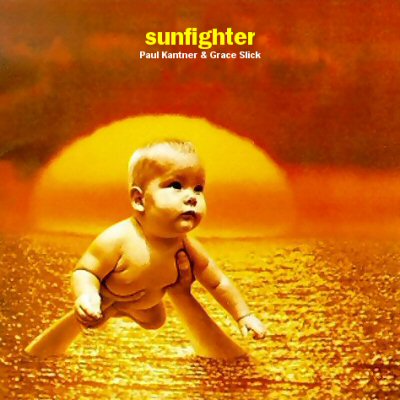
When I look at the cover of this album, I wonder what it was like being the daughter of a couple as freaky as Kantner and Slick. Baby China appears on the cover naked and chubby, held up toward the sun on the hands of her mom and dad, which are rising out of the sea. The gatefold opens to a photo collage of cosmic explosions, and the inner sleeve has a picture of Kantner and Slick side by side, both of them young kids -- him standing erect in his military uniform, her at a piano, sitting as straight as an Aryan, in her officer coat and tails. On the other side is a dystopian poem called “Pets.” It’s a very odd artifact in celebration of a newborn child, and it’s made stranger still by the fact that it was mass-produced and sold around the world. I had a huge crush on China when I was in high school and she was an MTV VJ, and now, 41 years later, I own a copy of her baby album that I got for $2.99 from Twist and Shout. It has heavy ring wear and the initials “JB” in the upper left hand corner. As for the music, it’s all eminently listenable, if not consistently memorable: solid, somewhat hard-driving, early 70s rock, with some acoustic strands woven in here and there, and lots of Kantner fantasy/sci-fi lyrics about wizards and lizards and the like. But the album has stellar high points. Side one breaks down halfway through into a wonderful wash of outer space freakiness. And side two features “China,” Slick’s ode to her daughter, which begins, “She’ll suck on anything you give her.” It’s just piano and swells of strings toward the end, and Slick’s voice is magnificent as she sings of her child and the world: “It all comes in, so fast, it all comes in.” Surely China has a fondness for that one.

Steve Hackett – Voyage of the Acolyte and Please Don’t Touch!
Records by ex-Genesis ax man Hackett abound in the used vinyl racks, and they really put the old “don’t judge a book by its cover” credo to the test, because almost all of them have hideously cheesy artwork. But some are full of great music, and are worth much more than their miniscule asking price. Odds are you can get a bunch for less than $20. Voyage of the Acolyte is generally agreed to be his best, and it’s certainly the most psychedelic. One good friend described it to me as “blobular.” Hackett’s main gift, other than his stratospheric guitar playing, is his ability to craft complex and epic arrangements, and Voyage takes your ears around the world forward and backward through time. So does his second solo effort, Please Don’t Touch!, the first to feature his mastery of a Roland GR-500 Guitar Synthesizer. The sounds shift from stuff that would be perfect for a sci-fi movie soundtrack, full of amplified drama and tension and weird sounds, to lovely strains of classical-inspired acoustic guitar, to late-70s guitar-god pop. The vocal tracks, few and far between, are a bit unexpected. They feature guest singers Richie Havens, Steve Walsh of Kansas and R&B siren Randy Crawford, a trio whose voices are so distinct that they would give the record a various-artists feel, were it not for the connective thread of Hackett’s considerable composition talents.

Thursday, January 10, 2013

Fables of the Reconstruction: Low-Hanging Fruit, Pt. 1

For the past couple of months I’ve been feeding on low-hanging fruit -- stuff that’s plentiful in the used vinyl bins, and cheap. I like to go to the record store with a hundred bucks or so and come home with more records than I can hold in my arms. The trick is to like music that other people have liked enough to buy but not enough to keep. Lots of other people. Big-label stuff from the halcyon days of the record business, the 70s and 80s. Records that sold by the thousands and hundreds of thousands but never became universally accepted as must-haves. There are a lot of wonderful things to be found within these broad parameters. Here are a few of my recent favorites.

Gentle Giant – Free Hand and Interview
These records came out near the end of the band’s life, when they were at the peak of their creativity and skill, and they’re unlike any records made by any artists before or after. They weren’t the big breakout hits the band hoped they’d be, but they sold better than anything else they’d done, though they’re less sought after today than their earlier records. They’re less like collections of rock tunes than compositions of abstract aural patterns. Which is not to say they’re muddy mélanges of free-form psychedelia and noise; weird as the arrangements are, they’re always accessible and often infectious. The same can be said of Gentle Giant’s earlier records, with their mix of hard-rock edginess and the complexities of classical music, but what makes these stand out in my collection (besides their cheap price) is how far they lean forward, especially Interview, which weaves strands of as-yet undefined new wave into the pastiche, particularly on track two, “Give It Back,” with its odd electrified and heavily layered polyrhythmic reggae vibe. I’ve listened to this record many times and every time it surprises me. It’s just some of the most unusual and unusually well done music in my collection.

Kinks – Soap Opera and Schoolboys in Disgrace
If you put any stock in the ratings on AllMusic, you’re bound to think the Kinks hit a low in the mid-1970s, at the tail end of their run of concept records. Don’t believe them. Reading the reviews for Soap Opera and its immediate predecessor Schoolboys in Disgrace (which earned one and two stars respectively) I expected a couple of pretentious, sprawling, incoherent, prog-rock wannabe pieces of crap. Nothing could be further from the truth. They’re both tight collections jam-packed with high-quality, hard-rocking pop songs – relentlessly fun, catchy and danceable. And funny. Especially Soap Opera, a tale of a rock star who changes places with an everyday bloke and gets trapped in his boring, miserable life. The poor chap has to drink to get some relief from the relentless monotony of it all and, in one of the funniest rock songs of all time, “Ducks on the Wall,” he falls into sexual frustration because of his new wife’s turn-off taste in interior design (“I love you baby, but I just can’t ball with those ducks on the wall!”). Great stuff to crank when you’re cleaning the house or drunk.

Fleetwood Mac – Tusk
With the possible exception of Son of Schmilsson, this is the weirdest high-budget, major-studio, top-40 album of all time. It came on the heels of the band’s biggest success, Rumours, and it was said to have cost a million dollars to produce. For most of the record it sounds like they spent that much: flawless late-70s pop, densely layered with lovely sounds from all kinds of different instruments, and dreamy harmony vocals, every note tucked into one another so perfectly that it’s endlessly airy and light. But some of the songs are strangely lo-fi, with fuzzed-out bass lines and guitar solos and spastic beats that sound like they were made with electrified rubber and a bunch of shiny new metal trash cans. And the title track is perhaps the strangest song ever to hit the Billboard top ten, with its marching band core shrouded in echoing crowd sounds and overlays of jungle sounds (“ooga agga ooga”). Back and forth this album goes from the lovely lovelorn dream pop of Christine McVie to the Wiccan crystal melodies of Stevie Nicks to the frantic break-all-the-rules genius of Lindsey Buckingham. Two LPs packed in double inner sleeves made from thick, shiny paper, covered with elaborate and dreamy art inspired by coke, Colombian weed and Cutty Sark. It’s a peerless artifact of a gloriously decadent time. It’s been reissued on heavy audiophile vinyl, but if you’re lucky, like I was, you might just find a pristine copy for six bucks – or less.

Wednesday, December 5, 2012

Fables of the Reconstruction: Woods

Woods are my favorite contemporary band for a lot of reasons, but the two biggest are their song writing chops and the weird sounds they weave throughout them. I don’t know enough about music to be sure exactly how they do it, but their tunes seem to reside in the major and minor keys simultaneously, if that’s even possible – they’re happy and sad all at the same time. And they’re infectious, highly hummable. As for the weird sounds, it all comes from the way they record: straight-up analogue. Inspired by records from the 60s and early 70s, the band has sought to recapture that sound by recording on the same old-school tape systems their idols did. Jarvis Taveniere, who along with Jeremy Earl forms the core of the group, said once in an interview, “when I began to develop my ear and have a more defined opinion on sound, I realized most of my favorite albums didn't sound expensive. I knew we couldn't play like The Byrds, but ‘Eight Miles High’ didn't seem sonically out of reach.” Woods go for those warm, cosmic sounds that creep into classic albums, like part on “I Wasn’t Born to Follow” from The Notorious Byrd Brothers (and the Easy Rider soundtrack) where the melody seems to get sucked into an oscillating jet engine, or the washed-out euphoria of “Shine a Light,” near the close of Exile on Main Street, or every second of Their Satanic Majesties Request. But they’re not a retro band. Despite the nods to the past, they’re a very current band. They’re like how music from the 60s would be if time had gone in reverse and punk had come first.
            They’re also Dead Heads, or at least Earl is, and for years I’ve been trying to get an old Dead Head friend of mine into them. At my urging, he checked out their 2010 release, At Echo Lake, and didn’t much like it; he thought the playing was subpar and the vocals were grating (“sloppy and hoarse,” is how he described them). It’s true, Earl has an unusual high-pitched voice, and it tends to polarize music fans: some love it, some cringe. And it’s true, too, that their musical skills have been evolving. Much as I love them, I rarely listen to their earliest records because, although they show some promise they’re not particularly well-executed. But with their last four records, starting with 2009’s Songs of Shame, they’ve steadily improved on all fronts: song writing, playing, recording technique, even singing. And with this year’s release, Bend Beyond, I think they’ve made a record that’ll ring nicely in my friend’s discriminating ears. The vocals are much smoother, and they’re nicely stacked in rich harmonies.     The songs are catchy and deceptively simple, masterfully played, but not slick—they’ve maintained their DIY edge. Indie music blogs are hailing it as their “most approachable gateway yet,” a cleaner presentation of their loose and lovable sound, and the band is forthright about the more deliberate approach they took in making it, spending more time crafting the songs in their home studios, moving away from the more spontaneous, devil-may-care policy that drove their earlier releases. A good comparison for this release is the records put out last year by Real Estate and Kurt Vile. Both artists had started in the low-fi quadrant of the underground music cosmos, and both had early releases on Earl’s label, Woodsist. Their 2011 releases were their first pro studio albums on big labels. Among the two, I’d place Bend Beyond nearer to the Kurt Vile end of the spectrum. It’s cleaner, yes, and more professional, but their sound has lost little if any of their weirdness and uniqueness, and I have to admit I can’t say the same about Real Estate’s Days, which was a bit too polished. What lifts Woods’ new record above the ones by their friends is that they did it themselves. Near as I can tell, they aim to keep doing so, and I believe they’ll keep getting better and better.

Tuesday, September 11, 2012

Fables of the Reconstruction: Hawkwind

In 1977, NASA launched a pair of LPs made of copper and gold into space. Both were attached to the Voyager I and II, a couple of spacecraft that examined Jupiter, Saturn, Neptune and Uranus and are now drifting past the outer reaches of our solar system, and they’ll continue doing so, presumably forever. The records are for whoever or whatever finds them. They contain images from earth encoded into their grooves and about 90 minutes of music that was chosen to give a sense of what humankind is like. There are Western masterpieces by Mozart, Bach and Beethoven, of course, and prime examples of music from the Far East, Middle East and Africa, and Chuck Berry’s “Johnny B. Goode”. As wonderful as this gesture was, I can’t help but believe that they made a grave error by not including any Hawkwind. I think that of all the music from our little blue ball in space, Hawkwind’s would best speak to the souls of extra terrestrials, because they were the lords of Space Rock.

            Other fans might argue with me, but the Hawkwind record I’d choose for inclusion on the interstellar comp would be In Search of Space. It’s their second album, released in 1971, and the first where they fully embraced the sci-fi aesthetic. When the aliens figure out how to play the golden record with the diamond stylus that comes with it, they’ll hear familiar cosmic sounds: the light ticking of radar signals, blobular pulsations like those from a vast cloud of cosmic dust, the built up pressure of pent-up nuclear energy, a metronomic countdown and then, blast off! Their ears will be rocketing though space like intergalactic bandits on a star-faring hot rod. In earthly terms, the opening track, a 15+ minute epic called “You Shouldn’t Do That,” has an early heavy metal/proto-punk feel -- a couple of chords played fast and hard, but all throughout are strange oscillations and vibrations of space tones, like the sound effects from movies where little green men shoot laser beams and photon waves. And all these sounds weave and meld together into a singular force of forward momentum that’ll likely please the ears and minds of whatever ultra-intelligent beings happen to find them.
            I’d caution against including Hawkwind’s third album, though. Upon listening to the 1972 release Doremi Faso Latido, they might think we mean them harm. The punk and heavy metal elements are more pronounced here, so it’s much darker, more sinister (though the flying saucer sounds remain). To my ears, it’s like the soundtrack of an interstellar warlord civilization on a mission to conquer the universe. The vocals remind me a bit of Ozzy—high-pitched but flat, and shouted. The heavy guitar riffs pulsate and drone like a lot of metal and hardcore, but there’s enough variance across both sides of the album—a bit of acoustic guitar and saxophone and some shifts in syncopation—to keep it from feeling monotonous and redundant. In fact, there’s so much going on in the music, between the pulse and drive of the songs and the weird noises that float around it, that it starts to form aural moirés that are so intense they set your head to spinning. Fun for a wild night on earth, to be sure, but probably not appropriate as a greeting to fellow space beings.
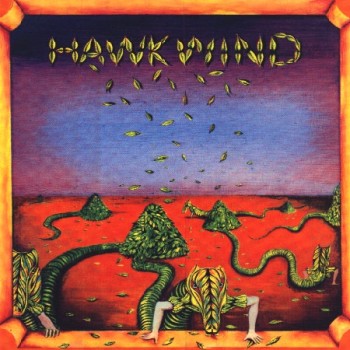
            I definitely do not recommend sending Hawkwind’s first self-titled record, though in some respects it’s my favorite. I vote against it only because it reveals the band in their pre-space days, when they were more of an acid rock group. Pondering the heavens, to be sure, but still lacking the wherewithal to fully escape the earth. The opening track, “Hurry On Sundown,” has a bluesy/folksy feel. It begins with a bright riff strummed on an acoustic guitar, then a blaring harmonica kicks in and dances along with the melodic vocals. On the second track, they venture a fair distance into space, but it’s a feedback-based approximation of space that’s still rooted in earthliness. There’s less artifice; you can picture ragamuffin stoners making the music in some groovy pad somewhere, tripping out. The shape of some of the songs is less streamlined and symmetrical than on their later records, too. The third track, “Be Yourself,” for instance, has an odd three-beat form that’s kind of arty in a punk-rock sort of way, the punkiness due mainly to shouted lyrics. Side two has a similar form, only in reverse, going from off-centered, dark melody and rhythm, through several interludes of guitar-and-amp cosmos (with a touch of crazy saxophone from the gates of hell thrown in), and it ends with another down-to-earth tune, “Mirror of Illusion,” which verges on pop, in a hippy sort of way. It’s a great album, but probably not the best hello for whoever might be out there, millions of light years away. Better to wait to play the space creatures Hawkwind’s first record when they finally arrive at our home planet, where we can have them over for supper and wine and maybe even some of our precious herbs for a long night gathered around a real turntable.

Friday, August 24, 2012

Fables of the Reconstruction: Gunn-Truscinski Duo

Steve Gunn is the best guitarist that no one has heard of. He’s not a blazing-guitar-solo great guitarist, though he’s such a master of the six-string that I suspect he could be if he wanted to. His music is mellower, richer. Much of it he performs on acoustic guitar. If I were to pin his style down, I’d say he plays in the tradition pioneered by John Fahey: highly skilled explorations of deceptively simple melody, rhythm and chord themes that reside somewhere between jazz, classical and blues, with a whole world of international sonic spirituality mixed in. When he does plug into an amp it’s not to blast out power chords and screeching licks, but to add a layer of electric resonance to his intricate tapestries of sound, vibrations along the lines of those conjured in a good raga. Gunn started out in a virtually unknown Brooklyn drone trio called GHQ, and in 2007 he began releasing music of his own, on CDRs at first and then on vinyl with a tiny label based in North Carolina called Three Lobed Recordings. These records are rare from the get go: Gunn’s 2009 LP debut, Boerum Palace, had a print run of just 823. Which might explain his relative obscurity. He’s clearly not trying to be famous.
In 2010 Gunn teamed up with drummer John Truscinski to form the Gunn-Truscinski Duo, and they’ve released two records, Sand City and Ocean Parkway, both with Three Lobed, both on limited edition vinyl—624 and 777 copies respectively. The musical relationship between Gunn and Truscinski feels similar to the way Bill Evans and Paul Motian played together, two stellar musicians playing improvisational lead simultaneously within highly structured themes. The result is something that’s at once expansive and contained, tunes that feel simple enough to relax the mind at the end of a long, hard day, but full of complicated waves of notes dense enough to yield surprises across many, many listens. And it sounds so good on vinyl. It’s the kind of music that begs for the warmth and physical texture of an LP, partly because of its simplicity, but mostly because it’s music rich with handmade qualities and textures—the scrape of Gunn’s fingers across the strings, the woodenness of his guitar, the lo-fi hum of a small amp, the tautness of the snare drum, the uneven brassy sheen of cymbals. It’s like wood grain and unpolished stone. It’s something real in a world that seems to be fading into bits and gigabytes.
Frankly I can’t understand why Gunn and Truscinski are not superstars, at least among the millions of quality-music lovers who tune in to NPR’s All Songs Considered to be turned on to new aural art, because they’re just so good. In fact, Gunn has received some NPR attention with a fascinating interview from July of last year (in which he confessed to being a Dead Head). But the surreally small pressing of their latest release suggests that either the interview drew too few new fans or they don’t care and they want to keep things small. I’m not complaining. I like being one of the few people on earth who knows about such a good thing.

Monday, August 13, 2012

Fables of the Reconstruction: Holy Modal Rounders


It’s a mystery why the Holy Modal Rounders haven’t gotten as much revisionist historical fanfare as the Velvet Underground and the Mothers of Invention. The two albums they released in 1967 and 1968, Indian War Whoop and The Moray Eels Eat the Holy Modal Rounders, were paradigm-shifting masterpieces, every bit as radical as the Velvets’ banana-sticker-cover self-titled debut and Freak Out! and Absolutely Free by Zappa and the Mothers. In some ways, the Holy Modal Rounders’ records are even more avant-garde because all the weirdness is poured into traditional forms that at that point in time hadn’t had much affiliation with pop, stuff like folk and hillbilly music and ragtime and Tin Pan Alley and punk, long before punk even existed. And in so doing, they offer a stunning view of the infinite possibilities of rock and pop that would be explored in the coming years by young musicians all around the world.
            That’s not to say these records inspired legions of sonic experimenters. Most likely, they didn’t. I’d never heard of the Holy Modal Rounders before this year, when my uncle loaned me a record they did in the mid-seventies with Michael Hurley, and in the time since I became acquainted with them I’ve discovered that most of my music savvy friends hadn’t heard of them either. That’s probably because these records are weird beyond weird; so weird that they verge on sloppy, kind of like the music I used to make with my buddies in high school when we’d get really stoned, turn on a tape recorder and strum warbling chords on an acoustic guitar and bang on pots and pans and make spooky sounds with our mouths. The difference here is that the Holy Modal Rounders are skilled musicians, and at the heart of all the psychedelic spontaneity is some solid playing. The fiddle work in particular is top notch. And it’s all stirred together with heavy doses of studio effects—echo, delay, reverb—that give the records a dreamlike quality. Listening to these records is like floating through the greatest flea market on earth, a place jam packed with Americana ephemera that drifts in and out of focus through a hallucinatory haze. You’ll be floating along, grooving on an echoing organ line that sounds equal parts Star Trek soundtrack and funeral parlor dirge, when suddenly the muffled drums quicken and a strand of fiddle cuts in and you’re tapping your foot to a down home barnburner. After a minute or so of that, it might slide into a ragtime ditty, similar in melody to Country Joe and the Fish’s “Fixin’ to Die Rag,” except it sounds like it’s being sung by cartoon rednecks with super-secret intellectual alter egos.
            In other words, these records are just as wild and crazy as can be, and they were wild and crazy at a time when few musicians knew it was even possible to be so strange. If I had first heard them without knowing what they were, I would’ve thought they’d come out earlier this year, and that they were cutting-edge, DIY, underground freak folk, not music that’s older than I am. I’d say they were wildly influential if I had a notion that a lot of later artists had heard them and followed suit, but the annals of rock history are too quiet about the Holy Modal Rounders for me to believe that their influence was direct.

Friday, August 3, 2012

Fables of the Reconstruction: Krautrock and Its Descendants Pt. 2

I have a friend who remembers listening to the radio in the mid-seventies when the DJ came on and said, “We have this new record and this is the future of music,” and then he played Kraftwerk’s “Autobahn” in its entirety, all twenty-two minutes and forty-six seconds of it. I’m jealous. It must’ve seemed like a musical revolution. At its core, “Autobahn” is a simple pop song with a catchy tune and a chorus you can sing along to even if you don’t know German. But it goes on and on and spirals into all kinds of cosmic synth sounds. It’s supposedly structured to resemble a road trip on the famous German highway, the one with no speed limit. I can’t vouch for the resemblance, because I’ve never been fahr'n fahr'n fahr'n auf der Autobahn, but the song definitely has a narrative structure, like a journey through a soundscape of shifting tempos and curious instrumental interludes, and there’s enough variety and stability to hold your interest through the whole trip. When it ends, I want it to keep going.
            Radical as the song must have seemed to my friend back in the day, it probably sounded tame to fans of Kraftwerk’s earlier records. The band’s first several records were quite a bit weirder; freeform compositions conjured with an array of synthesizers and various drums, strings and wind instruments. And this is a reason why Kraftwerk reminds me of one of my favorite contemporary bands, Wet Hair (another is that the latter is clearly inspired by the former). The group hails from Iowa City, and their earliest recordings, which started coming out in 2007, were only for the most adventurous ears: dissonant washes and swells of far-out synth tones and occasional vocals that were flat and deep and uninviting. But when I got into them last year, when they released In Vogue Spirit, some of their earliest fans groused that they’d sold out because the album was full of songs as opposed to waves of weird noise. But to my uninitiated ears, it sounded as far out as can be. As with “Autobahn,” trippy old sci-fi-movie sounds punch up the melodies and the driving beat. With their latest release, Spill Into Atmosphere, their tunes have become even tighter. The bass and drums are bright and clear, and the synth sounds are highly danceable. But there’s still plenty of weirdness stirred in. I talked with Wet Hair’s main man Shawn Reed earlier this year, and when I asked him to describe his music, he said that “kraut pop,” for lack of a better term. So if you’re a fan of Kraftwerk in the 70s, you might want to check this out—though, I have to warn: Reed’s vocals take some getting used to; like I said, they’re rather flat and piercing. Likewise, if you’re already into Wet Hair and other new indie underground stuff like it, you might want to dig into the roots: Krautrock like Kraftwerk, “the future of music.”

Friday, July 6, 2012

Fables of the Reconstruction: Muscle Shoals, Alabama

I’d never been to a recording studio before last week when I visited FAME Studios in Muscle Shoals, Alabama. I chose a good one for my first. Etta James, Clarence Carter, Arthur Conley, Little Richard, Wilson Pickett, Aretha Franklin and Otis Redding all recorded there when they were young and among the best musicians on earth. They’ve even got a sign in the lobby that says it: “Through these doors walk the finest musicians, songwriters, artists and producers in the world.” It sits between a CVS Pharmacy and a Pizza Hut a half block off the main road into Muscle Shoals, a long and hideous stretch crowded with chain stores and new car lots. The Pizza Hut crew watched us as we parked and got out of the car, checking to see if we were famous. Over the last decade they’ve seen the likes of the Dixie Chicks, George Strait, Travis Tritt, Billy Ray Cyrus and Chris Ledoux go through their neighbor’s door. It seems so unlikely that a mundane place like this, an hour from the nearest interstate, two hours from the nearest city big city, would be the birthplace of so much culture and character.
Gold records hang in the lobby, and in the waiting room outside the studios there are rows and rows of framed photographs. I stared for a while at one of Little Richard caught with his head cocked back, mid-wail, and when I went into the studio I stood on the same spot where he’d stood in the photo. Sounds corny, but it felt cool. The place has high ceilings with a lattice of dark wood to trap the bass. The guy who gave us our tour sat down and played a few notes of the grand piano and the sound just hung in the air like energy and light. The control room sits half a floor up from the studio, so the producers look down on the musicians. Up there I found a reel of two-inch tape that read, “Duane Allman Outtakes.”
The next morning I visited the Alabama Music Hall of Fame — for a whirlwind tour, unfortunately, because I was in a hurry to get down to Birmingham. When I walked in I heard the Dead playing. I asked our tour guide why, and he pointed to a display case with an embroidered dress Donna Jean Godchaux used to wear onstage, along with a silky Europe ’72 tour jacket, and a copy of Europe ‘72. She grew up in the area and she lives there now. I’ve always thought Donna was a cool character in Grateful Dead lore, but this realization of where she’s from made her seem all the more cool, like she’s got it in her blood or something. The museum’s not particularly big, but it’s full of stuff of interest to music freaks. My favorite artifact was the rotating steel guitar, with four sets of strings mounted on a kind of rotisserie, each tuned differently. Actually, the highlight for me was the Hall of Fame itself, with each of the inductees painted in oil on glorious black velvet. The paintings are big, mounted two high across all four walls, so they sort of overpower you, magnificent and reverent and cheesy all at the same time.
I know Sun Ra said, “Space is the Place.” But there’s something to be said for his sweet home state.


Sunday, June 17, 2012

Fables of the Reconstruction: Nick Drake and Fairport Convention

I was getting bogged down in psychedelic rock and punk, so I asked my record store friend to recommend some folky mellow stuff, and he suggested Nick Drake and Fairport Convention. All I knew about Drake was what I’d heard on a Volkswagen commercial, and Fairport Convention I’d heard just once on a bootleg cassette and I couldn’t remember much about it. The Drake was along the lines of what I was expecting, simple melodies sung and strummed gently on an acoustic guitar. I picked up Family Tree, a 2007 double-record release of his earliest recordings. His voice is so smooth and soothing, sad in the loveliest way. It’s got harmonies built into it, like he’s somehow singing bass and treble at the same time. And his guitar work leans to the fingerpicking end of the spectrum, so it’s busy and intricate, but like his voice, it’s velvety, simple, it never overpowers. I’m instantly calmed when I lower the needle onto any of the four sides. In addition to the solo numbers, they added a few piano tunes by Drake’s mother that were recorded on very lo-fi equipment. They feel like ghostly tunes from another time, like something you’d hear on a 78, without all the crackles and pops. I love listening to these in the late afternoon, when the sun’s angled off behind the trees. It’s music to deepen thoughts.
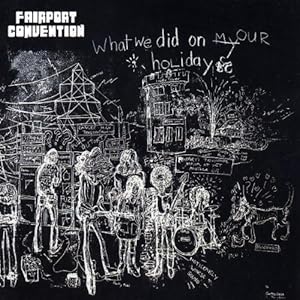
            Fairport Convention was full of surprises. I grabbed their second, third and fourth albums—What We Did On Our Holidays, Unhalfbricking and Liege & Lief, all from 1969. The first big surprise is that I like them as much as I do, because the vocals are of a style that I’ve never been crazy about. Sandy Denny’s singing fits in with the ilk of female folk singers who stay mostly in the higher octaves and whose voices have a lilting quality that calls to mind Medieval maidens and mead. I don’t hate it; it’s just a little too pretty for me. Music has to have at least some darkness to keep me coming back to it. Somehow Denny manages to fold a bit of evil into her pretty voice. Part of the secret, I think, lies in the harmony vocals, sung by Richard Thompson. He adds just the right low notes to give Denny’s voice fullness, and his voice tucks perfectly into hers, bolsters it, never overshadows. The other factor is the instrumentation; Fairport Convention’s arrangements are adventurous and eclectic, woven with strands of blues, rock, raga and folk melodies from all around the world, and electric guitars and full drums, and they stretch Denny’s voice in ways that I’ve never heard Judy Collins’s voice stretched. For instance, on the last song on side one of What We Did On Our Holidays, a cover of Bob Dylan’s “I’ll Keep It With Mine,” begins with an electric guitar strummed low and quietly in a way that makes you know that the song is going to build up to triumphant heights, and it does: the drums kick in, and the guitar and bass play harder, and Denny belts it out: “Come on! Give it to me! I’ll keep it with mine!”
            My favorite number on that album is “Book Song.” Thompson sings lead, but not by much; Denny is right there with him through every note. The melody is a masterpiece, drawn out almost to the point of being epic, and their voices are bolstered by wide-ranging sounds: a bit of sitar here and there, some violin, a tape of an electric guitar solo played backward and forward, a gentle swell of organ at the end. Their music becomes more adventurous across the arc of the three albums. The second to the last song on Unhalfbricking is an eleven-and-a-half-minute adventure that begins sort of like a British or Celtic folk tune and builds into a fulsome jam with violin, thick bass and electric guitar with a raga flair. This roaming track seems a precursor to the third record, Liege & Lief, which, unlike the others, has no covers of songs by American folks artists such as Dylan. The roots here all dig deep into the British Isles, all punched up with modern amplification and attitude, all adorned with Denny’s beautiful voice, and the result is quite unlike any other I’ve ever heard. It’s got the mellow I was asking for, but it also has the complexity I need to keep me coming back to it. 

Friday, June 8, 2012

Fables of the Reconstruction: LA Punk

I read Please Kill Me: The Uncensored Oral History of Punk and was peeved to find almost no mention of Los Angeles. To me, L.A. punk is punk. Those great bands that came out of there in the late 70s and early 80s weren’t the first punk bands, but they were most highly evolved and lowly devolved. My conviction is probably due to the movie Decline of Western Civilization. It’s by far the best punk-rock doc and it had a profound impact on me, especially the scenes with the Germs. I was in junior high when I first saw those shots of Darby Crash writhing on stage, cutting his bare chest with shards from broken bottles, screaming the most guttural screams that any punk has ever screamed. The Germs’ GI has been reissued on CD this week after a far-too-long hiatus. Produced by Joan Jett, it’s an all-out scorcher. A lot of people call it the first hardcore album ever made, which is understandable, because they play very fast, loud and hard. But there’s a lot more going on than pure aggression. The guitar work is intricate and spidery, the drums are spastic but centered and forceful, and the bass playing is very loose and spaced out. I read Lexicon Devil: The Fast Times and Short Life of Darby Crash and the Germs before I read Please Kill Me, and I was surprised to learn that the Germs didn’t listen to a whole lot of punk. They were into the New York Dolls, the Ramones and especially the Stooges, but they were actually more into the arty 70s bands that I always thought punk was rebelling against. Lead singer Crash and guitarist Pat Smear hailed David Bowie and Yes as their favorites, and drummer Don Bolles was big into Krautrock. All this comes through on the album—once you get past the initial shock of its all-out punkness.
            When I first got into punk as a teen in the early 80s, the scene was dominated by hardcore. Anything over two chords was pretentious art rock. My gateway albums were the Circle Jerks’ Wild in the Streets and Golden Shower of Hits, but both of those came out after hardcore had put a stranglehold on the punk scene. The real catalyst was Black Flag’s Damaged. After that record came out, hardcore spread like some sort of violent, conformist disease that consumed disaffected kids from the suburbs. Punk slid into a single, high gear and sort of stayed there, and that’s what a lot of people think of when they think of punk. The fact is that the L.A. punk scene was very eclectic, even after hardcore hit. The members of Black Flag themselves were hardly close-minded hardcore freaks. The band’s founder, Greg Ginn, is a professed lifelong Dead Head, and his label, SST, put out some of the most eclectic and innovative music from the 80s – Minutemen, Meat Puppets, Saccharine Trust. And it was Henry Rollins who turned me on to Jimi Hendrix when I interviewed him outside of the Rainbow Music Hall in ’85 for a little fanzine I made on my mom’s photocopier.
            If you really want to get a feel for the scope and musical promise of the LA punk scene, check out X and Zolar X. The former were arguably the best musicians and songwriters in the scene, and their first four records – Los Angeles, Wild Gift, Under the Big Black Sun and More Fun in the Real World were tours de force. They played fast and hard, but their musicianship was always top notch, especially Billy Zoom’s guitar playing, which had rockabilly flair to it, and the vocal harmonies of John Doe and Exene Cervenka. And they would slow it up and play more old rhythm and blues, good old rock and roll, and even a dash of country here and there. I played Under the Big Black Sun for a friend of mine who thinks he doesn’t like punk. (He likes the Clash, but strictly London Calling and later), and he thought I was full of it when I told him it was punk. Zolar X, on the other hand, were not great musicians. And technically, they weren’t punk. They were part of that nebulous mid-70s genre between glam rock and heavy metal. But they were de facto members of the punk scene. They lived in the same ghetto apartment complex where a lot of the early punks lived (members of the Germs shacked up there, for instance), and they were weird as hell. They billed themselves as aliens from outer space. They spoke and alien language that they’d made up and wore angular, bright-colored satin outfits like the kind you might see on The Avengers, as well as antennae and pointy ears – all the time, everywhere they went. Since they lived in the same place as some the more active early punkers, and they played a lot of the same small venues, they had an unwitting influence on the scene. Their music sounded less like the Germs and X and more like Kiss, without the practiced musicianship and money for production, and way more freakified with outer space sounds. Years later, Jello Biafra of the Dead Kennedys found one of their records in a used record bin and was blown away. He reissued their rare EPs and 45s on a single LP on his punk label, Alternative Tentacles, thus officially sanctifying them in the church of punk.

            So to hell with those snobby New Yorkers and their “definitive” history books that suggest that the Big Apple and London are the only place where punk mattered. As far as I’m concerned, the genre was at its best in the West.

Thursday, May 24, 2012

Fables of the Reconstruction: Matt Valentine Interview

MV+EE’s Space Homestead is the best release so far this year. It’s got everything a psych freak like me needs and loves: cozy downhome melodies spun from acoustic guitar; transcendent vocal harmonies; asymmetrical rhythms; wah-wah; slide/pedal steel; long fuzzed-out solos; some scary feedback; 4D stereo; and a plethora of ghost and starship sounds swirling all around. This week, I caught up with Matt Valentine, the MV of MV+EE, for an email chat, and he confessed that they’re a jam band. We talked quite a bit about Jerry Garcia because, for reasons that are probably better left unexplained, I recently got in touch with him and offered to send him a huge box of bootleg cassettes -- Jerry Garcia Band or Grateful Dead, his choice. He went with the JGB, and during the winter and spring months, while he and Erika Elder (the EE) were putting the finishing touches on the new record, he had those cassettes in constant rotation on the car stereo. Naturally, I wanted to know where ol’ Jer fits in with the whole MV+EE scheme. (Note: Matt’s style of writing in mostly lower caps is preserved here to maintain the MV+EE aesthetic even in the realm of the verbal.)

Why'd you go with the JGB over the Dead?
well i've heard a lotta live dead, there is something for me to love in ALL of it -> the jerry stuff is more elusive and in some ways more solid. what i really dig is hearing him stretch out and his phrasing. i can relate to the more ergonomic rig in the JGB, more real-people vibe, and somewhat tangible to my set up.

Which ones were your favorites, and why?
there are many faves, i particularly dig where he is at in the early solo stages, when he really started to get busy "solo" ('72-'73), but the late '70s -> early '80s have so many amazing shows, and there was one from '92 that blew me away. one of my desert-island ones was 7/8/76. i also dig when they launch unexpectedly on "lonesome and a long way from home," for example, in the late show at the warner theatre in D.C. - 3/18/78.

Photo: Cat Stevens
I've read interviews where you claim Garcia as a guitarist you admire but that he doesn't really influence your own playing. Why?
imagine if i named our dog jorma instead of zuma! sure, garcia is a big influence, but i try to transmute it. if i went around saying jerry was my main insp, that's all folks would rap about. garcia's and lou reed's extended solos are two major signposts for me. and then there's robbie basho. i try not to be too myopic with my playing; i've always eschewed copying because i wanted to develop my own voice; it's a choice and there are sacrifices one makes by doing it that way. i try and recycle all the sweet spots to my ears from all the players i dig, so what went into the hopper as a cardboard cowboy might come out as a lonesome cowgirl, moonlight on vermont. nothing is really "new" in music. it's like speech. there are breakthroughs with little vowels, arcane words. i try my best to secede from the banal within a very rigid structure of western tonality.

we've been a "jam band" all along. we just never came out and said it that brazenly, you dig?  all of our records have exploratory sections and we've always embraced mixed modes and improvisations, even on the studio recordings. that's a massive garcia influence right there. he is also really measured and articulate even when to lesser ears it might seem random. same is true with our music. for example "cold rain" from our "mother of thousands" double LP has a line that sounds like a long rambling solo to undisciplined ears. it's actually a lengthy phrase that i've been playing the exact same way for 10+ years! and it's still a staple in the live show, i guess it isn't finished! it's become a springboard for all sorts of inspired jams. that same record had our "cover" of "death don't have no mercy" as well – a whole side long. erika has always really been into garcia’s choice of material. the dude has a great touch. chill...but really i'm just thankful that he gave so much music, that's probably the biggest jerry influence on me right there.

You’ve called the jams on Space Homestead "covert." What do you mean? 
let's just say all the tunes can have "vegas" arrangements live. so that's the deal with what inspired "space homestead"…it's a pleasure to play the material in concert as much as it was to craft and record.

Vegas?
i guess i mean a lotta things by saying "vegas"...but really i mean how we can vamp for a long time over the changes and explore before coming back in with the next vocal verse...

If you were planning a multi-course musical meal, with Space Homestead as the main course, what other records would you have on the menu?
we'd be servin' up that woods/amps for christ split, hissteria from purling hiss, robbie basho's twilight peaks, gunn-truscinski duo’s ocean parkway, J mascis's several shades of why, and the village of spaces’ alchemy and trust … man, then we'd let it rip. 

Monday, May 14, 2012

Fables of the Reconstruction: Krautrock and Its Descendants Pt. I

There’s a scene in Portlandia where a mom stands up at a PTA meeting in the library of a fancy pre-school and demands better music in the school’s record collection. The discussion gets heated, and the school principal admits that she doesn’t know what Krautrock is. The mom fills with rage and says, “I am getting very stressed out that the head of our school does not know about NEU! These are the people teaching our kids!” The skit hit close to home. I was a college professor before I’d heard of them. I somehow missed out on Krautrock completely, despite a lifelong love of freaky music.
My introduction to NEU! was their first album, NEU!, which I picked up with a whole bunch of other Krautrock classics. It’s a very wide-ranging genre—from the guitar-heavy darkness of Amon Duul to the quiet, icy space sounds of Edgar Froese and Cluster and Tangerine Dream to the computer weirdness of Kraftwerk to the drum-centered jams of Can and NEU!. I wanted to check it out because a lot of the new bands I’m into—Woods, Wet Hair, Herbcraft—are admitted Krautrock freaks. You can really hear the connection in NEU!’s self-titled debut. It came out in 1972 and it’s mostly instrumentals that center on simple but infectious grooves, driving beats that serve as a solid core for cosmic improvisation. As the numbers progress, the guitarists keep adding variations to a central theme, distorting it with space-age swells of feedback and distortion, adding extra beats here and there to quicken the pace, or subtracting to slow it down. It’s like a far-out geometric pattern, like that part at the end of 2001: A Space Odyssey, where Dave the astronaut goes through the wormhole.
As I listened, I came to realize that I’d enjoyed this sound already. It’s obvious to me, for example, that Krautrock has had a strong influence on Phish and the way they approach psychedelic improvisation. It’s not sprawling improv like the Grateful Dead or Miles Davis of the late 60s and early 70s; it’s more contained, like a mandala or a kaleidoscope, but it suggests infinity just as ably as music that seems to spread out through space. And a couple of the songs sound a lot like numbers on recent Woods and Jovontaes records. First track on NEU!, “Hallogallo” has chicka-chocka rhythm guitar riff running through it that’s reminiscent of “Out of the Eye,” a long instrumental on Woods’ Sun and Shade, my favorite album from last year. And the last song on side one, “Weisseusee,” a wonderfully slow and spacy tune, is almost a dead ringer for a long track on Jovontaes’ debut LP, Things Are Different Here.
The Jovontaes’ record was my favorite sleeper release from last year. They’re a band of young skate freaks from Lexington, Kentucky, and they had previously only released a few sloppy sounding cassettes that offered no indication of what they had up their sleeves for their jump up to vinyl. The record is entirely instrumental and it’s very chill and smoky; I like to play it when my wife and I have another couple over and we open up a second bottle of wine and settle in for a long night of conversation and spacing out. It unfolds nicely in the background, but it’s not background music; though relatively quiet and slow, it’s got enough freaky sounds to keep it interesting and compelling for those moments when the conversation dies down and the mind yearns for something to focus on.
Woods’ latest release, a split LP with Amps for Christ, has a more wide-ranging sound, with strands of 60s pop and raga and noise woven through it, but their side closes with a long instrumental called “September Saturn” that’s got a real Krautrock feel. A simple four-beat bass line lays the foundation, and it stays steady throughout as threads of strange sounds are added to it, first some shaky tambourine and symbol, then a few layers of guitar, some fuzzed out, others bright and clear. All together, it forms a kind of aural environment, like some crazy jungle on a Star Trek planet, and it keeps getting stranger and more interesting the more sounds are added in. The Amps for Christ side is interesting, too, rooted more in the noise tradition, but it’s rarely abrasive or grating, and it has a lovely traditional-style song in the middle. But for me, the Woods side is the real reason for picking up this release. They just keep getting better and better, and the fact that this split was a little side project, that the songs here are ones that didn’t make it on the LP they’ll be releasing this fall, indicates to me that they gearing up for a big breakthrough release. And for the sake of our children, I hope that the Shooting Star pre-school on Portlandia picks up a copy for their library collection.

Monday, May 7, 2012

Fables of the Reconstruction: Another Green World

I first met the kid who would become my best friend in high school when we were on a chartered bus bound for a cross-country meet in Fort Morgan. His name was Dave Sherman, and he was a skinny little freshman with a big nose, just like me. We had our Walkmans out and our cassettes were spilled across the empty seats between us. He asked me what I had and I read off the names: The Clash, The Dickies, The Circle Jerks. Dave laughed when I said Circle Jerks, and when I played him “You Drive Me Ape, You Big Gorilla,” he laughed so hard he slid out of his seat. He liked all those arty longhaired groups I was rebelling against—Yes, Emerson Lake and Palmer, ELO. Back and forth we went naming names until we finally hit one in common, Brian Eno. We became best friends. All through the years when music defined us and we were constantly changing, through our teens and early twenties, from punks to Puppet Heads to Dead Heads to just plain freaks, and even down divergent paths, me into gangsta rap and grunge and him into Sufi dancing and post-rock, Eno and Another Green World remained a bond.
            I first came across the album when I was in junior high and on the hunt at the public library for anything that would transport me away from feathered-hair conformity of my little Midwestern hometown in the early eighties. I wanted new wave and punk, and there wasn’t any of that in the record bins at the public library, but the simple, cool, bright-colored design on the cover of this album that made me think it might be close. I took it home and listened to it and I definitely got my wish to be transported to somewhere else. Another Green World has a lot of synthesizer in it, and that appealed to my new wave side, but here it’s in service to songs that are less like songs than lush aural environments, some dense with tropical rhythms, others ethereal and vaporous. Quite a few are instrumentals that slowly rise from silence and fill the air with colorful, shapely sounds and drift back into silence. But there are also tunes you can sing along to, and they’re quite catchy, especially “St. Elmo’s Fire,” with its elating chorus that goes, “In the blue August moon,” and my instant favorite, “I’ll Come Running,” a bouncy, dreamy pop song that would fit perfectly in one of those movie scenes where two lovers run toward one another in a hazy meadow, but it’s funny because the song’s title is paired in the chorus with, “to tie your shoe.” It’s all very easy to listen to; no sharp edges or violent shifts. At the same time, it’s not sentimental or soft; there’s a sinisterness lurking around throughout, a barely perceptible discordant thread that made the record acceptable even when I was a close-minded hardcore punk (after all, even thrashers need some chill music from time to time).
            I never owned Another Green World on vinyl. Through high school and most of my college years I carried the cassette I’d made of the copy I found at the library. But somewhere along the way, probably during one of my many moves in my 20s, I lost it. Then right after I graduated and I was struggling to find a decent job, I got a call from a friend who said that Dave had died of a drug overdose. Dave and I had drifted apart; I hadn’t talked to him for the better part of year. At the funeral, his mom remembered me as his best friend, even though we really weren’t any more, and she asked me if I would meet her at his apartment to go through his things. I wound up taking a lot of stuff – a food processor, a lamp, a rug, things like that – as a favor to her because it was obvious that she couldn’t bear to throw any of it away. But I didn’t go there for any of that. I wanted an artifact to remember him by. The first place I looked was his music collection. There wasn’t much there that I was interested in. He’d taken a liking to cosmic experimental stuff that bordered on new age. But there among all the crap I didn’t like was a copy of Another Green World, on CD, with a cracked case. Full circle, just like the day we met.

Thursday, April 19, 2012

Fables of the Reconstruction: Taj Mahal

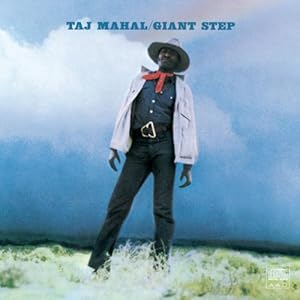
It’s not fair to call Taj Mahal a blues artist. He is, but he’s so much more. For years I stayed away from him because I just wasn’t crazy about electric blues. I’m still not, honestly. A lot of it sounds to me like rock and roll stuck in a low gear. So when I snatched up a load of old records from my uncle on a recent trip back to my hometown, I initially looked down my nose at the three Taj Mahal albums in my haul. It took me a week to get around to listening to them. I chose Giant Step/De Ole Folks at Home to start with because of the novelty of a double record that’s actually two separate records bound together in a gatefold. The first record, Giant Step, is electric with a full band. The opening track, “Ain’t Gwine Whistle Dixie Anymo’,” is a short and wistful whistling-and-guitar tune that’s nice and mellow. It’s like a nice shoulder rub to ease you into the listening experience. The next song, the title track, is similarly calming but a little more upbeat, with Mahal urging you to “take a giant step outside your mind.” I wouldn’t peg either of these numbers as blues. Forced to categorize, I’d say, “easy-going American music.” The third tune, “Give Your Woman What She Wants,” is straight-up electric blues. If I were more confident in my knowledge, I might say Chicago-style. It’s the kind I usually hate—macho, hard-driving stuff. But here, set in contrast to the first two songs, it takes on a nice shine. Plus there’s a quality to Mahal’s voice, a sort of soft raspy-ness and soulfulness, that mitigates the testosterone overdrive of the genre and carries the mellow vibe through from the first two songs. Side two opens with a cover of “Six Days on the Road” done up in the groovy, high-speed way the Flying Burrito Brothers did it, except Mahal seems to be having more fun with it, like he’s getting a big ol’ kick out of being a black dude belting out a country trucker song.
            The second record, De Ole Folks at Home, is acoustic. Like its companion, it gathers a wide range of sound and unifies the pieces. It opens with a rhythmic work crew song, slides into an instrumental slide guitar number that calls to mind Blind Willie Jefferson by way of Ry Cooder, breezes into a banjo number with a tempo that’s reminiscent of blues but not quite. The blues are always present on these records, but they’re not always front and center. They’re more like the DNA that underlie and bind all the songs together.
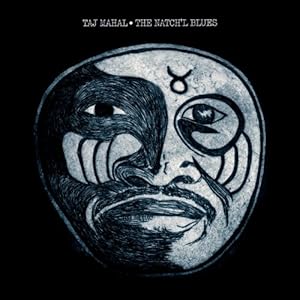
            After spinning these two discs, I was hooked on Taj Mahal, so I reached for another record and grabbed The Natch’l Blues. I was leery, fearful that this would be the slogging blues record I dread. And true to its name, it’s more consistently bluesy. It came out a year ahead of Giant Step/De Ole Folks at Home, and it was just his second record, so maybe he wasn’t quite ready to stretch out so much. Still, he pushed the boundaries a bit, especially on “Corinna” and “You Don’t Miss Your Water,” both of which drift into a soul territory, and even a little bit of gospel on the latter. The bluesy numbers have the kind of hippy swing to them that you’d expect from a record released in 1968, the notes bent ever so slightly, as if to suggest the silhouette of a go-go dancer shaking on a table top. And throughout there’s still that voice that’s soft and hard-edged all at the same time, and has a way of finding the soul of the melody and hitting you where you live. This is blues even a blues hater can love.

Friday, April 6, 2012

Fables of the Reconstruction: Golden Calves

I organize my record collection chronologically so I can keep in tune with the space-time continuum of music. It’s like they’re all part of an epic, ongoing improvisation. Some years --1972 and 1970, for example -- are like long crescendos, with dozens of brilliant and very different albums, and others are more like brief bridges – 1962, 1979. The 90s are the biggest gap in my stack. This is less a reflection of the quality of music from that decade than a document of my musical life. Or, more accurately, its near-death. That’s when I divested myself of all my LPs, and most musicians stopped releasing them. That’s when, not long after I got my first dial-up Internet account, I unloaded all my CDs and cassettes, and embarked on ten long years of digitally-squashed songs crammed into a piece of plastic the size of a cigarette pack, and squeaking out of a puny pair of ear buds.
            Now that I’m back into vinyl with a vengeance, it’s nice to run across end-of-the-Millennium artifacts from artists who never gave up on the medium. It’s like being able to relive a life I missed. Such is the case with the first release of the year from the Woodsist label, Golden Calves’ Money Band + Century Band. It’s a double-record reissue of an early project by James Jackson Toth, a DIY-scene pioneer and hero who’s released an untold number of albums and singles under a bunch of different names, Wooden Wand and Vanishing Voice being the best known, relatively speaking. Toth put these recordings out on vinyl in 1996, a year when I seriously believed LPs were no longer being made. Not only that, he paid for it by cashing in his meal plan at college, thereby precluding himself from being able to “eat a proper lunch for an entire semester,” according to the reissue’s liner notes, which Toth wrote. “I was eighteen years old,” Toth writes. “I was taking drugs.”
Listening to the record 16 years later, I’m stunned by the bravery and the dedication, and I’m grateful to him for keeping grooves in the music, and vice versa. This is music that has to be heard on vinyl. Its bones and structure are built with a single acoustic guitar, a sound that thrives in the warmth of wax, and this sound brings a fleshy folky-ness to Toth’s compositions, though they seem to owe more to improvisational jazz and Africa and rhythms and trance and spooky film soundtracks and noise than Joan Baez or Tim Hardin. He fleshes out these odd-shaped and strummed melodies with layers of weird sounds, electric guitars drenched in static, sustained notes from a cheap Casio synth, screechy saxophone, atonal piano, even the hushed rhythm of an adding machine. And his voice, soft and shaky, cracks a bit here and there betraying his youth and unprofessionalness, in the best sense of the word, in a punk-meets-folk sense, as he sings surreal lyrics such as “electric stacks of glass” and “my bacteria forms” over and over again, like some sort of AIDS-era mantra. In other words, it’s trippy as hell, but gentle and chill. I keep coming back to it, and with each listen it reveals more and more, despite its simplicity and primitiveness.
Toth is at once egotistical and self-deprecating in his account of the music on these rereleases. “These are not perfect records,” he writes. “Perhaps worse than so-called ‘naïve art’ is ‘only-marginally-informed art’ … I should have let my talents marinate for a while before rushing out records … But fuck it, man. I was hopelessly arrogant then and remain so today. Why else would I greenlight this fucking thing?” Thank god he did. The original releases were few in number and are almost impossible to find anymore. But with this, Woodsist has offered up an important document, a missing link in the unstoppable life beat of music. Real music that you can hold in your hands and that sounds right in your ears. Toth is one who wouldn’t let it go away.