Monday, April 25, 2016

I'd Love to Turn You On At the Movies #139 - The Texas Chainsaw Massacre 2 (1986, dir. Tobe Hooper)


In 1974, director Tobe Hooper released The Texas Chain Saw Massacre, a nightmarish and intense horror film about a family of murderous cannibals that, with a budget of less than $100,000, raked in over $30 million in the U.S. alone and now stands high on almost any list of the all-time great horror films. Despite the film’s reputation (and title) its on-screen violence is actually quite mild – the makers had hoped to secure a PG rating – with the very effective result of leaving the more brutal aspects of the film’s violence to the viewer’s imagination. Hooper has long insisted that the film is a dark comedy, but because of the harrowing intensity that ended up earning it an R rating it can be hard for some viewers to laugh – except maybe as a release of tension. The success of the film lead Hooper and his co-screenwriter to start thinking up a sequel, but it kept getting back-burnered, shelved, and otherwise delayed until Hooper scrapped his initial sequel idea, connected with the producers of the notorious Cannon Films, and brought on a new screenwriter to create The Texas Chainsaw Massacre 2.

For some reason, this film is decidedly less well-liked by most than the original. Not me though. Situated right in the middle of the 80s as the slasher (and sequel) era was giving way to some great horror-comedy (Re-Animator, Evil Dead 2, Return of the Living Dead, etc.) and featuring a promotional poster that mocked the then-hot film The Breakfast Club and bore the tagline “After a decade of silence… the buzzz is back,” the sequel seemed poised to be a worthy box office draw honoring the original classic. Add to this that it also utilized the talents of screenwriter L.M. Kit Carson (star of the 60s underground hit David Holman’s Diary, writer/director of the Dennis Hopper semi-documentary The American Dreamer, and writer of 1984’s Paris, Texas) and brought original director Tobe Hooper back into the fold along with actor Jim Siedow (reprising his role of The Cook from the original film). Carson took the comedic subtext of Hooper’s earlier film into something that openly satirized things that Hooper had been implicitly referring to – the Vietnam War (and now, its aftermath), The Cook ranting about how hard the competition is in capitalism for a working class chef, and so forth. Both are subtext in the 1974 film but very much on the surface here. And where the performances of the original strove for documentary-like realism, here the murderous family (plus Dennis Hopper as the avenging angel Lefty) are portrayed as over-the-top, seemingly designed solely to bring chuckles – or at least incredulity – throughout. And then there’s the blood – lots of it. This being the 80s, Hooper enlisted special effects master Tom Savini to provide the requisite amount of gore for the film (in addition to subtler work, like the aged face of the 137 year-old Grandpa), distributed in an equally over-the-top show to match the unhinged performances on tap.

And yet – even with its decidedly unrealistic tones, even with its over-the-top gore, even with its satirical flair, the film manages to be nearly as unnerving as the original. And that’s mainly due to our central character, the radio DJ Stretch (Caroline Williams in a mostly thankless role). She’s a late-night DJ who unwittingly overhears a murder by the family and is subsequently stalked by them. Her down-to-earth performance grounds the film from flying off into becoming the “geek show” that Roger Ebert (who hated it) saw in it. When she’s in danger, we’re scared. When a couple of the family members visit her at the radio station, it’s terrifyingly creepy. As the film progresses and she tracks the family to their underground lair it becomes something of an amped up remake of the first film’s climactic scenes (and a flash forward to Rob Zombie’s far less effective homage, House of 1000 Corpses), in which she’s imprisoned, tormented, and tries to escape while pursued by the chainsaw wielding killer Leatherface and his deranged brother. It’s easy to laugh it off if you want, but if you let it the film gets under your skin and becomes nearly as effective as the blunt nightmare of the original film.

The Texas Chainsaw Massacre 2 was plagued with issues during its creation – money to make the film ebbed and flowed with the fortunes of producers Golan and Globus of Cannon Films (a low-budget studio that’s the subject of the entertaining documentary Electric Boogaloo: The Wild, Untold Story of Cannon Films). Hooper delivered a film he figured was in line with the violence quotient of the day but was slapped with an X by the ratings board, choosing to release the film unrated which lead to its distribution being severely hampered in the process. So in the same year that the utterly mediocre Jason Lives: Friday the 13th Part VI managed to draw nearly 20 million out of the pockets of filmgoers, this one – with intelligent (if not exactly artistic) ambitions – barely scraped out enough to make its budget back and make a few extra bucks. Dennis Hopper – right then in the middle of a run of films that included an Academy Award nomination for Hoosiers and other honors for his role in Blue Velvet – is alleged to have said that this was the worst film he’d ever been in. By contrast, Bill Moseley, who had the role of Leatherface’s brother Chop-Top, has named the role as his favorite of his own. I’m definitely in Moseley’s camp – not only does he turn in a truly effective performance, the film as a whole finds the perfect pitch of dark humor and nightmarish terror and stands as one of the highlights of 1980s horror/comedies.

-         Patrick Brown

Monday, April 18, 2016

I'd Love to Turn You On #152 - Hubert Laws – Crying Song


Three things to talk about here; the phenomenon of jazz/rock, the specific jazz subgenre “flute-jazz” and the label CTI. In the late 60’s and early 70’s the movers and shakers in jazz were trying to keep their format relevant to the exploding rock audience which was accounting for stratospheric sales figures and the deification of the stars. The rock audience was not having bebop, they were demanding jazz be played with electric instruments and concern itself with topical subject matter. The obvious answer was “jazz/rock,” a subgenre that rearranged popular music for jazz instruments and, in turn, resulted in some jazz records selling the kind of numbers expected from rock releases. Miles Davis is perhaps the most successful merger of these two genres, actually creating an entirely new music free of the time constraints of rock and the staid instrumentation and conventions of jazz, offering an exciting electric amalgam of the two. Hubert Laws did not do what Miles did, but he did make a few really great jazz/rock albums of which Crying Song is the most far-reaching. Consisting of five rock covers and two jazz originals, Laws leads his crack band (with Bob James, George Benson, Grady Tate and Ron Carter among others) on beautiful flute-led excursions into the near cosmos. “Flute-jazz” is a very specific and groovy type of music. The flute has both an exciting and calming quality that can only be described as beatific. Each instrument has a different effect on the listener, but there is none with the exact mood enhancing qualities of the flute. In the hands of a master like Hubert Laws, it conveys a greater spectrum of emotion than almost any other instrument. Crying Song covers the emotional gamut.

The high points of the album are the rock covers – specifically two Pink Floyd songs, “Crying Song” and “Cymbaline,” a Monkees song, “Listen To The Band,” a Traffic song, “Feelin’ Alright,” and The Bee Gees’ “I’ve Gotta Get A Message To You.” Laws remains true to the basic structures of these songs but adds horns and strings to lay down a bed for jazz soloing on the melodies. It works beautifully and is virtually irresistible for rock fans who like jazz. Hearing Pink Floyd’s aching “Cymbaline” without the cosmic lyrics fundamentally changes the song, but it does not diminish its beauty in any way. Laws plays the central theme with the correct tone and precision to please Floyd fanatics, but he swings in a way jazz aficionados will appreciate. Alternately, on “Crying Song” from Pink Floyd’s More soundtrack, he lets the band run wild in a pretty free-form excursion to the outside.

The label that released this lovely record was called CTI, standing for Creed Taylor International. Producer Creed Taylor started his label in 1967 as a partnership with A&M Records, but in 1970 broke off on his own and Crying Song was the first album he released on his new imprint. CTI Records built a reputation as a label with a specific sound and look. Many people credit (or blame) Creed Taylor and his chief arranger Don Sebesky for inventing and perfecting what became known as smooth jazz, however in 1970 when Crying Song was released it was just cool, mellow flute/jazz with songs that a rock audience liked and performances a jazz audience could respect. This should have been and was a very winning formula. CTI forged a reputation for stunningly recorded albums by first rate players that struck a chord equally with rock and jazz audiences. The covers were often graced with memorable images by photographer Pete Turner. Even though I prefer the overall output of labels like Blue Note or Prestige, CTI has a very special place in my heart and my collection. In fact it is the only label-group that I have segregated from its genre. At the end of my jazz section of vinyl I have a CTI section because it is so special and unique. Albums released on CTI have such a specific set of aesthetic principles at work that they belong in their own category. When I am in the mood for a certain kind of laid-back sophistication only CTI will do, and Hubert Laws’ Crying Song is top of the heap.

-         Paul Epstein

Monday, April 11, 2016

I'd Love to Turn You On At the Movies #138 - The Conversation (1974, dir. Francis Ford Coppola)


In the early 1970s, Francis Ford Coppola worked at such a prolific rate that he not only released The Godfather and The Godfather: Part II within a span of two and a half years, but also wrote and directed The Conversation in between them. Of the four films Coppola directed in the 1970s, The Conversation somehow falls in the shadows of the first two entries in The Godfather series as well as his sprawling Vietnam War epic, Apocalypse Now. This unfortunate circumstance results in a lack of awareness and appreciation of one of Coppola’s strongest works. Over forty years after its release, The Conversation endures as a minimalist masterpiece of the suspense genre, contains an unforgettable performance from Gene Hackman, and imparts a lasting meditation of the consequences of surveillance culture.

Coppola wastes no time by opening The Conversation in the middle of the film’s central focus: a discussion between a young woman and man walking around a public square in the middle of the day in downtown San Francisco. While these two talk Harry Caul, a surveillance expert, and his associates work clandestinely to record the discussion despite technical challenges presented by the outdoor setting and the speakers’ shifting locations. After Caul and his colleagues have finished taping he returns to his loft workspace to get down to the business of merging the various tapes of the incomplete recording to yield a master document of the conversation. While filling in the gaps of the conversation and deciphering the recording Caul quiets his assistant’s growing curiosity over the conversation’s content by declaring, “I don’t care what they’re talking about. All I want is a nice fat recording.” As Caul begins to realize that this recording may carry significant danger if it falls into the wrong hands, his adherence to this discipline fades. Together Coppola and Hackman create Harry Caul who, unlike the protagonists of kindred films like Michelangelo Antonioni’s Blow-Up and Brian De Palma’s Blow Out, is not a young, attractive, innocent bystander. Caul looks all too much like a man who has devoted himself single-mindedly to the task of listening to others while trying desperately not to be noticed while he does it. Coppola and Hackman imbue a sense of irony and humor into the character of Caul and the impotence of his attempts to control what happens around him. In spite of Caul’s cold professionalism and preposterous personal life he serves as a very human and sympathetic character as the mystery of the recording consumes him. Hackman provides the film’s complex main character but he’s not alone because The Conversation also features an excellent supporting cast including John Cazale, Terri Garr, Harrison Ford, Cindy Williams, Frederic Forrest, Allen Garfield, and Robert Duvall, who supplies a particularly chilling cameo as the Director.

The Conversation debuted just months before Richard Nixon resigned from office amid the Watergate scandal and bears some influence from those events, but the film’s powerful depiction of the perils of surveillance, not only for a society but also for an individual’s humanity, still functions as a timely warning today. Through Harry Caul the audience witnesses the true cost of this kind of surveillance, a cost which resonates deeply with both Edward Snowden’s revelations about NSA surveillance programs in 2013 as well as the FBI’s recent legal tangle with Apple over gaining access to the content of an iPhone. With The Conversation, Coppola spins fiction from the front page and creates a beautiful, absorbing, and cautionary tale that speaks volumes about where unchecked curiosity inevitably takes us.

-         John Parsell

Monday, April 4, 2016

I'd Love to Turn You On #151 - The Roots - The Tipping Point


Since drummer Ahmir “Questlove” Thompson and rapper Tariq “Black Thought” Trotter formed The Roots nearly thirty years ago while attending Philadelphia’s Creative and Performing Arts high school, the complicated, symbiotic, and fruitful relationship between these artists has defined the group’s rise from underground phenomenon to household name with their current gig as house band on The Tonight Show with Jimmy Fallon. The tension between the balance of critical and commercial success flows from the DNA of The Roots and has resulted in the creation of some of the best hip-hop albums of the last twenty years. The Tipping Point, their sixth studio album, demonstrates this tension more fully than any other album in the group’s catalog, reveals a compelling stage of the group’s evolution, and reflects major upheavals in the music industry circa 2004.

Following the back-to-back break-out successes of The Roots’ fourth and fifth studio albums (1999’s Things Fall Apart and 2002’s Phrenology), the group was well poised to build on this momentum when they released The Tipping Point in the summer of 2004. Forces both internal and external to the group during the album’s gestation supplied ample challenges to maintaining this momentum. Within the group, Questlove represents the aspiration to engage critics and fellow musicians while Black Thought symbolizes the desire toward moving and satisfying a popular audience. After the scattered, almost indulgent sprawl of Phrenology under Questlove’s guidance, The Roots chose to let the pendulum swing into Black Thought’s domain with The Tipping Point. At the same time, economic conditions and unprecedented uncertainties within the music industry caused the collapse of MCA, home to The Roots for their last two albums. The Roots landed at Interscope, helmed by industry veteran (and current Beats impresario) Jimmy Iovine, and quickly felt a new sense of obligation to deliver radio hits. To a degree, Interscope’s pressure to push The Roots into more commercial territory resulted in an album that upon its release satisfied neither mainstream hip-hop fans nor long-time fans of the group, but for very different reasons. The Roots’ relationship with Interscope began and ended with The Tipping Point and resulted in the group’s subsequent move to their home since 2006, Def Jam Recordings, under the leadership of none other than Jay-Z. Despite the conflicting forces present during its development, The Tipping Point contains some of The Roots’ best studio work, especially the great one-two punch showcase for Black Thought’s verbal prowess, “Web” and “Boom!” Also, two of the album’s most enjoyable moments are unlisted, hidden tracks that play after the final song, including a loose, energetic crew jam “In Love with the Mic” featuring comedian Dave Chappelle and a cover of “Din Da Da” by German electronic producer George Kranz.

In Questlove’s memoir Mo’ Meta Blues, while describing the choice to name this album after Malcolm Gladwell’s book, he admits, “With most of the records, we wanted the titles to work on three levels: as a reflection of our own career, as a reflection of the hip-hop scene, and as a reflection of the world at large.” Questlove and company may not have realized twelve years ago that this title would take on additional layers of meaning over time. In truth, The Tipping Point is not as strong as the albums that directly precede or follow it, but it remains one of The Roots’ most important albums because it supplies a fulcrum within their catalog by establishing a higher level of production, creating a stylistic template for their following albums, and hinting at the social/political statements to come on their next three albums, Game Theory (2006), Rising Down (2008), and How I Got Over (2010). These albums form a trilogy documenting the nation’s journey from the lowest moments of George W. Bush’s second term to the promise of hope signaled by Barack Obama’s first term and achieve a career high point for the group, which may not have been possible had The Roots not learned the lessons they did while crafting The Tipping Point.

-         John Parsell

Monday, March 28, 2016

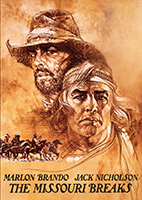
I'd Love to Turn You On At the Movies #137 - The Missouri Breaks (1976, dir. Arthur Penn)


Think about the extraordinary turn Marlon Brando’s career was taking in the 1970’s.  After stalling a bit in the late 60’s he came roaring back in 1972 - jowly, greying at the temple and more potent than ever in The Godfather and Last Tango In Paris. Two braver explorations of middle age could not be imagined, then… silence, until 1976 when he returned – greyer still, jowlier yet, but no less intense and seeming to have tapped into some sort of cosmic awareness that made him a real-life cross between con-man, genius, artist, shaman and fool. It was also impossible to take your eyes off of him in what could be considered his last great role of substance in The Missouri Breaks (I love Apocalypse Now, but it is hard to call what Brando did in it as “substantive.” Memorable yes, substantive maybe less so.).  Director Arthur Penn created a stylish western in the classic mode, which is elevated to something truly memorable by Marlon Brando’s inexplicable performance. From the moment he appears on screen as Robert E. Lee Clayton he is magnetic - both compelling and terrifying at the same time. He is a regulator (a legal assassin) who has been brought from Wyoming to Montana to help rancher David Braxton (John McLiam) and his attractive daughter Jane (Kathleen Lloyd) deal with a band of horse rustlers (Jack Nicholson, Harry Dean Stanton, Randy Quaid and more) who have been causing trouble. Brando enters the action as an exotic swashbuckler; fringed leather jacket, long hair and an Irish accent. He immediately shows himself as a man not to be trifled with, appraising Nicholson as the thief and beginning to exact punishment on the gang. His speed and deadly accuracy prove his reputation as an uncontrollable, but ultimately successful executioner.
With the central conflict established, Penn goes about turning the movie into a philosophical treatise on the difference between being a thief and a killer, and if either of those is morally worse than being a bad person on the right side of the law. David Braxton, it turns out, is a world-class creep who deserves whatever he gets, while Nicholson seems to be a more three-dimensional man than his designation as horse rustler might indicate. He yearns for the honest life - or at least the love of a woman who has lived the honest life - available in the person of Braxton’s daughter. Brando’s character Clayton appears more and more like a scorched earth psychopath, hell-bent on destroying his prey as violently as possible, letting no one - including those who hired him - stand in the way. His inhumanity grows with each scene as Nicholson becomes an increasingly sympathetic protagonist. As Clayton’s killings take on greater cruelty with each victim, Clayton’s personality takes on more complexity. He begins shifting accents from Irish to Southern, to female (complete with unforgettable drag costume) and back to Irish. His performance is always on the edge of hallucinatory, the cutting edge of menace and hilarity. In spite of it being one of his least famous movies, I believe The Missouri Breaks contains one of Brando’s most beguiling performances. By the end of the movie, he is a truly frightening presence - unpredictable, deadly and unstoppable - beyond the control of laws or bullets. The shocking twist at the end remains a great cinematic trick, never failing to surprise.


In the 34 years that have passed since I last saw this movie, I had forgotten almost everything about it. So the panoramic cinematography, realistic take on the Old West setting, excellent music and funny dialogue were all a welcome re-acquaintance. It is Marlon Brando’s terrifying depiction which I had not forgotten, and it was, in fact, even more potent than I remembered. He has had one of the most terminally appraised careers in the history of film, yet his depiction of Robert E. Lee Clayton does much to justify his genius reputation.

-         Paul Epstein

Friday, March 25, 2016

Deadheads Unite!

ListenUp will be hosting their annual Music Matters event on April 5th and 6th at their 685 So. Pearl location (right across from our old location). This is always a very cool event, where consumers can be exposed to the best new products for their home systems and hear from some of the best names in current audiophile thought. This year is extra special for Deadheads however, as famed Boulder-based audio Engineer David Glasser will be a special guest. Glasser has worked on countless Grateful Dead projects including the landmark Europe ’72 box set and, more recently, the epic Thirty Trips Around The Sun box set. He is a true authority on The Grateful Dead’s recordings and their efforts to bring them to the public. Around the time of The Complete Europe ’72 box I interviewed Dave about working on Grateful Dead projects. In honor of ListenUp’s upcoming event, we present it here again. Click here (http://www.listenup.com/music-matters-seminar-april-5-6/) to learn more about Music Matters and enjoy the interview (excerpted below, you can read the full interview HERE).

- Paul Epstein

The big archival news in the Grateful Dead world is the unprecedented Europe ’72 - The Complete Recordings box set. Containing all 22 shows of this greatest of all Dead tours, there’s not a dud show in the bunch; in fact there are very few dud songs. The band never played tighter or more inspired than on this tour. They also never toured behind such an abundance of great new material. They were playing many the songs from Weir’s then-new Ace album, Garcia’s first solo album plus about a dozen new Grateful Dead songs (“Ramble On Rose,” He’s Gone,” “Tennessee Jed,” Mr. Charlie,” Chinatown Shuffle,” etc.) and fresh covers (“Sing Me Back Home,” “You Win Again,”) and when combining them with some of their longer, jammier songs from the past (“Dark Star,” “The Other One,” “Truckin’,” “Lovelight”) they offered up an exciting marathon show every night of the tour. To add to the special nature of the tour was the fact that they were playing many beautiful, historic concert venues on a continent that was new to the band members and rich with historic and cultural significance to their hippie sensibilities. They were also dragging around a recording truck to every venue to insure their ability to pay for the whole trip. Remarkably, the recordings are outstanding, even by modern standards. There is a full, rich warmth to the sound that just reflects the warmth on stage. The huge, deluxe “steamer trunk” box set is sold out, but there is a superb new compilation called, appropriately enough,Europe ’72 Volume 2 that is out now on Rhino Records. It is packed with great moments from the tour including memorable takes on “Playin’ In The Band,” a huge Pigpen-led “Good Lovin’,” a great early version of “Sugaree” and a “Dark Star” that goes to outer space and back in 30 minutes. It is a wonderful keepsake, and we have it on sale for only $10.99. It’s the cheapest way you’re going to get into this tour. 


Because I was so blown away by the sound of these recordings, I thought it would be cool if we could ask Boulder resident David Glasser of Air Show Mastering some questions about the process of mastering this gigantic project. A Grammy Award winner, Glasser is one of the hidden gems of the Colorado music scene. Air Show has worked on countless albums you’ve heard of and continues to be one of the premier mastering facilities in the country. The Grateful Dead are legendary for their attention to detail when it comes to the sound and packaging of their releases, so their choice of Glasser is no accident. Glasser, as usual, was generous with his time and thoughtful in his answers.
Questions for David Glasser at Airshow Mastering regarding the Mastering of The Grateful Dead’s entire Europe ’72 tour.
Briefly explain the process of mastering.
• Mastering is simply the step - the last in the creative studio process - where the final adjustments and tweaks are made. It's akin to what a colorist does in the film world - making sure that the sound matches the vision of the producer and artist, and presenting the mixes in the best possible light. Usually that involves adjusting the song levels and overall level of the disc and using tools like EQ and compression to shape the sound (does it need to be brighter? punchier? less muddy? etc).
How is mastering an archival recording different than mastering a new, technically modern recording?
• Often archival recordings already exist in an aesthetic context that listeners are familiar with. This was certainly the case with the Europe 72 project. The 1972 LP is an iconic album - both the songs, and the sound. There are also several other official releases of E72 material, plus audience and soundboard tapes that have circulated for decades. So before starting I gathered together the original Europe 72,Steppin' Out, and Rockin' the Rhein, plus the first show that was mixed for this project. To my horror and dismay, they all sounded quite different! Jeffrey Norman and I discussed this at length and we agreed that the approach to this release was a "live-r," less "polished" presentation. We wanted to showcase the Dead as they sounded onstage at these shows. 
What is unique about mastering The Grateful Dead as opposed to other bands?
• Probably the fact that often they don't function as a typical rhythm section + soloists and singers like much popular music does. At any time, any one of the players could be driving the music, and it's constantly shifting. Phil's bass is another lead instrument along with the two guitarists. As a result, the music is often more dynamic. More like a jazz band - think Bitches Brew by Miles Davis. The goal is to mix and master so you can "see" into the music.
Describe your history with the recordings of The Grateful Dead. What was your first job mastering their recordings?
• My first Grateful Dead project was mastering the DVD release of The Grateful Dead Movie. Jeffrey Norman was looking for a place to master his surround mixes; "Dr." Don Pearson introduced us after visiting the studio with acoustician Sam Berkow. The Grateful Dead Movie was a huge project. I think there were 12 hours of music when you added up the stereo mix, the bonus material and the two surround versions. It took us two long weeks. After that Jeffrey returned with the Truckin' Up To Buffalo and the Rockin' The Cradle DVDs. There have been several others, for which I am forever grateful, pun intended. I've been listening to the Dead, and attending shows, since 1970.
Describe the process of working with The Grateful Dead organization. Who do you work with? How exacting are they? Does the record label (Rhino) get involved on your end at all?
• Working with the Grateful Dead's production team is an absolute pleasure. I wish all of my clients were this easy to work with. My contacts are Producer/Archivist David Lemieux and engineer Jeffrey Norman. Everyone has very high and exacting standards, but nobody is breathing down each other’s throat. The communication is very open. I think everyone really respects the creative process and everyone's contribution. Rhino is definitely involved in the tail end of my mastering work, as that's where we send the final masters.
Were there specific challenges involved with a project this large? 
• The challenges were chiefly organizational - how to keep track of so much material and insure quality and constancy from beginning to end.  We modified our in-house database for more efficient searching within the E72 project, and we designed a workflow that covered every aspect of our involvement with the project: from receiving Jeffrey's mixes, to naming files, to cross checking show-to-show, to sending references for approval, and creating the final masters for Rhino.
Did each show have a unique personality to you?
• Absolutely! The shows in the great concert halls like the Concertgebouw and Paris' Olympia Theater have a very open warm sound and I think the players were hearing the nice acoustics and hearing each other very well; it's reflected in the playing. The halls definitely influenced the playing. The Bickershaw show, which was an outdoor festival, sounds much different - the musicians are reacting to the cold weather and perhaps playing more deliberately. But the results are great - the “Dark Star/Other One” sequence was a standout, and is included in the Europe ‘72 Volume 2 release.
How about the individual personalities of the musicians in the band? 
• It's cool how the band can transform itself from song to song. When Pigpen steps out front, his blues and R & B attitude can change the whole vibe. And Bobby's country songs really inspire Garcia's Don Rich-style picking.
Did you gain a greater appreciation for, or did you have any revelations about the individual talents in the band?
• One of the cool things about listening to multiple versions of the same songs is that the personalities do come across. You can hear that Garcia is constantly exploring ways to express a solo, and his solos during this era are really well constructed, and they usually have a well-formed arc to them. As I worked on each show, I always referenced other versions of several songs to make sure the sound was consistent (or appropriately consistent). It's clear that the Dead were very well rehearsed, and the performances and even some of the solos of the first set type of songs were often identical over several nights. As the tour progressed, you can hear them refining arrangements. Bob Weir's playing is especially impressive. I think many people think his distinctive leads were played by Garcia - I know I used to!
Did you learn anything about what makes the Grateful Dead unique in the world of Rock from this project?
• I think we've all long appreciated that the Grateful Dead cut a wide swath through the landscape of American music. It sounds utterly natural to hear them go from a Marty Robbins cowboy song to a Bobby Blue Bland rave-up, to a jam Coltrane would admire, to a gorgeous Merle Haggard ballad, and end on Chuck Berry. What other band can do this?
Do you think the fact that the band was playing in small, largely opera-worthy venues on that tour made a difference in the way the band played and the way the recordings ultimately came out?
• I was fortunate to have seen the Dead in December 1971 in a concert hall setting, and in March 1972 in a mid-size theater (on my birthday!). I've always thought those kind of halls were the perfect size for this kind of music - large enough to get the energy flowing, and small enough for the band to play off the vibe of the hall and the crowd. I think that the Europe 72 recordings are a confirmation of this (though the larger gigs like Bickershaw really kick-ass).
Can you point to a couple of musical highlights of the tour? Where would you send a novice? Where would you send a hard-core fan?
• I think that David Lemieux did a great job in choosing the songs for the Europe ‘72 Volume 2 set. That and the original Europe ‘72 are a good starting point. Outside of those, I especially like “Dark Star” from the second Copenhagen show; “Two Souls in Communion” from Amsterdam, anything from the two Paris shows, and the first and last Lyceum shows. The Beat Club TV broadcast is also pretty cool, and the Aarhus concert, in a tiny 300 seat room has a nice intimate feel that you don't often hear.


-Paul Epstein

Monday, March 21, 2016

I'd Love to Turn You On #150 - Drive-By Truckers – The Dirty South


This is the best entry point to the Drive-By Truckers’ world. For this album they’ve got three-count-‘em-three songwriters working at a peak, the band is operating at a high level throughout, and some of their most indelible tunes are here. It’s also not perfect – as none of their albums are – so it’s not gonna set up unreasonable expectations of a batch of masterpieces for the unwary listener. This isn’t to say that they don’t have great albums (they have four by my count and three or four more a notch below those) or that you wouldn’t do almost as well jumping in with the album before this, Decoration Day, or being introduced to them via the (great) concept double album Southern Rock Opera, it’s just that, well, this one just feels right – less commitment than the double album and simply better overall than Decoration Day. But they’ve been around since the 90s, they’re headlining Red Rocks this summer for the first time, and starting with this record they haven’t failed to crack Billboard’s Top 200 album chart with any of their releases, so maybe you don’t need an intro and just need a reminder.

Or maybe you do need an intro – chart success or no, they’ve never had a song that hit the top 40, the only Grammy they’ve been associated with was as the backing band for Booker T’s album Potato Hole, and they’ve never had a gold record, which means only a select group of fans are buying their records. So take these 70 minutes of prime DBT and drink it in. It’s an album rife with working class stories of hard living below and around the poverty line, of lowlifes, crime and corruption, of some of the great purveyors of the very Americana that influences the Truckers themselves, and of “Goddamn Lonely Love.” Maybe start with the best thing on the album – lead guy Patterson Hood’s “Puttin’ People on the Moon,” about a Reagan-era family man struggling to get by while the local NASA affiliate spends who knows how much on pie in the sky ideas of putting people into space. This couplet has never failed to get a cheer from the audience in the ten years I’ve been seeing them perform live: “and all them politicians/they’re all lyin’ sacks of shit” and that’s followed shortly by “and the preacher on the TV says it ain’t too late for me/but I bet he drives a Cadillac and I’m broke with hungry mouths to feed.” But he’s not just being clever – the song’s angry, rife with cancer, no money for health care, “double digit unemployment” and more, so when Hood lets out a scratchy falsetto at the song’s climax, it’s a genuinely anguished moment. From there, proceed either to Mike Cooley’s lighter “Carl Perkins’ Cadillac,” about Sun Records founder Sam Phillips, or on to his intense, grim “Cottonseed” about a hired killer who specializes in making people disappear when the men who influence the law need them to disappear. It’s the centerpiece of the record both literally (falls in the middle of a trilogy of songs elucidating the other side of the true story that was turned into the movie Walking Tall) and mood-wise. Then maybe it’s time for Isbell’s rousing “We Ain’t Never Gonna Change,” an anthemic cry of Southern pride without any of the bullshit that can come with the territory, and a rival to “Sweet Home Alabama” in the rocking, melodic sing-along department. But then check out what Isbell is best known for – his slow, melancholy numbers, like “Danko/Manuel” about two casualties of The Band, or the closer “Goddamn Lonely Love” which is about exactly what it says and showcases Isbell’s aching vocals – a league away from Cooley’s drawl and Hood’s gruff story-songs. But find your way back to Hood too, his sad, goddamn lonely (and ultimately class-bound, like most of the album) “Lookout Mountain,” and his touching “The Sands of Iwo Jima” which pokes holes in the myth just like his pair of Walking Tall songs do. And then you might quickly note that I’ve mentioned every song except three – Cooley’s terrific, father-son opening salvo, “Where the Devil Won’t Stay” (which the liner notes say is “based on a poem by Ed Cooley,” Mike’s uncle), his other father-son tune “Daddy’s Cup” and another of Patterson Hood’s bits of true local color, “Tornadoes.”

But in telling you about all the songwriting smarts on display, I’m failing the band. I haven’t said how then-new bassist Shonna Tucker is already in perfect sync with drummer Brad Morgan, who takes his cue from Charlie Watts in that other rock band by simply, unflashily supporting and driving the band at all times. I’m not telling how the three songwriters’ guitars speak louder than their voices here and are the best that the Hood-Cooley-Isbell lineup ever laid down on albums. And I’m not telling how the flow of the album from Cooley’s lead cut to Isbell’s sad, slow closer is a trip worth taking in order, rather than the sampling suggested above.

The Drive-By Truckers have soldiered on after this record through personnel shifts and personal crises. Their last studio album, English Oceans, is one of their best, a surprising rebound from a pair whose quality many fans questioned. They’ve got a new one in the can slated for a fall 2016 release. Jason Isbell will also be headlining at Red Rocks this summer and walked home with a pair of Grammys for his most recent album, Something More Than Free. Catch both of those shows if you can – Isbell muscles up his tunes live and the Truckers themselves always deliver – but if you don’t know the records start here. Just promise that you’ll continue on from here to more – Southern Rock Opera, English Oceans, Decoration Day, or my personal fave, Brighter Than Creation’s Dark. And then you’ll come back to this one and remember just how great it is.


-         Patrick Brown

Monday, March 14, 2016

I'd Love to Turn You On At the Movies #136 - 2046 (2004, dir. Wong Kar-wai)


Chow Mo Wan: Take care. Maybe one day you'll escape your past. If you do, look for me.

Wong Kar-wai is one of the most accomplished and respected directors working in film today and there is no doubt in my mind that he deserves all of the reverence heaped upon him. This film, 2046, which is an odd, round-about sequel to his masterpieces Days of Being Wild (1990) and In the Mood for Love (2000), is certainly a testament to the talents of this director. The enthrallingly complex story, the gorgeous visuals, and the portrayals of the perfectly handpicked cast culminate in what is certainly a film that warrants multiple viewings and will most assuredly steal your heart as it has mine.

Weaving adeptly between the past, present, and a fictional science-fiction future (informed directly by the past) the story follows author Chow Mo-wan (Tony Chiu Wai Leung) through a variety of different periods of his life as well as the life of the fictional character that he writes for his series of "2046" stories. The plot is entirely too complex and full of beautiful nuance to truly do it justice in such a short synopsis. The only way that I might perhaps be able to describe the film in an attempt to advocate for its narrative is to try and convey just how engaging and successful Wong Kar-wai was in crafting a world (or worlds in this case) in which you, the viewer, are invited to spend some time. The film is both firmly rooted in a time period, yet timeless, and it is inhabited by fascinating characters that are equal parts elegant and human. When I reflect upon my time spent in the universe of 2046, I am hit equally by an intense empathetic remembrance of the emotions evoked by the characters throughout the story and my memory of the sheer elegance and splendor of the visuals of the setting that Wong Kar-Wai has created for his characters.

These two aspects are brought to life through the amazing performances of the actors and actresses and the beautiful cinematography by Christopher Doyle and Pung-Leung Kwan. In addition to the captivating and commanding performance of Tony Chiu Wai Leung as our leading man, Li Gong, Faye Wong (who was the enchanting co-lead again with Tony Chiu Wai Leung in Wong Kar-Wai's fantastic romantic comedy, Chungking Express (1994)), Takuya Kimura, Ziyi Zhang, Carina Lau and many others provide skillfully nuanced performances that bring life to the beautiful scenery. While an amazing lead performance is certainly necessary, it is the strength of the supporting cast that makes the story of our leading man truly worth following. This immense story of love and loss, and humanity's often unhealthy worship of and escape to the past would be nothing without the hypnotic performances of all of the actors and actresses in this film.

Often when I think about the films of Wong Kar-wai my mind is immediately drawn to just how magnificently they are shot and the fact that I can't help but be swept into the plot of a film that inhabits such a lush, wondrous and striking space. My experience with Kar-Wai’s films has been rather strange as 2046 was the first of his films that I saw and it directly and tacitly references two of his more venerated works. Initially after seeing the trailer for the film and the poster/design campaign behind the film, I was drawn to the set design, costume design, art direction, and sheer exquisiteness of every detail of the movie. I then decided that I needed to watch the film and see what it was all about, it was then that the true power of the story and multifaceted narrative took me over. After that I insatiably sought out as much of the director’s work as I could find, beginning with In the Mood for Love and Chungking Express (and then on to many others).

Even though this film is in many ways a strange sort of sequel to a couple of Wong Kar-wai's films, I wouldn't say that I regret watching the pieces in reverse order, so if you have or haven't seen Days of Being Wild and/or In the Mood for Love I would recommend this film regardless. For me this film was the gateway to the world of an amazingly talented director and I would be delighted if I was able to assist in turning you on to this film.
Edward Hill

Monday, March 7, 2016

I'd Love to Turn You On #149 - The Blues Project - Projections


I can put myself in the late 1960’s and remember being a pre-teen looking at the cover of Projections by The Blues Project. I stared at bassist/flautist Andy Kulberg - the guy in the front - and thought; as a Jewish kid, that’s probably about as cool as I could ever hope to look. The corduroy jacket and matching pants. The double-collared shirt, flowered tie and tousled hair - oh man this guy looked hip. In fact they all looked cool standing on Haight Street in San Francisco - Al Kooper wearing a military surplus jacket, Danny Kalb with his flowered shirt and early rock and roll combover - they looked like they were waiting for history to come over and tap them on the shoulder: “Excuse me gentlemen, are you prepared to make a singular, great album and then essentially disappear from history, leaving a few half-baked reunions, but really just this one, era-defining masterpiece and then gone to the sands of time?” Surely their answer would have been “No! We are going to be huge, with hit after hit and a gigantic fan base.” They would have been wrong, because The Blues Project did make a couple more albums with revolving line-ups, but Projections remains the album they are defined by, and with good reason.

Released in 1966 and produced by the great Tom Wilson (Dylan, Zappa, Simon & Garfunkel), Projections is way ahead of its time, encompassing several genres of music: pop, blues, jazz, all with instrumental chops and performing prowess that few of their peers matched. The Blues Project were both crafty songwriters and arrangers, offering up smart pop confections like their take on Chuck Berry’s “You Can’t Catch Me,” or “Cheryl’s Going Home” and “Fly Away,” but they also excelled at taking blues numbers and stretching them out, like “Caress Me Baby” or their masterful take on Muddy Waters’ “Two Trains Running,” which at eleven and a half minutes is a real late night classic, winding through memorable guitar and keyboard improvisations and climaxing with a classic train wreck of sound. It is a great example of a slow build, which required a listening patience that many pop fans in this era didn’t possess. I certainly credit “Two Trains Running” equally with Fairport Convention’s “A Sailor’s Tale” or The Grateful Dead’s “Dark Star” for expanding my own musical horizons and helping me understand forms that expanded beyond standard pop conventions. This led me ultimately to jazz, classical, and a larger understanding of music and its possibilities. Projections also has a couple of anomalous compositions that further opened my eyes. Both “Steve’s Song” and “Flute Thing” take the popular music form to even stranger places by dispensing with vocals and creating something entirely more contemplative. Before I really started to understand jazz, “Flute Thing,” with its repetitive and hypnotic melody circling around Kooper’s smart keyboard parts, served as my rudimentary introduction to the genre. It was eye-opening and intellectually liberating to hear young musicians unafraid to step outside the rules of AM radio.

There are only a handful of records I can point to that changed the way I think about music, but Projections is surely one of them. In spite of the fact that The Beatles were using more sophisticated song structures with lots of fancy chords, and Dylan was expressing very elevated sentiments in his lyrics, The Blues Project were also briefly successful at filling the dancefloors of psychedelic ballrooms with extended groovy tunes. There is a simple joy in the making of and equally in the listening to this music which reminds me of why I originally fell for it in the first place. It’s really well-played, exuberant music that thrills me to this day. Only Al Kooper went on to have a tremendously successful career after The Blues Project, but all of the performances on this album are first rate and show all the musicians to be top-notch. Projections is a definitive 1960’s rock album in that its feet are firmly planted in Chicago blues and the top 10 charts while its head is deep in the cosmos.

-         Paul Epstein

Monday, February 29, 2016

I'd Love to Turn You On At the Movies #135 - Sleeper (1973, dir. Woody Allen)

Back before Woody Allen got serious in the late 70s, he was an heir to the great slapstick film comedians. Roger Ebert drops Buster Keaton’s name in his review of this film while Allen himself says that he thought of it as a tribute to two of his favorite comedians, Groucho Marx and Bob Hope – and they’re both right. There are slapstick moments in Sleeper that are as funny as anything Keaton put on film and self-deprecating verbal wit on par with Groucho or Hope, all wrapped up in a goofy, freewheeling science fiction story that’s really just an excuse for Allen to riff on his favorite subjects – love, sex, and death – and take potshots at the some of the ridiculousness of the early 1970s.

Allen uses the standard sci-fi approach of a futuristic dystopia to tell the story of Miles Monroe, owner of a Greenwich Village health food store who goes in for a routine surgical procedure in 1973 and wakes up in 2173, unfrozen from his cryogenic sleep by a band of underground rebels who enlist him to help stop the oppressive Leader from enacting the sinister Aries Project. That’s about as much plot as is needed because the rest works itself out in ways you’ve seen before, though it’s Allen’s wit and goofy scenarios taking off from these commonplace plot elements that make this film something special. Some of them are time-bound – jokes about Nixon, Howard Cosell and United Federation of Teachers organizer Albert Shanker – and funnier to audiences of the time, but others – as when he’s forced to impersonate a robot servant, a convenience-oriented society that uses an “Orgasmatron” instead of sex, or when he drops lines like “My brain? That’s my second favorite organ” or “I was beaten up by Quakers” that don’t require any translation from 1973 to today. And some of the film’s moments are downright strange – as when he believes he’s being crowned Miss America or when he and Diane Keaton suddenly drop in a gender-swapped routine from Streetcar Named Desire – and funnier as a result. With training from his standup years in nightclubs, Allen is great with one-liners and I wouldn’t want to spoil any more of them, but this is the first of his films where he shows that he’s equally conversant in film – nodding to silent comedy of course (usually in dialogue-free scenes that feature him playing ragtime clarinet alongside the Preservation Hall Jazz Band or The New Orleans Funeral Ragtime Orchestra), and also to contemporary sci-fi (he enlists Douglas Rain, the voice of 2001’s HAL, to play a sinister computer here as well).

And as a special bonus for Coloradoans, much of the film was shot here in Colorado – within the first few minutes there’s a shot of our famous Botanic Gardens building, several scenes take place in and around The Sculptured House (the “mushroom house” off I-70 just west of the city, often now called “the Sleeper house” due to its inclusion in the film), the Church of the Risen Christ on South Monaco is turned into a McDonald’s, some of the outdoor shots were filmed at the Table Mesa Laboratory of the National Center for Atmospheric Research in Boulder, and so forth. Beyond the laughs of the film and the inevitable budding romance of Allen and Keaton’s characters, it’s fun for those of local privilege to location spot throughout the film. Sleeper stands as the finest film from a delightful era of Allen’s development, when slapstick and a ruthless desire to make people laugh was at the forefront of his mind. With the release of the classic Annie Hall in 1977, he started to take the relationships in his films far more seriously, and with 1978’s great Interiors he paid direct tribute to one of his cinematic heroes, Ingmar Bergman, rather than satirizing him as he’d done only a few years prior in Love and Death. I don’t value this period over his more mature works but there’s a verve here, a willingness to go to any lengths for a laugh that is missed in his later films, whatever other virtues they may have.

-          Patrick Brown

Monday, February 22, 2016

I'd Love to Turn You On #148 - Brian Eno/David Byrne – My Life in the Bush of Ghosts


After Talking Heads released their fourth album and masterpiece, Remain in Light, the band went on hiatus while its members explored side projects. Guitarist Jerry Harrison released The Red and the Black, an underrated solo album which built on his work with The Modern Lovers and Talking Heads. Rhythm section and married couple, Tina Weymouth and Chris Frantz, formed Tom Tom Club with Tina’s sisters and members of the Remain in Light touring band. Tom Tom Club’s debut functions like a release valve for the pressures building on Remain in Light and endures as a funky, energetic party album. Lead singer David Byrne and Brian Eno, producer of three Talking Heads albums, set off to create an album that draws upon similar archetypes as Remain in Light, but stands apart from anything these considerable talents have created before or since. My Life in the Bush of Ghosts sounds like Byrne and Eno discovered a way to tune into the radio signal of this entire planet and distill it into 40 minutes of genre-blurring, hypnotically engaging, and beautifully layered music.

Three and a half decades after its release, My Life in the Bush of Ghosts remains a ground-breaking and brilliant tangent from the minds of two of the most idiosyncratic and cerebral artists in popular music. Whereas Tom Tom Club seized upon the incredible pool of talent that had formed around Talking Heads and aimed it in a loose, upbeat, and fun-loving direction, Eno and Byrne set out on a concentrated, enigmatic, and exploratory mission into the unknown. My Life in the Bush of Ghosts contains some of the same DNA of poly-rhythms, experimentalism, and pastiche as Remain in Light, but this album grows into its environment without the frames and guidance of Byrne’s observational characters or recognizable song structures. Although both Eno and Byrne were known at this point for their skills and abilities as lead singers and songwriters, it may come as a surprise to some that this album features neither their voices nor their lyrics. The album’s liner notes credit both Brian Eno and David Byrne with, “guitars, basses, synthesizers, drums, percussions, found objects.” In place of Eno and Byrne’s vocals, nine of the eleven songs on the album contain elements cited in the liner notes as “voices” and include samples of radio hosts and callers, preachers, an exorcist, and singers from Egypt, coastal islands near the state of Georgia, and Lebanon. Among the eleven musicians who worked with Eno and Byrne on this album, eight are percussionists and three play bass. Eno and Byrne combine this robust rhythmic engine with the found, fragmented vocals to create a set of self-contained, evocative snapshots that, when regarded as a whole, reflect back to the listener like a mosaic formed from the pieces of a broken mirror.

Eno and Byrne reunited in 2008 for Everything That Happens Will Happen Today, an album that serves as a high point for both artists’ output in the last twenty years but bears no discernible connection to their first collaborative album. Everything That Happens Will Happen Today features some of Eno’s best recent production work as well as some of Byrne’s most natural vocals and most compelling lyrics since Talking Heads, but feels strangely orthodox and prosaic compared to the radical poetry contained within their first joint musical endeavor. My Life in the Bush of Ghosts merges elements of art rock, experimental music, funk, electronic music, African pop, folk music, field recordings, and minimalism into a highly influential sum, but few of its successors can compare with this fascinating musical exploration.    
John Parsell

Monday, February 15, 2016

I'd Love to Turn You On At the Movies #134 - The Five Obstructions (2003, dir. Jørgen Leth/Lars von Trier)


In this century, few directors have provoked, shocked, and captivated audiences like Lars von Trier. People who have watched Dancer in the Dark, Dogville, or Nymphomaniac: Vol. 1 & 2 are very unlikely to forget these films whether they loved or hated them. For a filmmaker who has specialized in crafting highly memorable and, in some cases, indelible on-screen moments, Lars von Trier himself can’t forget The Perfect Human, Jørgen Leth’s 1967 short film. The Five Obstructions, the documentary that tracks von Trier’s disciplined efforts to push Leth to re-examine and re-create The Perfect Human again and again with new limitations, serves as a revealing and intimate look at filmmaking, a portrait of an artist struggling against depression, and an unorthodox lesson in the redemptive power of a friend’s love.

The Five Obstructions opens with von Trier and Leth sitting down to watch The Perfect Human before they decide on restrictions for making a new version of the film. As they begin to debrief the film and create challenges for the next iteration, von Trier unleashes an almost wicked glee as he conjures up seemingly absurd rules for the new film. By the end of the brief meeting the two men agree that Leth’s next rendering of The Perfect Human must contain edits no longer than twelve frames, take place in Cuba (a country Leth had never visited before), answer the questions posed in the first version, and use no sets. Leth, who was in his mid-sixties during filming, staggers out of the initial meeting appearing stunned and befuddled at the amount of work ahead of him. Von Trier, who was in his mid-forties as this all transpired, counters Leth’s weary patience with a reassuringly firm confidence in the process of this project. Despite von Trier’s self-described “satanic” behavior in developing the successive courses of complications, the younger director consistently demonstrates affection and respect for the man he calls his “hero.” Upon returning from Cuba, Leth comes across as both rejuvenated and proud of his solutions to von Trier’s invented problems. Both men watch The Perfect Human: Cuba together and express how impressed they are with the result, but feelings of contentment pass quickly as von Trier begins the work of generating a new set of hurdles for Leth to clear for the next edition of The Perfect Human. Yes, this process occurs four more times and each time, von Trier’s motivation for engaging Leth in this endeavor becomes more apparent. The dynamic between von Trier and Leth pushes deeply into a special brand of pedantry. Once the pupil, von Trier reverses the student/teacher dynamic as he nudges, admonishes, and goads his mentor. As the film progresses, von Trier and Leth allow the audience sit in on a master class in which a former student challenges his teacher to unlearn the considerable skills he has gained over a lifetime in order to explore the still untapped potential within him.

A sense of love and a spirit of experiential learning flow through all stages of The Five Obstructions. I saw this film on the recommendation of a good friend who stated, “You should watch this. It reminds me of your relationship with your dad.” At first I was a little confused by the comparison, but it didn’t take long for me to see connections. My father was a teacher and I grew up with him telling me stories about an influential teacher from his youth. My father never forgot the time this teacher, Gladys Metcalf, explained to him, “You’re an ‘A’ student doing ‘B’ work and that’s why you’re making a ‘C’ in this class.” Society has developed many norms for guiding the young through their development, but there are few templates for mentoring our mentors. Lars von Trier reminds me of Gladys Metcalf in this film and reaffirms the value of asking more from people who we trust are able to accomplish more. The Five Obstructions rewards those who are familiar with von Trier’s feature films as well as those who know nothing of his work by sharing a compelling story about someone who won’t allow his friend and mentor to give up and fade away.

John Parsell